སྒྱུ་རྩལ
མཛེས་སྡུག་དང་བདེ་ཐང
བཟོ་རིག
རིག་གནས་དང་ལོ་རྒྱུས
དགའ་སྟོན
ཁོར་ཡུག
ཟས་དང་བཏུང་རྫས
ཕྱིར་འཕྲུལ་རིག
ཚན་རིག
རྩེད་འགྲན
རིག་རྩལ
གྱོན་རུང
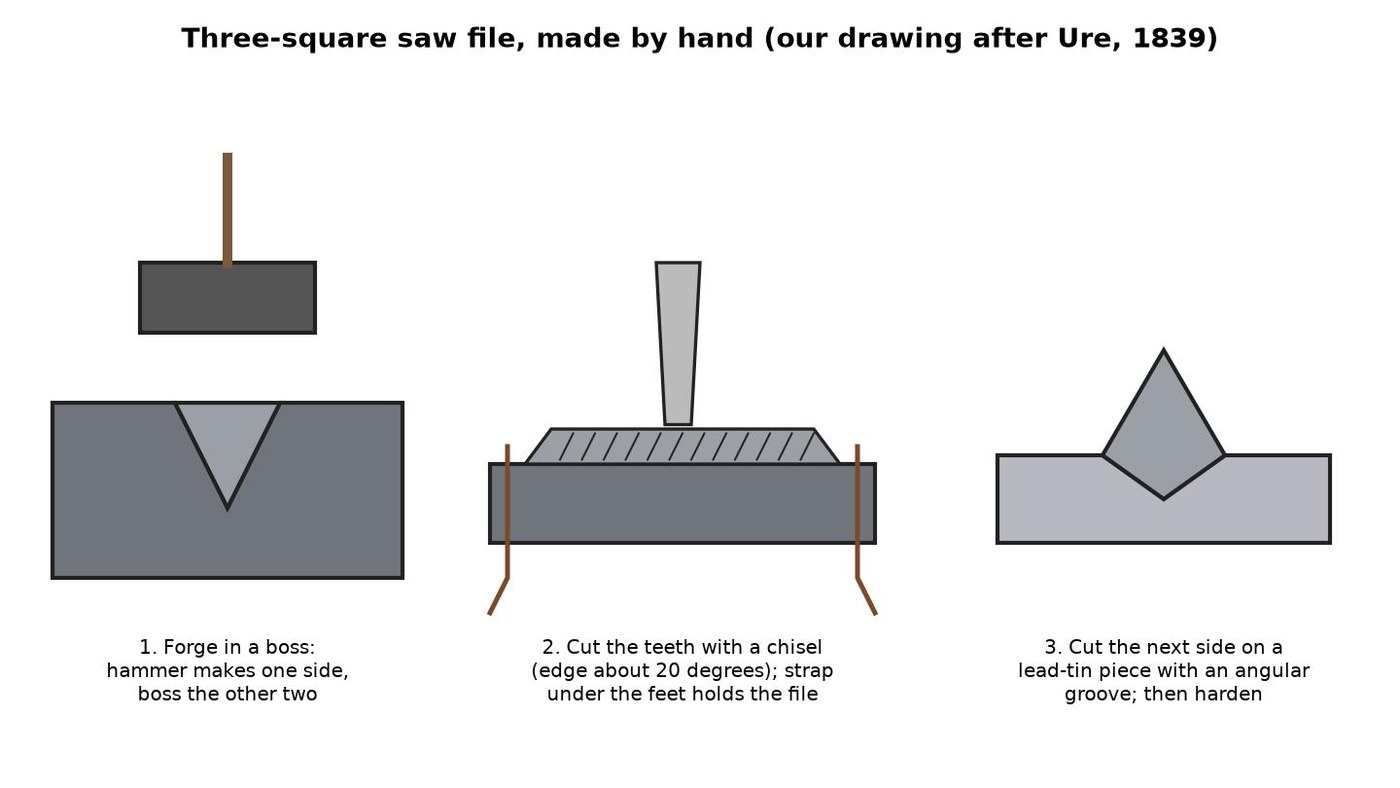


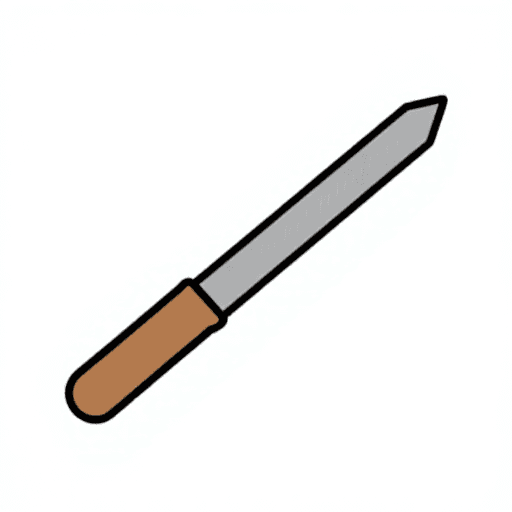
Saw File: Three-Square, Forged in a Boss, Cut by Hand and Hardened (Ure, 1839)
The file for sharpening saw teeth as Sheffield made it by hand: a three-square (triangular) bar of cast steel, not tapering, forged in a V-shaped boss, its teeth cut one by one with a chisel and hammer, then hardened under a coat of animal carbon and salt and quenched in cold spring water.
Ure says saw files in particular should be hardened with the carbon mixture, so they will cut iron and steel.
Not given: sizes and teeth per inch.
Source: A. Ure, Dictionary of Arts, Manufactures, and Mines (1839), File. Picture: our drawing.
མཐོ་རིམ
Unknown
ལམ་སྟོན
1
1
Forge the blank
Forge the blank
Draw cast steel out square at the forge, then lay it with one angle down in a boss whose recess has two sides meeting at an angle, so the hammer forms one side and the boss the other two. Keep it the same size along its length (saw files are not tapered).
གོམ་པ་འདིའི་རྫས་རིགས:
 ཞུན་སྣོད་ཀྱི་ལྕགས་ཁར1 cast steel bar
 མ་ཤེས་པའི་ཚད།1 དུམ་བུ།
ལག་ཆས་དགོས་མཁོ:
 མགར་བའི་ཐབ་ཁུང་།
 མགར་བའི་གཟེར་ཆས།
 འོག་གི་སྒོར་དཔེ།
 ཐོ་བ།
 ཐོ་བ་ཆེན།
2
2
Cut the teeth
Cut the teeth
On an anvil with a flat, even face, hold the file down with a leather strap over each end, the workman's feet in the straps like stirrups. Cut the teeth with a chisel a little broader than the file, sharpened to about 20 degrees, struck with a hammer of 1 to 6 lb. For single cut, run a fine file lightly over the teeth to take off the roughness; for double cut, cut a second set nearly at right angles to the first.
ལག་ཆས་དགོས་མཁོ:
 ལྕགས་ཀྱི་མགར་བའི་རྡོ་ལེབ
 ཀོ་བའི་སྐེད་རགས།
 གྲང་མོའི་གཟོང་།ཐོ་བ།
 ལྕགས་ཀྱི་དར་མ།
3
3
Cut the other sides
Cut the other sides
To cut the next side, lay the file in a piece of lead-tin alloy with an angular groove, so the teeth already cut are not spoiled on the anvil.
ལག་ཆས་དགོས་མཁོ:
 གསའ-ཞ་ཡི་ལྷ་ཡིགལྕགས་ཀྱི་མགར་བའི་རྡོ་ལེབགྲང་མོའི་གཟོང་།ཐོ་བ།
4
4
Coat for hardening
Coat for hardening
Distil shoemakers' and curriers' leather refuse in an iron still and powder the bright coal left. Grind about equal parts by bulk of this carbon and salt to the consistence of cream with water and cover the file with it.
ལག་ཆས་དགོས་མཁོ:
 ལྕགས་ཀྱི་བཙག་སྣོད
 ཚྭ།
 ཆུ།
5
5
Harden
Harden
Hold the file by the tang in a fire of very small cokes, drawing it out often, until it is an even cherry red from tang to point. Plunge it straight down, quickly, into clear spring water as cold as possible.
ལག་ཆས་དགོས་མཁོ:
མགར་བའི་ཐབ་ཁུང་། ལྕགས་བཟོའི་སོལ་བ།མགར་བའི་གཟེར་ཆས།ཆུ།
6
6
Clean and oil
Clean and oil
Brush the file with water and powdered cokes until clean and metallic, wash it in two or three waters to take off all the salt, dip it in lime-water, dry it quickly before the fire and oil it while warm with olive oil containing a little oil of turpentine.
ལག་ཆས་དགོས་མཁོ:
ལྕགས་བཟོའི་སོལ་བ།ཆུ། རྡོ་ཞིའི་ཆུ
 ཨོ་ལིབ་སྣུམ།
 ཐང་སྣུམ
རྫས་རིགས
2- 1 cast steel barས་ཆ་འཛིན
- 1 དུམ་བུ།ས་ཆ་འཛིན
ལག་ཆས་དགོས་མཁོ
17- ས་ཆ་འཛིན
- ས་ཆ་འཛིན
- ས་ཆ་འཛིན
- ས་ཆ་འཛིན
- ས་ཆ་འཛིན
- ས་ཆ་འཛིན
- ས་ཆ་འཛིན
- ས་ཆ་འཛིན
- ས་ཆ་འཛིན
- ས་ཆ་འཛིན
- ས་ཆ་འཛིན
- ས་ཆ་འཛིན
- ས་ཆ་འཛིན
- ས་ཆ་འཛིན
- ས་ཆ་འཛིན
- ས་ཆ་འཛིན
- ས་ཆ་འཛིན
བིལུ་པིརིན་ཊི་འདི་གིས་བཟོ་མི
CC0 སྤྱི་དབང
བིལུ་པིརིན་ཊི་འདི་CC0 འོག་བཀྲམས་ཡོད། ཁྱེད་རང་གིས་ཆོག་མཆན་མ་བཞེས་པར་ཕབ་ལེན་དང་བཟོ་བཅོས། བགོ་བཤའ། དགོས་མཁོ་གང་ལའང་བཀོལ་སྤྱོད་བྱས་ཆོག
བཟོ་མཁན་ལ་རྒྱབ་སྐྱོར་བྱེད་པའི་ཆེད་ཁོང་ཚོའི་བིལུ་པིརིན་ཊི་བརྒྱུད་ཐོན་སྐྱེད་ཉོ། བཟོ་མཁན་གྱིས བཟོ་མཁན་གྱི་ཁེ་ཕོགས ཚོང་པས་གཏན་འཁེལ་བྱས་པ། ཡང་ན་བིལུ་པིརིན་ཊི་འདིའི་པར་གསར་བཟོས་ཏེ་ཁྱེད་རང་གི་བིལུ་པིརིན་ཊི་ནང་མཐུད་སྦྲེལ་བྱས་ཏེ་ཡོང་སྒོ་བགོ་བཤའ་བྱེད།