སྒྱུ་རྩལ
མཛེས་སྡུག་དང་བདེ་ཐང
བཟོ་རིག
རིག་གནས་དང་ལོ་རྒྱུས
དགའ་སྟོན
ཁོར་ཡུག
ཟས་དང་བཏུང་རྫས
ཕྱིར་འཕྲུལ་རིག
ཚན་རིག
རྩེད་འགྲན
རིག་རྩལ
གྱོན་རུང
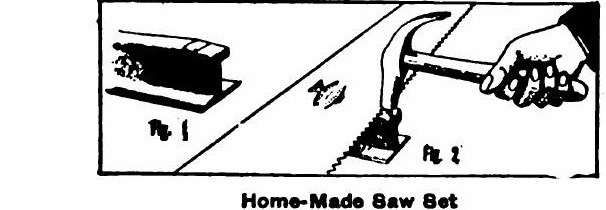


Saw Set: a Bevelled Iron Block (Shop Notes, 1909)
A home-made saw set: a foot of T-rail, or any iron about 2 in square, with one end filed to a small bevel and a gauge mark on it. Lay the saw teeth to the mark and strike each tooth with a light hammer to bend it over the bevel.
The mark as given sets a saw for soft wood; draw the saw back a trifle for hard wood.
Source: Popular Mechanics Shop Notes for 1909, p. 896 (N. J. McLean). Picture: the article's drawing.
འགོ་བཙུགས
Unknown
ལམ་སྟོན
1
1
File the bevel
File the bevel
Take a piece of T-rail about 1 ft long, or any piece of iron about 2 in square. With a file, bevel one end on top, 1/8 in down by 5/8 in back.
གོམ་པ་འདིའི་རྫས་རིགས:
 ལྕགས་ཀྱི་དབྱུག་གུ་ཚུ1 about 1 ft long, about 2 in square
ལག་ཆས་དགོས་མཁོ:
 ལྕགས་ཀྱི་དར་མ།
2
2
Mark the gauge line
Mark the gauge line
On the bevel make a gauge mark 3/16 in down from the top of the bevel (Fig. 1). This mark is for soft wood such as white pine and hemlock.
ལག་ཆས་དགོས་མཁོ:
ལྕགས་ཀྱི་དར་མ།3
3
Set the teeth
Set the teeth
Lay the saw on the flat top of the iron with the points of the teeth to the gauge mark. Strike each tooth one smart blow, or two light blows, with a light hammer with a small face; a horseshoeing hammer works well (Fig. 2). For hard wood, draw the saw back a trifle from the mark.
ལག་ཆས་དགོས་མཁོ:
 ཐོ་བ་ཆུང་ཀུ
 ལག་སོག་ལེ།
རྫས་རིགས
1- 1 about 1 ft long, about 2 in squareས་ཆ་འཛིན
ལག་ཆས་དགོས་མཁོ
3- ས་ཆ་འཛིན
- ས་ཆ་འཛིན
- ས་ཆ་འཛིན
བིལུ་པིརིན་ཊི་འདི་གིས་བཟོ་མི

CC0 སྤྱི་དབང
བིལུ་པིརིན་ཊི་འདི་CC0 འོག་བཀྲམས་ཡོད། ཁྱེད་རང་གིས་ཆོག་མཆན་མ་བཞེས་པར་ཕབ་ལེན་དང་བཟོ་བཅོས། བགོ་བཤའ། དགོས་མཁོ་གང་ལའང་བཀོལ་སྤྱོད་བྱས་ཆོག
བཟོ་མཁན་ལ་རྒྱབ་སྐྱོར་བྱེད་པའི་ཆེད་ཁོང་ཚོའི་བིལུ་པིརིན་ཊི་བརྒྱུད་ཐོན་སྐྱེད་ཉོ། བཟོ་མཁན་གྱིས བཟོ་མཁན་གྱི་ཁེ་ཕོགས ཚོང་པས་གཏན་འཁེལ་བྱས་པ། ཡང་ན་བིལུ་པིརིན་ཊི་འདིའི་པར་གསར་བཟོས་ཏེ་ཁྱེད་རང་གི་བིལུ་པིརིན་ཊི་ནང་མཐུད་སྦྲེལ་བྱས་ཏེ་ཡོང་སྒོ་བགོ་བཤའ་བྱེད།