སྒྱུ་རྩལ
མཛེས་སྡུག་དང་བདེ་ཐང
བཟོ་རིག
རིག་གནས་དང་ལོ་རྒྱུས
དགའ་སྟོན
ཁོར་ཡུག
ཟས་དང་བཏུང་རྫས
ཕྱིར་འཕྲུལ་རིག
ཚན་རིག
རྩེད་འགྲན
རིག་རྩལ
གྱོན་རུང
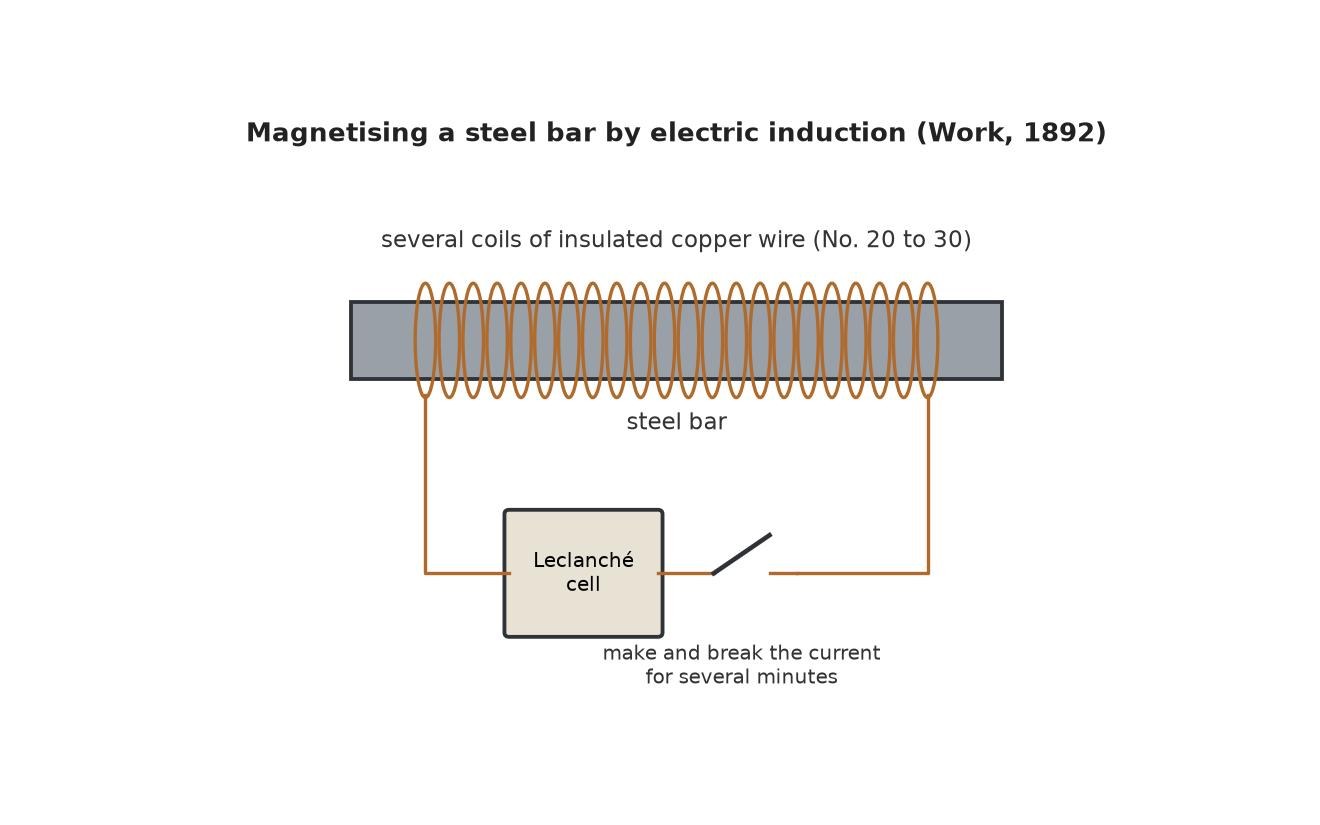


Small Magnet: a Steel Bar Magnetised by Electric Induction (Work, 1892)
A permanent magnet made from a steel bar. Work (1892) names three ways to magnetise steel: single touch, double touch, and electric induction. Induction needs no magnet to start with: wind several coils of insulated copper wire over the bar and send a frequently interrupted current through them for several minutes. A Leclanché battery will do, with wire of any size from No. 20 to 30.
Bar size, steel grade and the way the current is interrupted are not given.
Source: Work No. 180 (27 August 1892), p. 382, answers by G. E. B. Picture: our diagram.
འགོ་བཙུགས
Several minutes (magnetising)
ལམ་སྟོན
1
1
Read the source
Read the source
"Magnetising by electric induction is effected by winding over the bar several coils of insulated copper wire, and sending a frequently interrupted current of electricity through the coil for several minutes." (Work, 27 August 1892.) For a bar magnet, the answer above it adds: "The current from your Leclanché battery will do, and the wire may be of any size from 20 to 30."
2
2
Wind the coil
Wind the coil
Wind several coils of insulated copper wire, No. 20 to 30, over the steel bar. Bar size, steel grade and number of turns are not given (unknown); for small magnets the same writer prefers steel of hard temper. Ours: steel bar stock, enamelled copper wire.
གོམ་པ་འདིའི་རྫས་རིགས:
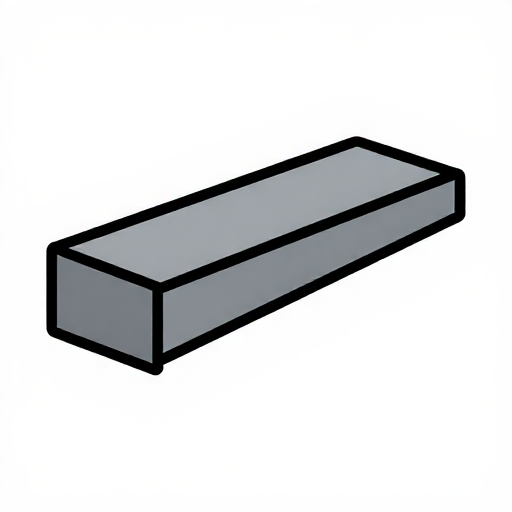 ལྕགས་ཀྱི་དབྱུག་གུ་རྗེན་མ1 bar
ལག་ཆས་དགོས་མཁོ:
 ཨེ་ན་མཱེལ་བྱུགས་པའི་ཟངས་སྐུད།
 མ་ཤེས་པའི་ཚད།
3
3
Send an interrupted current
Send an interrupted current
Connect the coil to a Leclanché battery and make and break the current again and again for several minutes. How the current is interrupted is not given (unknown).
ལག་ཆས་དགོས་མཁོ:
 གློག་སྨན་ཨེ་ན་མཱེལ་བྱུགས་པའི་ཟངས་སྐུད།
4
4
History and honest limits
History and honest limits
By single touch, the north end of a permanent magnet is drawn from the middle of the bar to one end a dozen times or more, and the other half is stroked the same way with the south pole; double touch uses two magnets at once from the middle outwards, which is quicker and makes a stronger magnet. Steel bars can also be magnetised by stroking them on the field-magnets of a dynamo.
Not given: bar size, steel grade, number of turns, how the current is interrupted.
རྫས་རིགས
1- ས་ཆ་འཛིན
བིལུ་པིརིན་ཊི་འདི་གིས་བཟོ་མི

CC0 སྤྱི་དབང
བིལུ་པིརིན་ཊི་འདི་CC0 འོག་བཀྲམས་ཡོད། ཁྱེད་རང་གིས་ཆོག་མཆན་མ་བཞེས་པར་ཕབ་ལེན་དང་བཟོ་བཅོས། བགོ་བཤའ། དགོས་མཁོ་གང་ལའང་བཀོལ་སྤྱོད་བྱས་ཆོག
བཟོ་མཁན་ལ་རྒྱབ་སྐྱོར་བྱེད་པའི་ཆེད་ཁོང་ཚོའི་བིལུ་པིརིན་ཊི་བརྒྱུད་ཐོན་སྐྱེད་ཉོ། བཟོ་མཁན་གྱིས བཟོ་མཁན་གྱི་ཁེ་ཕོགས ཚོང་པས་གཏན་འཁེལ་བྱས་པ། ཡང་ན་བིལུ་པིརིན་ཊི་འདིའི་པར་གསར་བཟོས་ཏེ་ཁྱེད་རང་གི་བིལུ་པིརིན་ཊི་ནང་མཐུད་སྦྲེལ་བྱས་ཏེ་ཡོང་སྒོ་བགོ་བཤའ་བྱེད།