སྒྱུ་རྩལ
མཛེས་སྡུག་དང་བདེ་ཐང
བཟོ་རིག
རིག་གནས་དང་ལོ་རྒྱུས
དགའ་སྟོན
ཁོར་ཡུག
ཟས་དང་བཏུང་རྫས
ཕྱིར་འཕྲུལ་རིག
ཚན་རིག
རྩེད་འགྲན
རིག་རྩལ
གྱོན་རུང
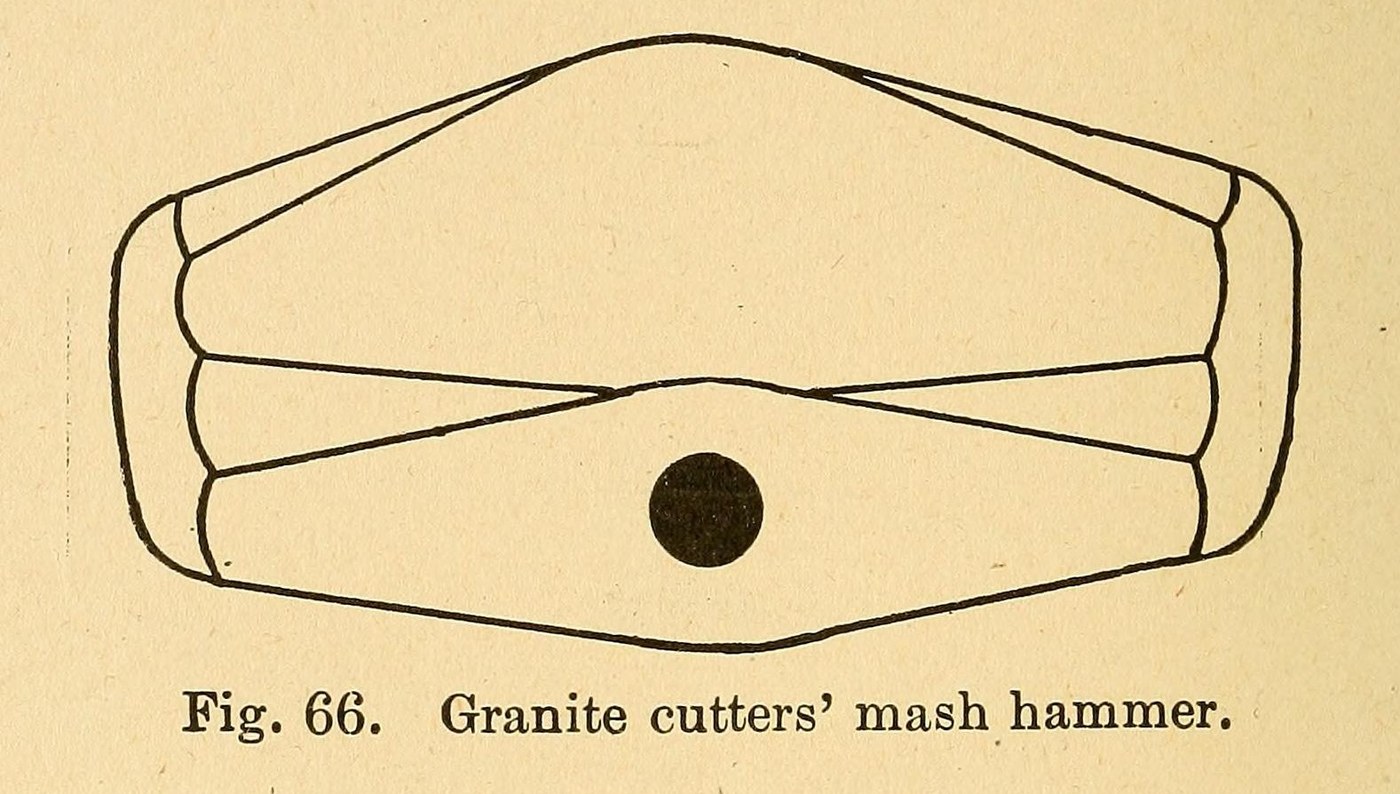


Stone Carving Hammer: a Granite Cutters' Mash Hammer (Holford, 1907)
A mash hammer is a two-faced hammer used by granite cutters. H. Holford's 20th Century Toolsmith and Steelworker (1907) gives the granite cutters' pattern: forged from 75-point carbon steel 1 3/4 inches square, with a small round eye, both ends bevelled and hardened, with no temper drawn.
His forging and hardening come from his chapter on the hand hammer. The brine bath comes from his chapter on the hardening bath. He gives no weight or length for the mash hammer and no handle wood; those are unknown here.
Source: H. Holford (1907), pp. 21, 47-53, 127-128. Picture: his Fig. 66.
བར་མ
A day
ལམ་སྟོན
1
1
Read Holford
Read Holford
"After proper hardening it is not necessary to draw any temper as there are no sharp corners to break off."
2
2
Heat the steel
Heat the steel
Take good steel of 75 point carbon (about 0.75 per cent), 1 3/4 inches square; the length for a given weight is not given (unknown). In a good clean fire, heat it slowly, turning it now and then so the corners do not overheat while the middle is still black, until it is an even yellow heat right through.
གོམ་པ་འདིའི་རྫས་རིགས:
 ལག་ཆས་ལྕགས་ཁར་གྱི་ཡུ་བ་གྲུ་བཞི།1 1 3/4 in square
ལག་ཆས་དགོས་མཁོ:
 མགར་ཐབ།
 མགར་བའི་ལག་བཟུང་།
 མ་ཤེས་པའི་ཚད།
 ཚ་བཟོད་ཀྱི་ལག་ཤུབས།
3
3
Punch a small round eye
Punch a small round eye
Punch a small round eye, not the large oval eye of other hammers, no more than 3/4 inch across when finished. Start it a little smaller, as the eye grows while the hammer is forged. A little coal dust in the hole keeps the punch from sticking.
ལག་ཆས་དགོས་མཁོ:
 ཚན་པོའི་བུག་ཆས།
 མགར་བའི་ཐོ་བ།
 མགར་བའི་རྡོ་ལེབ།མགར་བའི་ལག་བཟུང་།
 ཉེན་སྲུང་མིག་ཤེལ།
4
4
Forge the bevelled ends
Forge the bevelled ends
Forge both ends bevelled down from the eye on the top and sides, leaving the bottom side perfectly flat (Fig. 66). Bevel the face at each end too, dress it a little full in the centre and leave the corners very rounded. Start at an even yellow heat and work lower as you finish, ending at a dark dull red; steel worked too cold is strained and may crack in hardening. Anneal it if much filing is to be done.
ལག་ཆས་དགོས་མཁོ:
མགར་བའི་ཐོ་བ། ཕུ་ལར (ཁུང་བཟོ་ལྕགས)མགར་བའི་རྡོ་ལེབ།མགར་ཐབ།མགར་བའི་ལག་བཟུང་།ཉེན་སྲུང་མིག་ཤེལ།
5
5
Harden both ends
Harden both ends
With the coal well charred and free from sulphur and thick smoke, stand one end upright in the fire and heat it slowly and evenly. If the corners get hot enough to harden before the centre, stop blowing until the centre is cherry red too. Heat no more than 3/4 inch back from the end and never harden the eye. Plunge the whole hammer in the hardening bath and hold it there until stone cold. Holford's bath (p. 21) is clean water free from grease, best made into a brine with as much salt as it will dissolve, kept as large and cold as possible. Do the same with the other end. Draw no temper.
ལག་ཆས་དགོས་མཁོ:
མགར་ཐབ།མགར་བའི་ལག་བཟུང་། ཚྭ་ཁུ་གང་བ།ཚ་བཟོད་ཀྱི་ལག་ཤུབས།
6
6
Hang it
Hang it
Fit a good straight handle through the eye; Holford adds that a little spring in it is a good fault. He does not name the wood (unknown).
གོམ་པ་འདིའི་རྫས་རིགས:
 ངོ་མ་ཤེས་པའི་རྒྱུ་ཆ།1 handle
7
7
History and honest limits
History and honest limits
Holford wrote for blacksmiths and toolsmiths who dressed quarry and granite tools; the same page describes the granite hammer, drawn to a sharp edge at both ends and tempered to a light straw. He blames broken corners and hollow faces on steel soaked too long or worked too cold, and on the old way of dipping only an inch of the end, which leaves the face hollow.
The size of the mash hammer and the handle wood are not given; the tools are ours.
རྫས་རིགས
2- 1 1 3/4 in squareས་ཆ་འཛིན
- 1 handleས་ཆ་འཛིན
བིལུ་པིརིན་ཊི་འདི་གིས་བཟོ་མི

CC0 སྤྱི་དབང
བིལུ་པིརིན་ཊི་འདི་CC0 འོག་བཀྲམས་ཡོད། ཁྱེད་རང་གིས་ཆོག་མཆན་མ་བཞེས་པར་ཕབ་ལེན་དང་བཟོ་བཅོས། བགོ་བཤའ། དགོས་མཁོ་གང་ལའང་བཀོལ་སྤྱོད་བྱས་ཆོག
བཟོ་མཁན་ལ་རྒྱབ་སྐྱོར་བྱེད་པའི་ཆེད་ཁོང་ཚོའི་བིལུ་པིརིན་ཊི་བརྒྱུད་ཐོན་སྐྱེད་ཉོ། བཟོ་མཁན་གྱིས བཟོ་མཁན་གྱི་ཁེ་ཕོགས ཚོང་པས་གཏན་འཁེལ་བྱས་པ། ཡང་ན་བིལུ་པིརིན་ཊི་འདིའི་པར་གསར་བཟོས་ཏེ་ཁྱེད་རང་གི་བིལུ་པིརིན་ཊི་ནང་མཐུད་སྦྲེལ་བྱས་ཏེ་ཡོང་སྒོ་བགོ་བཤའ་བྱེད།