སྒྱུ་རྩལ
མཛེས་སྡུག་དང་བདེ་ཐང
བཟོ་རིག
རིག་གནས་དང་ལོ་རྒྱུས
དགའ་སྟོན
ཁོར་ཡུག
ཟས་དང་བཏུང་རྫས
ཕྱིར་འཕྲུལ་རིག
ཚན་རིག
རྩེད་འགྲན
རིག་རྩལ
གྱོན་རུང
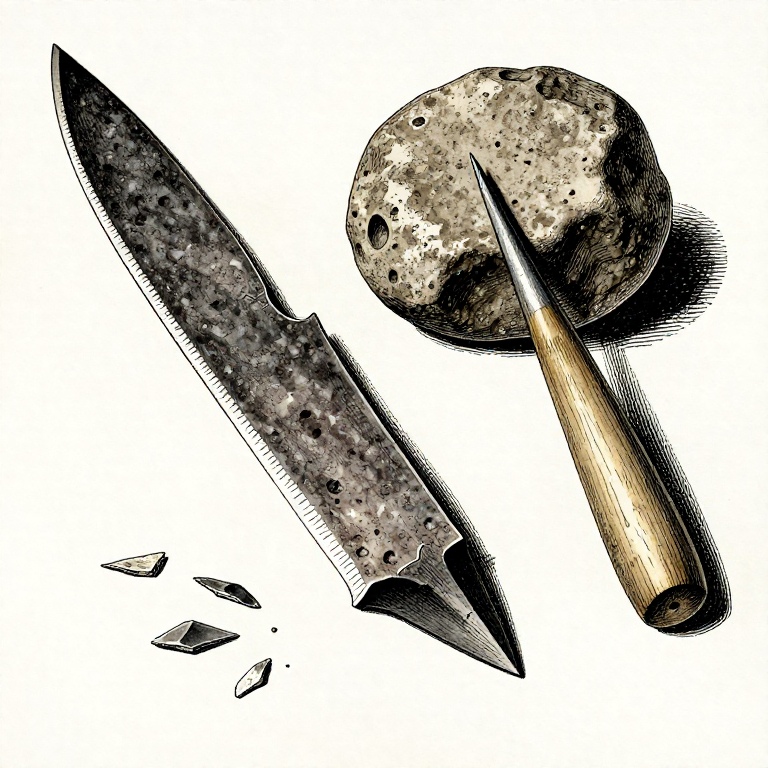


Knapping a Flint Knife — Stone Age Cutting Tool
Flint knapping: 2 million years old, still sharper than surgical steel. Learn percussion flaking to produce a usable knife from stone. Safety: wear eye protection and gloves.
མཐོ་རིམ
1-2 hours
ལམ་སྟོན
1
1
Select Stone
Select Stone
Flint, chert, or obsidian. Waxy luster, rings when tapped, no granular texture. Check riverbeds and limestone outcrops. Avoid cracked stones.
2
2
Platform & Primary Flaking
Platform & Primary Flaking
Strike off a small piece to create a flat platform. Hit 1cm from the edge with hammerstone — strike through the stone, not at it. Each flake creates a new platform.
བཀོད་པ
Diagram: striking angle, platform edge, flake removal direction
གོམ་པ་འདིའི་རྫས་རིགས:
 རྡུང་རྡོ།1 དུམ་བུ།
3
3
Shape the Blade
Shape the Blade
Work around the nodule removing flakes to create a leaf shape. Alternate sides to thin evenly. Target: 10-15cm long, thin enough for a sharp edge.
གོམ་པ་འདིའི་རྫས་རིགས:
 མེ་རྡོའི་གོང་བུ།1 དུམ་བུ།
4
4
Refine Edge
Refine Edge
Switch to antler or hardwood baton. Lighter strikes, thinner flakes. Work along the cutting edge for a straight, sharp line.
གོམ་པ་འདིའི་རྫས་རིགས:
 རྭ་ཅོའི་ཐོ་བ།1 དུམ་བུ།
5
5
Haft (Optional)
Haft (Optional)
Split a wooden handle, insert blade, bind with cordage and pine pitch glue.
རྫས་རིགས
6- 1 དུམ་བུ།ས་ཆ་འཛིན
- 1 དུམ་བུ།ས་ཆ་འཛིན
- 1 དུམ་བུ།ས་ཆ་འཛིན
- 1 དུམ་བུ།ས་ཆ་འཛིན
- 1 དུམ་བུ།ས་ཆ་འཛིན
- 1 དུམ་བུ།ས་ཆ་འཛིན
ལག་ཆས་དགོས་མཁོ
3- ས་ཆ་འཛིན
- ས་ཆ་འཛིན
- ས་ཆ་འཛིན
CC0 སྤྱི་དབང
བིལུ་པིརིན་ཊི་འདི་CC0 འོག་བཀྲམས་ཡོད། ཁྱེད་རང་གིས་ཆོག་མཆན་མ་བཞེས་པར་ཕབ་ལེན་དང་བཟོ་བཅོས། བགོ་བཤའ། དགོས་མཁོ་གང་ལའང་བཀོལ་སྤྱོད་བྱས་ཆོག
བཟོ་མཁན་ལ་རྒྱབ་སྐྱོར་བྱེད་པའི་ཆེད་ཁོང་ཚོའི་བིལུ་པིརིན་ཊི་བརྒྱུད་ཐོན་སྐྱེད་ཉོ། བཟོ་མཁན་གྱིས བཟོ་མཁན་གྱི་ཁེ་ཕོགས ཚོང་པས་གཏན་འཁེལ་བྱས་པ། ཡང་ན་བིལུ་པིརིན་ཊི་འདིའི་པར་གསར་བཟོས་ཏེ་ཁྱེད་རང་གི་བིལུ་པིརིན་ཊི་ནང་མཐུད་སྦྲེལ་བྱས་ཏེ་ཡོང་སྒོ་བགོ་བཤའ་བྱེད།