སྒྱུ་རྩལ
མཛེས་སྡུག་དང་བདེ་ཐང
བཟོ་རིག
རིག་གནས་དང་ལོ་རྒྱུས
དགའ་སྟོན
ཁོར་ཡུག
ཟས་དང་བཏུང་རྫས
ཕྱིར་འཕྲུལ་རིག
ཚན་རིག
རྩེད་འགྲན
རིག་རྩལ
གྱོན་རུང
ཉེན་ཁ་ཅན།

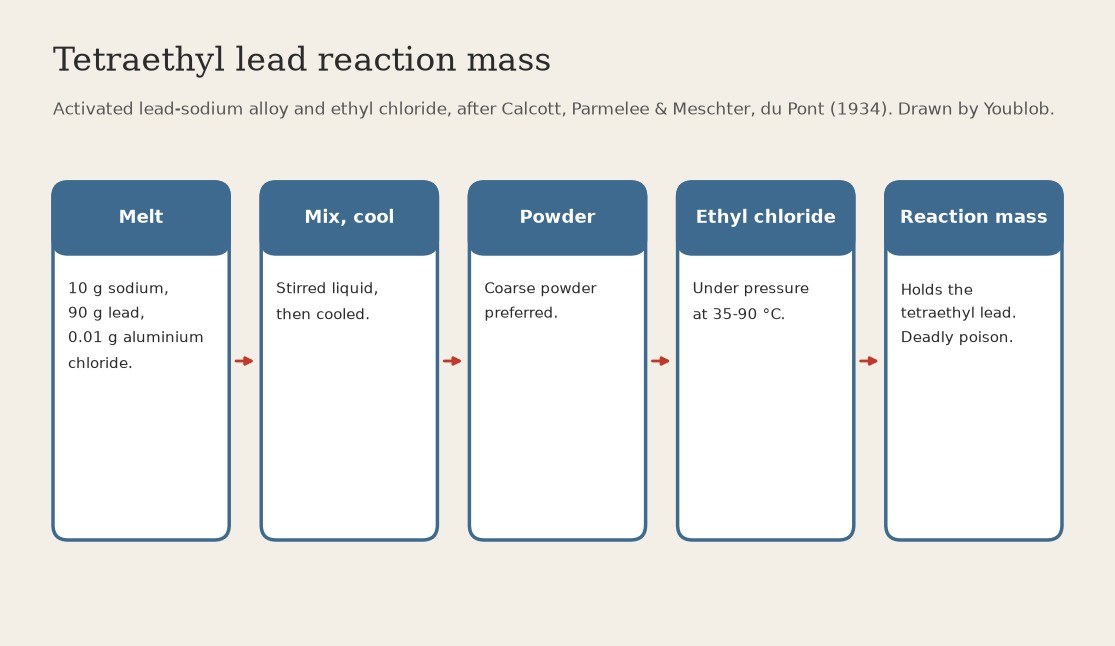
Tetraethyl Lead Reaction Mass: Lead-Sodium Alloy Activated with Aluminium Chloride, Treated with Ethyl Chloride at 35-90 °C (Calcott, du Pont, US 1,962,173)
Tetraethyl lead is made by letting ethyl chloride attack a lead-sodium alloy under pressure. Du Pont found that a trace of aluminium chloride melted into the alloy makes it react better.
Result: a reaction mass holding the tetraethyl lead, to be steam-distilled out (next blueprint).
Variable: the alloy with or without aluminium chloride. Without it, the usual practice at 35-100 °C gave about 80 % of the theoretical yield; with it the patent says the yield is higher, without a figure.
Source: Calcott, Parmelee & Meschter, US 1,962,173 (1934). Not given: pressure, amount of ethyl chloride. Danger: tetraethyl lead is a deadly poison that goes through skin; sodium burns in contact with water. Picture drawn by Youblob.
ཆེས་མཁས་པ
1 day
ཉེན་ཁ་ཅན་ནང་དོན
བིལུ་པིརིན་ཊི་འདིའི་ནང་ཉེན་ཁ་ཅན་ལག་ལེན་ཡོད། གོམ་པ་རེ་རེའི་ལམ་སྟོན་བལྟ་ནིའི་ཆེད་ནང་འཛུལ་གནང་ཞིང་ཉེན་ཁ་ཅན་ནང་དོན་ལྕོགས་གནང།
ནང་བསྐྱོད་འབད།བིལུ་པིརིན་ཊི་འདི་གིས་བཟོ་མི
འབྲེལ་ཡོད་བིལུ་པིརིན་ཊི
བིལུ་པིརིན་ཊི་འདི་ཚུ་ཐབས་ལམ་དང་རྫས་རིགས། སྤྱི་ཆོས་བགོ་བཤའ་བྱེད

ཉེན་ཁ་ཅན།
Ethyl Chloride: Hydrogen Chloride into Boiling Alcohol over Zinc Chloride (Groves 1874)
Charlie གྱིས
བཟོ་གྲྭ
༦
༠
༠
༠
༠
༠
ཉེན་ཁ་ཅན།
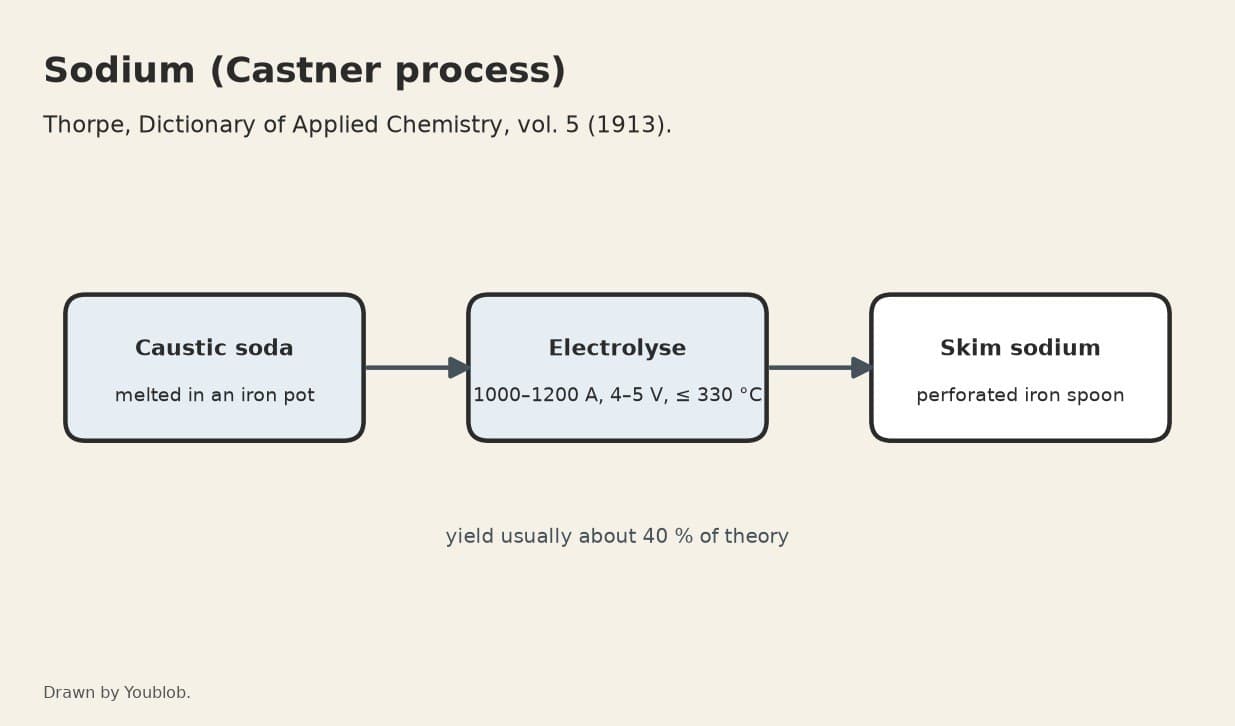
Sodium: Fused Caustic Soda Electrolysed in a Castner Cell
Charlie གྱིས
སྲོག་མེད
༡༢
༠
༠
༠
༠
༠
ཉེན་ཁ་ཅན།
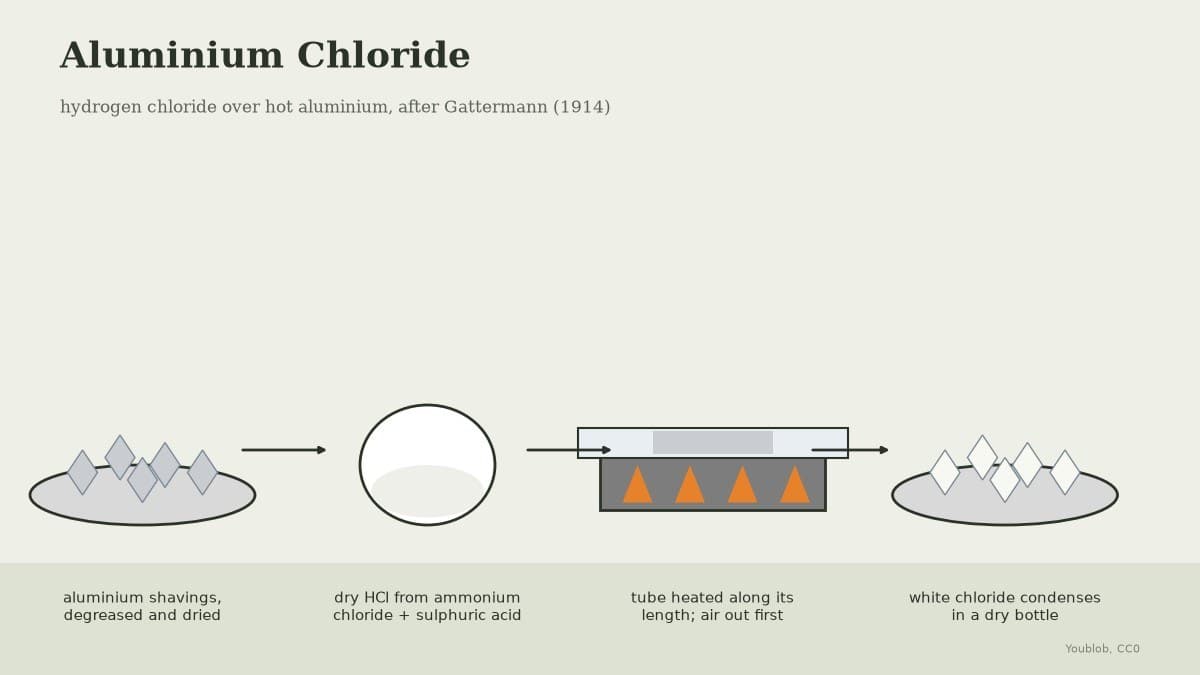
Aluminium Chloride: Hydrogen Chloride over Hot Aluminium
Charlie གྱིས
སྲོག་མེད
༡༣
༠
༠
༠
༠
༠
CC0 སྤྱི་དབང
བིལུ་པིརིན་ཊི་འདི་CC0 འོག་བཀྲམས་ཡོད། ཁྱེད་རང་གིས་ཆོག་མཆན་མ་བཞེས་པར་ཕབ་ལེན་དང་བཟོ་བཅོས། བགོ་བཤའ། དགོས་མཁོ་གང་ལའང་བཀོལ་སྤྱོད་བྱས་ཆོག
བཟོ་མཁན་ལ་རྒྱབ་སྐྱོར་བྱེད་པའི་ཆེད་ཁོང་ཚོའི་བིལུ་པིརིན་ཊི་བརྒྱུད་ཐོན་སྐྱེད་ཉོ། བཟོ་མཁན་གྱིས བཟོ་མཁན་གྱི་ཁེ་ཕོགས ཚོང་པས་གཏན་འཁེལ་བྱས་པ། ཡང་ན་བིལུ་པིརིན་ཊི་འདིའི་པར་གསར་བཟོས་ཏེ་ཁྱེད་རང་གི་བིལུ་པིརིན་ཊི་ནང་མཐུད་སྦྲེལ་བྱས་ཏེ་ཡོང་སྒོ་བགོ་བཤའ་བྱེད།