

Catcher's Mask
Armour stops a blow by being strong enough to absorb it. That works if you can carry the weight and do not need to see. A baseball catcher can do neither — a padded faceplate heavy enough to take a foul tip would be blinding, and a rigid plate pressed against the face transmits the whole impact straight into the bone behind it.
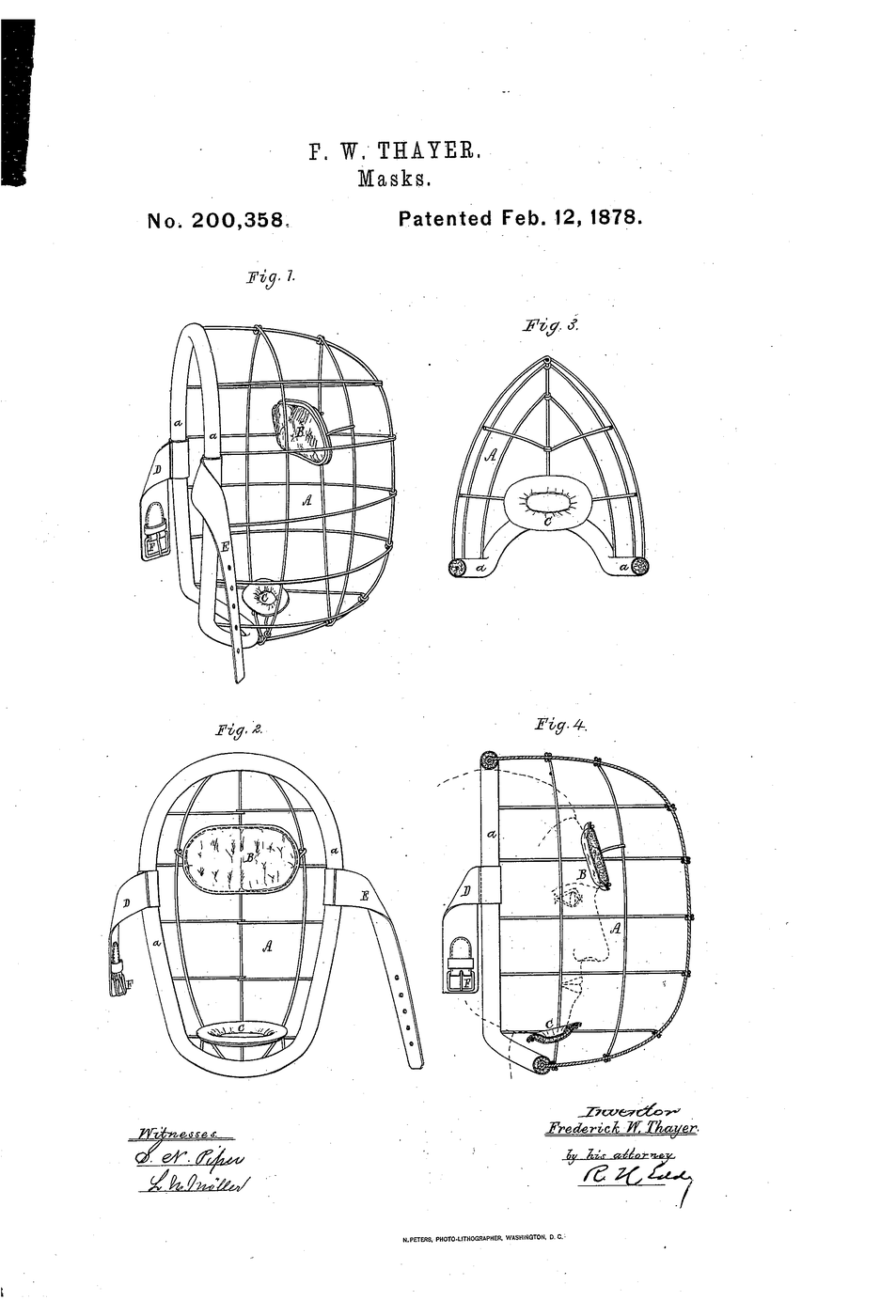
Thayer's mask does not try to absorb the ball. It deflects it, and it never touches the face. The wire cage is arched in two directions, horizontally and vertically, so a ball arriving from almost any angle meets a curved surface and glances off. And the whole cage stands away from the face on just two padded bearings — the forehead and the chin — so whatever force does arrive is carried by bone that can take it, not by the nose, teeth and eye sockets.
US Patent 200,358, modestly titled "Improvement in masks", filed 15 January 1878 and granted 12 February 1878 to Frederick W. Thayer. He describes it as a face-guard or safety-mask for base-ball players.
ལམ་སྟོན
Test on a dummy head, never on a person
Test on a dummy head, never on a person
Every impact test below uses a mounted model head. Do not wear a home-made mask and do not have anyone throw at you. Real protective equipment is certified to standards this is not.
Read US 200,358 and note the two arches
Read US 200,358 and note the two arches
Thayer specifies a cage "arched both horizontally and vertically, in order to deflect a ball when struck by it". Deflection, not absorption — that is the design premise.
Build a model head with a clay face
Build a model head with a clay face
Mount a wooden head form and cover the face with a layer of soft modelling clay. Impacts will leave measurable dents — that is your instrumentation.
གོམ་པ་འདིའི་རྫས་རིགས:
 རླུང་གིས་སྐམ་མི་འཇིམ་པ།1 དུམ་བུ།
Throw a ball at the bare face and measure
Throw a ball at the bare face and measure
Roll or lob a ball into the clay from a fixed distance. Measure the depth of the dent. This is the baseline injury.
Try a flat rigid plate held against the face
Try a flat rigid plate held against the face
Strap a flat board directly onto the clay and repeat. The clay still deforms, because a plate in contact simply passes the load through. Note that flat and touching is the wrong answer.
Bend the outer frame
Bend the outer frame
Form a stout wire into an oval frame large enough to stand clear of the whole face with room to spare.
གོམ་པ་འདིའི་རྫས་རིགས:
 གཟའ་ཏིག་བྱུགས་པའི་ལྕགས་སྐུད།2 མི་ཊར།
ལག་ཆས་དགོས་མཁོ:
 ཁ་ལེབ་ཀྱི་ལྕགས་ཀྱིབ།
Arch it vertically
Arch it vertically
Curve the frame so it bows outward from forehead to chin. A ball arriving from above now meets a slope rather than a wall.
Arch it horizontally as well
Arch it horizontally as well
Curve it side to side too, so the cage is domed in both planes. Both arches are claimed, and a mask curved only one way has a flat direction that catches square hits.
Fill in the cage bars
Fill in the cage bars
Add horizontal and vertical wires, spaced widely enough to see through and closely enough that a ball cannot pass. Bind or solder every crossing.
Check the sightlines before going further
Check the sightlines before going further
Put the cage on the model and look out through it. A catcher must track a pitch — a mask you cannot see through will not be worn, however well it protects.
Make the forehead and chin rests
Make the forehead and chin rests
Fit two padded leather bearings, one at the forehead and one under the chin. These are the only points that touch — everything between stands clear.
གོམ་པ་འདིའི་རྫས་རིགས:
 རྩི་ཤིང་གིས་བཟོ་བའི་པགས་ཀོ།1 དུམ་བུ།
Measure the standoff gap
Measure the standoff gap
Check the clearance between cage and nose. It must not close under impact — that gap is where the deformation happens instead of in the face.
Fit the head straps
Fit the head straps
Add straps that hold the two rests firmly but allow the mask to be thrown clear in one motion. A catcher discards it to chase a pop fly.
Repeat the impact test and compare
Repeat the impact test and compare
Same ball, same distance, fresh clay. Measure the dent. Then throw from three different angles and confirm the ball glances off rather than stopping dead.
History & Context — the mask they laughed at
History & Context — the mask they laughed at
The patent. US 200,358, "Improvement in masks", filed 15 January 1878 and granted 12 February 1878 to Frederick W. Thayer, captain of the Harvard baseball club. It is generally made for his catcher, James Tyng, who had to stand close behind the plate without protection.
Deflection is a completely different strategy from armour, and it is the better one here. Armour stops a projectile by absorbing its energy, which requires mass. A double-arched cage instead ensures the ball almost never strikes perpendicular to a surface, so most of its momentum is redirected rather than absorbed — the mask has to survive a glancing blow, not a square one. That is why a light wire cage works at all, and why steps 7 and 8 must both be done: a mask curved in one plane has a whole family of angles where it is effectively flat.
The standoff is the other half. Two padded bearings on the forehead and chin — both solid bone — hold the cage away from everything fragile. The nose, teeth, cheekbones and eye sockets never touch anything. Step 5 shows why contact is the problem: a rigid plate resting on the face is a very efficient way of delivering an impact to it. Every hard-shell helmet since uses the same principle of a suspended shell with standoff, and the modern catcher's mask and hockey goalie cage are recognisably Thayer's object.
It was mocked before it was adopted. Contemporary reaction treated the mask as cowardice — the terms used in the press included "rat trap" — and there was real resistance to a player protecting his face. What changed the argument was not persuasion but injury rates; catchers of the era routinely lost teeth and suffered broken noses and fractured orbits, and standing close behind the plate was a job with a short career. This is a recurring shape in protective equipment: the hard hat, the seat belt elsewhere in this batch, and the bicycle helmet all faced the same objection, and all won on the same evidence.
What it enabled, quietly. Before masks, catchers stood well back and took pitches on the bounce, which limits what a pitcher can throw and how base runners can be controlled. A protected catcher can crouch directly behind the batter — and that single change to where one player stands reshaped the pitching, catching and base-stealing of the game. The equipment did not just prevent injuries; it altered the sport.
རྫས་རིགས
3- 1 དུམ་བུ།ས་ཆ་འཛིན
- 2 མི་ཊར།ས་ཆ་འཛིན
- 1 དུམ་བུ།ས་ཆ་འཛིན
ལག་ཆས་དགོས་མཁོ
1- ས་ཆ་འཛིན
འབྲེལ་ཡོད་བིལུ་པིརིན་ཊི
བིལུ་པིརིན་ཊི་འདི་ཚུ་ཐབས་ལམ་དང་རྫས་རིགས། སྤྱི་ཆོས་བགོ་བཤའ་བྱེད

CC0 སྤྱི་དབང
བིལུ་པིརིན་ཊི་འདི་CC0 འོག་བཀྲམས་ཡོད། ཁྱེད་རང་གིས་ཆོག་མཆན་མ་བཞེས་པར་ཕབ་ལེན་དང་བཟོ་བཅོས། བགོ་བཤའ། དགོས་མཁོ་གང་ལའང་བཀོལ་སྤྱོད་བྱས་ཆོག
བཟོ་མཁན་ལ་རྒྱབ་སྐྱོར་བྱེད་པའི་ཆེད་ཁོང་ཚོའི་བིལུ་པིརིན་ཊི་བརྒྱུད་ཐོན་སྐྱེད་ཉོ། བཟོ་མཁན་གྱིས བཟོ་མཁན་གྱི་ཁེ་ཕོགས ཚོང་པས་གཏན་འཁེལ་བྱས་པ། ཡང་ན་བིལུ་པིརིན་ཊི་འདིའི་པར་གསར་བཟོས་ཏེ་ཁྱེད་རང་གི་བིལུ་པིརིན་ཊི་ནང་མཐུད་སྦྲེལ་བྱས་ཏེ་ཡོང་སྒོ་བགོ་བཤའ་བྱེད།