སྒྱུ་རྩལ
མཛེས་སྡུག་དང་བདེ་ཐང
བཟོ་རིག
རིག་གནས་དང་ལོ་རྒྱུས
དགའ་སྟོན
ཁོར་ཡུག
ཟས་དང་བཏུང་རྫས
ཕྱིར་འཕྲུལ་རིག
ཚན་རིག
རྩེད་འགྲན
རིག་རྩལ
གྱོན་རུང
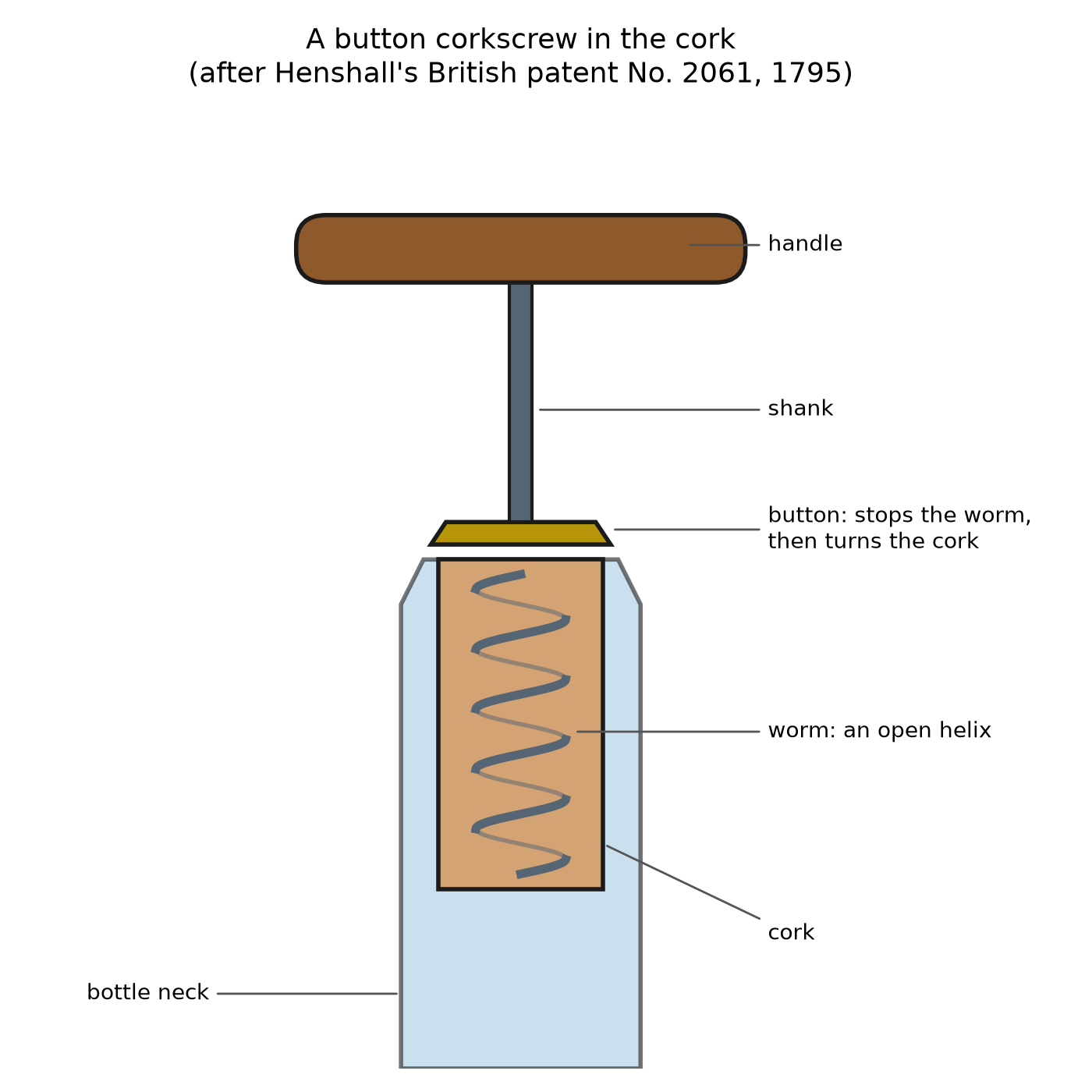
Youblob (drawn diagram, draw_corkscrew.py) · CC0


The Button Corkscrew: A Helix That Grips and a Disc That Stops It
A cork is squeezed into a bottle neck so hard that pulling it out by a simple worm takes a strong arm — and a worm driven too far pierces the cork and pushes crumbs into the wine. Samuel Henshall, an English clergyman, took out British patent No. 2061 on 24 August 1795 for a corkscrew with a button: a concave disc fixed between the worm and the shank. The button stops the worm once it is deep enough, and turning on past that point twists the whole cork in the neck, breaking its hold on the glass before it is pulled. Matthew Boulton's works in Birmingham made it.
This rung works out the worm's turns and grip and the force a pull needs, and makes and tests a button corkscrew.
འགོ་བཙུགས
About 2 hours
ལམ་སྟོན
1
1
Worm pitch, grip and pulling force
Worm pitch, grip and pulling force
Jupyter ཚང་དེབ་མངོན་གསལ་འབད་དོ་…
2
2
The helix underneath it
The helix underneath it
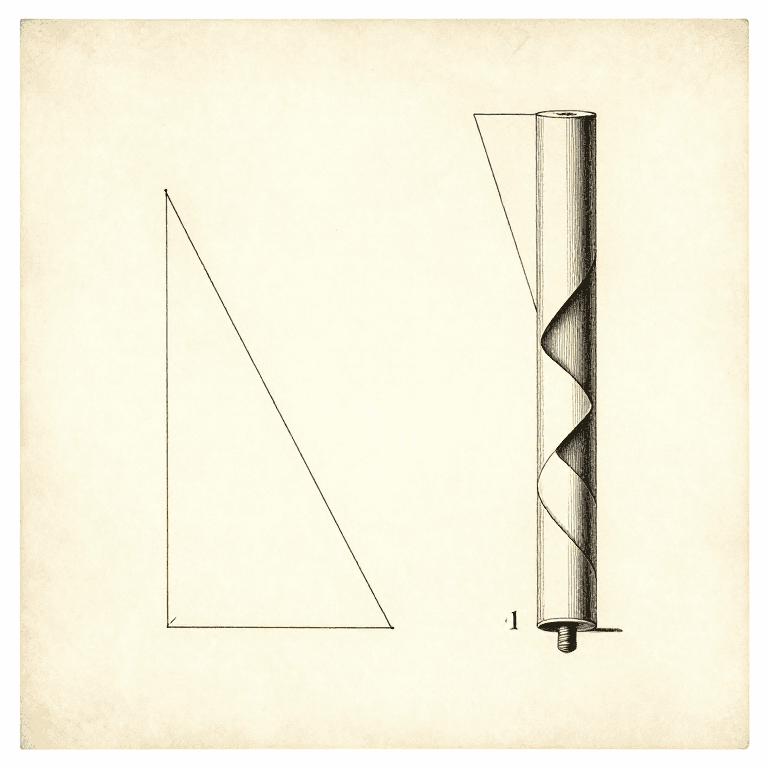
A corkscrew worm is a helix with nothing inside it. The embedded blueprint shows the helix as a ramp wrapped round a cylinder.
3
3
Make a worm and a button
Make a worm and a button
Wind 2 mm spring steel wire round a 6 mm rod held in a vice, five turns at an 8 mm pitch — set the pitch by winding over a spacer strip. Grind the free end to a point on the outside of the helix so it follows the helix, not the centre. Leave a straight tail as the shank.
For the button, drill a 20 mm steel washer to fit the shank and file its underside slightly concave with abrasive paper wrapped round a rod. Slide it down to where the worm starts and solder it in place. Fit a wooden handle across the top of the shank.
གོམ་པ་འདིའི་རྫས་རིགས:
 སྤིང་ལྕགས་ཀྱི་སྐུད་པ།1 དུམ་བུ།
 ལེབ་ཏོག་ཏོའི་ཝཱ་ཤར།1 དུམ་བུ།
 ཤིང་སྲ་གི་ཕུར་པ།1 དུམ་བུ།
 གསའ-ཞ་ཡི་ལྷ་ཡིག1 དུམ་བུ།
ལག་ཆས་དགོས་མཁོ:
 ལས་ཅོག་གི་འཛིན་ཆས།
 ཐག་མེད་ཕུག་འཕྲུལ།
 ཕུག་མགོའི་ཚོགས་ཆས།
 བྱེ་ཤོག་གི་ཆ་ཚན།
 ཞ་བཏབ་ནིའི་ལྕགས།
 ཀོ་བའི་ལས་ལག་ཤུབས།
 གསལ་བའི་ཉེན་སྲུང་མིག་ཤེལ།
4
4
Measure the pull, with and without the twist
Measure the pull, with and without the twist
Recork several empty wine bottles with new corks of the same kind, using a hand corker, and let them stand a day.
On the first, drive the worm in until the button touches, stop, and pull straight up with a spring scale hooked to the handle: read the peak force. On the next, drive it in until the button touches, then turn two more turns so the cork rotates in the neck, and pull again. Compare the peak forces. Compare also with a commercial corkscrew.
གོམ་པ་འདིའི་རྫས་རིགས:
 ཤིང་ཤུན་གྱི་ཁ་རྒྱབ།6 དུམ་བུ།
 རྒུན་ཆང་གི་ཤེལ་དམ་ཁ་རྒྱབ་ཆས་ཆ།1 དུམ་བུ།
 ཀོག་ཀི་འདོན་ཆས1 དུམ་བུ།
ལག་ཆས་དགོས་མཁོ:
 ཤུགས་འཇལ་ཆས་ (སི་པིརིང་སྲང)
5
5
A cork that will not come out cleanly
A cork that will not come out cleanly
Cork removal problems.
Flow
Loading...
6
6
History and honest limits
History and honest limits
**Samuel Henshall** was granted **British patent No. 2061** on 24 August 1795 — the first patent for a corkscrew. Matthew Boulton made Henshall's corkscrews at Soho, Birmingham, marked "Obstando Promoves". Later designs added threads, levers and wings to take the effort out of the pull.
**Honest limits.** The cork pressure and friction in the notebook are illustrative; measure your own pulls. The patent itself is not in the patent databases used for this programme; its details here come from museum and patent-office sources.
རྫས་རིགས
7- 1 དུམ་བུ།ས་ཆ་འཛིན
- 1 དུམ་བུ།ས་ཆ་འཛིན
- 1 དུམ་བུ།ས་ཆ་འཛིན
- 1 དུམ་བུ།ས་ཆ་འཛིན
- 6 དུམ་བུ།ས་ཆ་འཛིན
- 1 དུམ་བུ།ས་ཆ་འཛིན
- ཀོག་ཀི་འདོན་ཆསཁེ་ཕོགས 10%1 དུམ་བུ།ས་ཆ་འཛིན
ལག་ཆས་དགོས་མཁོ
8- ས་ཆ་འཛིན
- 1 vendor sell this, none ship to you yetས་ཆ་འཛིན
- ས་ཆ་འཛིན
- ས་ཆ་འཛིན
- ཞ་བཏབ་ནིའི་ལྕགས།ཁེ་ཕོགས 10%Magento Legacy Storeships internationallyས་ཆ་འཛིན
- ས་ཆ་འཛིན
- ས་ཆ་འཛིན
- ས་ཆ་འཛིན
འབྲེལ་ཡོད་བིལུ་པིརིན་ཊི
བིལུ་པིརིན་ཊི་འདི་ཚུ་ཐབས་ལམ་དང་རྫས་རིགས། སྤྱི་ཆོས་བགོ་བཤའ་བྱེད


CC0 སྤྱི་དབང
བིལུ་པིརིན་ཊི་འདི་CC0 འོག་བཀྲམས་ཡོད། ཁྱེད་རང་གིས་ཆོག་མཆན་མ་བཞེས་པར་ཕབ་ལེན་དང་བཟོ་བཅོས། བགོ་བཤའ། དགོས་མཁོ་གང་ལའང་བཀོལ་སྤྱོད་བྱས་ཆོག
བཟོ་མཁན་ལ་རྒྱབ་སྐྱོར་བྱེད་པའི་ཆེད་ཁོང་ཚོའི་བིལུ་པིརིན་ཊི་བརྒྱུད་ཐོན་སྐྱེད་ཉོ། བཟོ་མཁན་གྱིས བཟོ་མཁན་གྱི་ཁེ་ཕོགས ཚོང་པས་གཏན་འཁེལ་བྱས་པ། ཡང་ན་བིལུ་པིརིན་ཊི་འདིའི་པར་གསར་བཟོས་ཏེ་ཁྱེད་རང་གི་བིལུ་པིརིན་ཊི་ནང་མཐུད་སྦྲེལ་བྱས་ཏེ་ཡོང་སྒོ་བགོ་བཤའ་བྱེད།