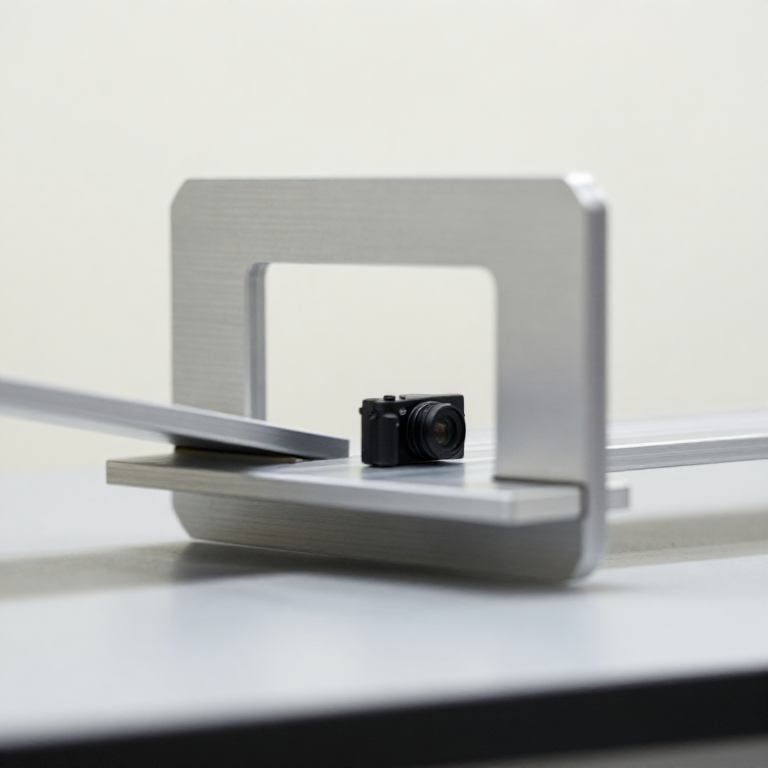

The Camera Slider
A camera that moves tells a different story from one that does not. A slow lateral track across a static scene produces parallax — near objects sweep past faster than far ones — and parallax is the strongest depth cue a flat image has. That is why the shot reads as three-dimensional in a way a zoom never does.
The engineering problem is not making the camera move. It is making it move smoothly enough. A camera is a lever arm on top of a carriage, so any play in the bearings is multiplied by the height of the camera above the rail and again by the focal length of the lens. A tenth of a millimetre of rock at the carriage becomes a visible jolt on screen.
So the whole design is about constraint. A carriage on a rail should have exactly one degree of freedom left — along the rail — and every other motion should be removed. Two parallel rails with paired bearings do that; one rail with one bearing does not, because nothing stops it rotating.
The second requirement is constant velocity. A human hand accelerates and decelerates unevenly, and the eye is very good at spotting it. Adding drag, mass, or a slow drive makes the motion smoother by making it harder to change.
Build one, film a test, and measure the wobble frame by frame.
ལམ་སྟོན
Set the rails parallel — and prove it
Set the rails parallel — and prove it
Mount two linear rails on a rigid base. Measure the gap between them at five points along the length and adjust until the readings agree to within a few hundredths of a millimetre.
Do not trust the extrusion to be straight.
Non-parallel rails bind at one end and rattle at the other, and no amount of bearing quality fixes a base that is not true.
གོམ་པ་འདིའི་རྫས་རིགས:
 ཐིག་ཕྲང་ལྕགས་ལམ་ཆ་ཚང (MGN12H)1 ཡོ་བྱད་ཚན།
 ཨལུ་མི་ནི་ཡམ་འཐེན་བཟོའི་རྣམ་པ། (T-གཤོང་ཅན།)1 དུམ་བུ།
ལག་ཆས་དགོས་མཁོ:
 ཨང་རྟགས་ཚད་འཇལ་ཆས་ ཨིནཅི 6
Build the carriage with four bearings, not two
Build the carriage with four bearings, not two
Fit two bearings per rail, spaced as far apart along the rail as the carriage allows, and bolt them to a rigid plate.
Add the camera mount on the plate's centreline.
Bearing spacing is what resists pitching. Two bearings close together on one rail leave the carriage free to rock; the same two spread wide turn that rocking into a couple the bearings can resist.
གོམ་པ་འདིའི་རྫས་རིགས:
 ཐིག་ཕྲང་བེ་རིང་ཆ་ཚང (LM8UU)1 སྒྲིལ་ཐུམ།
ལག་ཆས་དགོས་མཁོ:
 ཐག་མེད་ཕུག་འཕྲུལ།
Measure the play you actually have
Measure the play you actually have
Clamp the base. Push the carriage sideways, twist it, and lift one corner, measuring the movement at the camera mounting point each time.
Then repeat the measurement at the top of a mounted camera.
Expect the figure at camera height to be several times larger.
Play is angular, so it grows with height. This is why a tall rig on a short carriage is always worse than the bearing spec suggests.
ལག་ཆས་དགོས་མཁོ:
ཨང་རྟགས་ཚད་འཇལ་ཆས་ ཨིནཅི 6 ཤུགས་འཇལ་ཆས་ (སི་པིརིང་སྲང)
Add drag, and measure what it buys
Add drag, and measure what it buys
Film a slow pan by hand, then add controlled friction — a felt pad, a light brake, or a fluid damper — and film again with the same timing.
Step through both clips frame by frame and record the position of one high-contrast feature.
Plot position against frame number.
Expect the damped run to be closer to a straight line. Drag does not make the motion smooth; it makes irregularity expensive.
ལག་ཆས་དགོས་མཁོ:
 ཆུ་ཚོད་བཀག་ཆས།
 ཐིག་ཁྲམ་ཤོག་ཀུ།
Level it, because gravity is a drive system
Level it, because gravity is a drive system
Put the slider on a slope and try a move in each direction. Then level it with a spirit level and repeat.
Expect uphill and downhill moves to be visibly different on a slope, and to match once level.
A slider on a tripod is almost never level, and an unnoticed slope is the commonest reason a move that felt smooth reads as accelerating on screen.
ལག་ཆས་དགོས་མཁོ:
 ཆུ་ཚད་འཇལ་ཆས།
Find the shot the slider is for
Find the shot the slider is for
Film the same subject three ways: static, zoomed in slowly, and slid slowly sideways with a foreground object close to the lens.
Compare.
Expect the slide with foreground to read as markedly more three-dimensional, and the zoom to read as flat.
The depth comes from parallax, and parallax needs something near the camera to move against. A slider pointed at a distant landscape produces almost nothing.
Compendium — motion, constraint and where sliders came from
Compendium — motion, constraint and where sliders came from
The slider is a small descendant of the dolly. Camera movement in cinema was originally achieved by putting the camera and operator on a wheeled platform running on laid track — literally rails, levelled with wedges, exactly as a railway is. Everything a slider does is that idea shrunk to a metre and one axis, and the vocabulary comes with it: a dolly moves the camera, a truck moves it laterally, a pan only rotates it. The distinction matters because only the first two produce parallax.
Why constraint is the design principle. A rigid body has six degrees of freedom. A slider's job is to remove five and leave one, and every mechanism that does this well does it by exact constraint — enough contact points to remove the unwanted motions and no more. Over-constraining is its own failure: three rails instead of two guarantees binding, because no three rails are ever perfectly parallel. Two rails and four bearings is not a compromise; it is the correct number.
What a motor adds beyond smoothness. A driven slider gives repeatability — the same move twice, which enables compositing two takes — and it enables time-lapse with motion, where the carriage advances a tiny step between frames. That second use is why motorised sliders exist at all in stills work; a move too slow to perform by hand is trivial for a stepper motor taking one step per exposure.
Honest limits. A slider adds one axis and nothing else — it cannot follow a subject, and combined with a pan it is easy to produce a move that reads as neither. Rails collect grit, and a single hard particle in a recirculating ball bearing is felt for the rest of the rail's life, so a wipe before and after use is not fussiness. Longer rails sag under load in the middle, which shows up as a slow vertical drift through the shot. And the whole rig is only as stable as the tripod under it — a good slider on a light tripod is a worse result than a mediocre slider on a heavy one.
རྫས་རིགས
3- 1 ཡོ་བྱད་ཚན།ས་ཆ་འཛིན
- ས་ཆ་འཛིན
- 1 སྒྲིལ་ཐུམ།ས་ཆ་འཛིན
ལག་ཆས་དགོས་མཁོ
6- ས་ཆ་འཛིན
- 1 vendor sell this, none ship to you yetས་ཆ་འཛིན
- ས་ཆ་འཛིན
- ས་ཆ་འཛིན
- ས་ཆ་འཛིན
- ས་ཆ་འཛིན
མཐུད་སྦྲེལ་བིལུ་པིརིན་ཊི་རྫས་རིགས
འབྲེལ་ཡོད་བིལུ་པིརིན་ཊི
བིལུ་པིརིན་ཊི་འདི་ཚུ་ཐབས་ལམ་དང་རྫས་རིགས། སྤྱི་ཆོས་བགོ་བཤའ་བྱེད
CC0 སྤྱི་དབང
བིལུ་པིརིན་ཊི་འདི་CC0 འོག་བཀྲམས་ཡོད། ཁྱེད་རང་གིས་ཆོག་མཆན་མ་བཞེས་པར་ཕབ་ལེན་དང་བཟོ་བཅོས། བགོ་བཤའ། དགོས་མཁོ་གང་ལའང་བཀོལ་སྤྱོད་བྱས་ཆོག
བཟོ་མཁན་ལ་རྒྱབ་སྐྱོར་བྱེད་པའི་ཆེད་ཁོང་ཚོའི་བིལུ་པིརིན་ཊི་བརྒྱུད་ཐོན་སྐྱེད་ཉོ། བཟོ་མཁན་གྱིས བཟོ་མཁན་གྱི་ཁེ་ཕོགས ཚོང་པས་གཏན་འཁེལ་བྱས་པ། ཡང་ན་བིལུ་པིརིན་ཊི་འདིའི་པར་གསར་བཟོས་ཏེ་ཁྱེད་རང་གི་བིལུ་པིརིན་ཊི་ནང་མཐུད་སྦྲེལ་བྱས་ཏེ་ཡོང་སྒོ་བགོ་བཤའ་བྱེད།