སྒྱུ་རྩལ
མཛེས་སྡུག་དང་བདེ་ཐང
བཟོ་རིག
རིག་གནས་དང་ལོ་རྒྱུས
དགའ་སྟོན
ཁོར་ཡུག
ཟས་དང་བཏུང་རྫས
ཕྱིར་འཕྲུལ་རིག
ཚན་རིག
རྩེད་འགྲན
རིག་རྩལ
གྱོན་རུང


The Ice-Hammer Lemon Squeezer: Hammer, Pick, Squeezer and Nutcracker in One
A bar needs an ice hammer, an ice pick and a lemon squeezer, and each lies somewhere different when an order comes.
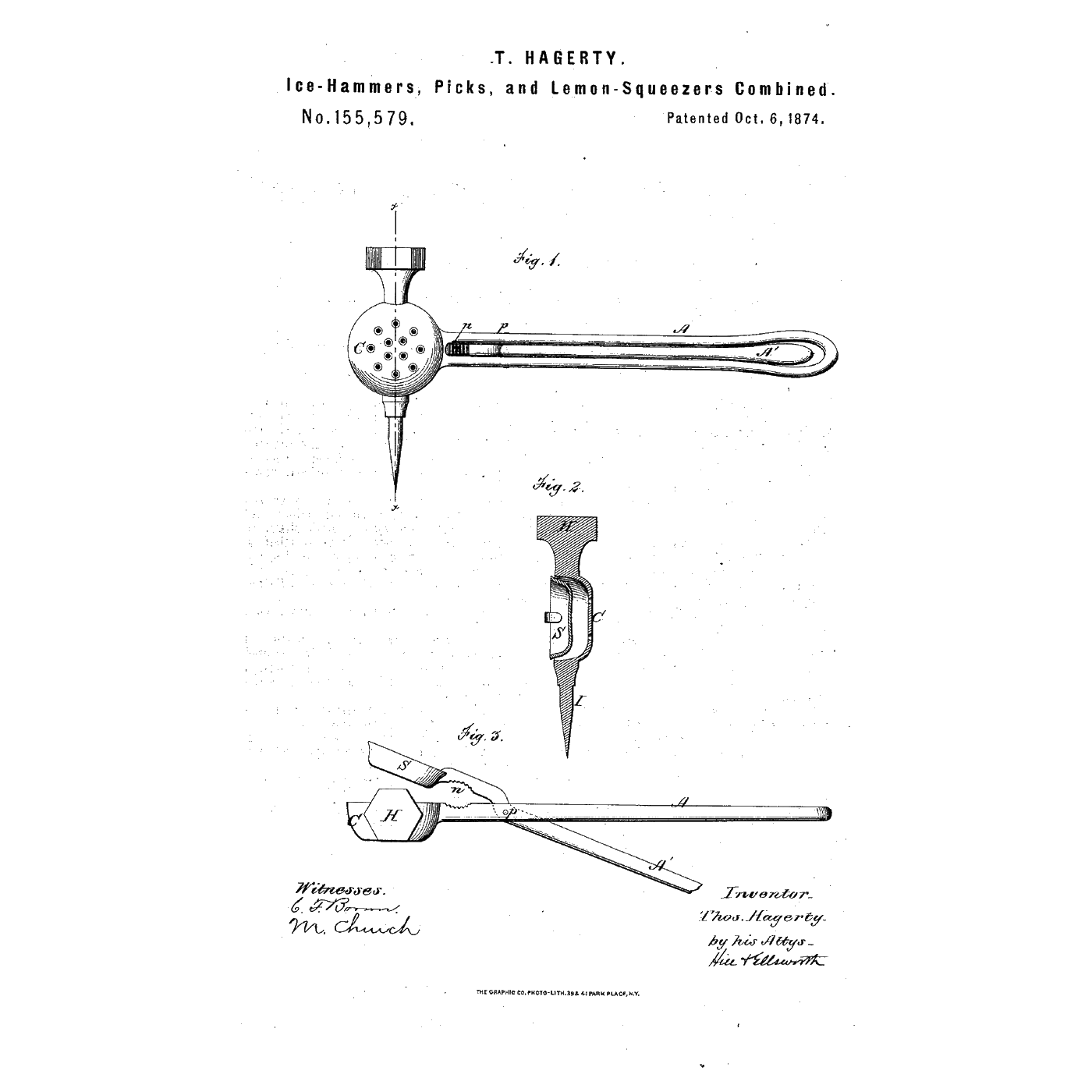
Thomas Hagerty of Richmond, Virginia, received US 155,579, dated 6 October 1874, "to combine in one simple and convenient instrument, an ice-hammer, an ice-pick, and a lemon-squeezer": two pivoted handles, one ending in a perforated cup and the other in a squeezer that fits into it, with a hammer head on one edge of the cup and a pick on the other, and corrugated recesses at the pivot that form a nutcracker.
This rung works out why the pick splits ice where the hammer crushes it, then forges the tool from flat bar with a punched cup, a hammer block and a pick, and tries all four jobs.
མཐོ་རིམ
About 5 hours
ལམ་སྟོན
1
1
Pick against hammer
Pick against hammer
Jupyter ཚང་དེབ་མངོན་གསལ་འབད་དོ་…
2
2
A squeezer before it
A squeezer before it
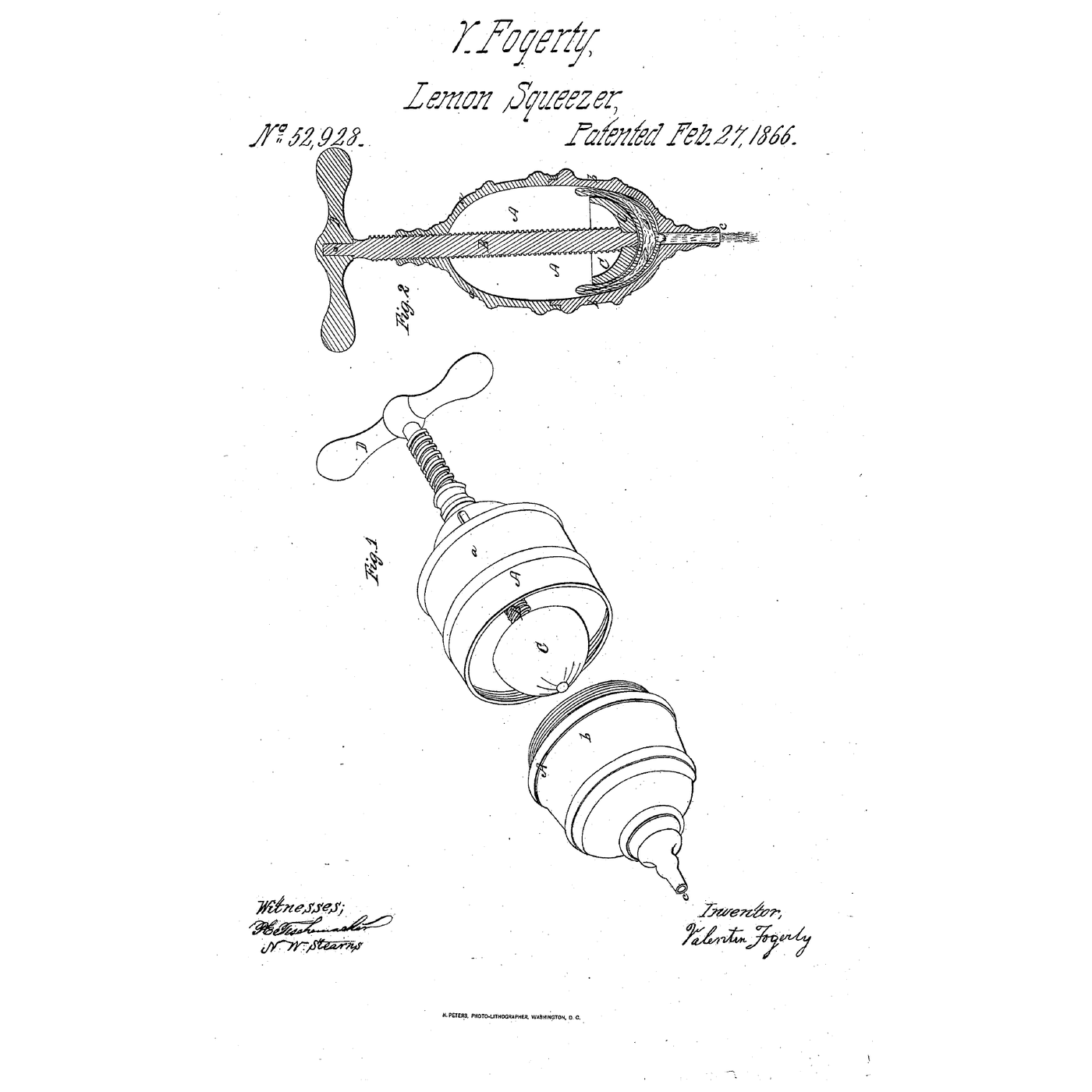
The embedded blueprint squeezes with a screw. Hagerty's is a pair of pivoted handles, and the same tool breaks the ice for the drink.
3
3
Read US 155,579
Read US 155,579
"In the drawings, A A′ are the handles, one being slotted laterally to accommodate the other, and the two being pivoted together at p, and, if preferred, recessed and corrugated at n, to form a nut-cracker. The front end of one of the handles is expanded into a cup, C, perforated to allow the lemon-juice to escape."
"The hammer-head H is attached to one edge, and the ice-pick I to the other edge, of the cup, as represented."
4
4
Make the tool and try its four jobs
Make the tool and try its four jobs
**Handles.** Cut two 30 cm lengths of 20 × 5 mm mild steel flat bar. Drill both for an M6 pivot bolt 6 cm from one end and file matching grooves across both, just behind the pivot, as the nutcracker.
**Cup and squeezer.** Cut the bottom 3 cm off a small clean tin can, punch holes in its base with a nail, and rivet it to the end of one handle. Cut a disc of steel a little smaller than the cup from the can's lid, rivet it to the other handle so it presses into the cup.
**Hammer and pick.** Rivet a hardwood block to one side of the cup as the hammer head. Heat a 10 cm length of steel rod, forge one end to a point, file the tip round, and rivet it to the opposite side.
**Test.** Squeeze half a lemon and weigh the juice. Crack a walnut in the grooves. Tap a block of ice with the hammer and with the pick at the same force and compare what each does.
གོམ་པ་འདིའི་རྫས་རིགས:
 ལྕགས་འཇམ་གྱི་ལེབ་ཤིང་།0.6 མི་ཊར།
 ཟངས་སྐྱ་གི་སྒྲོམ1 དུམ་བུ།
 ལྕགས་འཇམ་གྱི་དབྱུག་ཟླུམ།0.1 མི་ཊར།
 སྲ་བའི་ཤིང་གི་སྒོ་རྡོག1 དུམ་བུ།
 ཟུར་དྲུག་སྐྱོགས་ཤིང་གི་བསྡུ་ཚན།1 དུམ་བུ།
 ཟུར་དྲུག་གི་ནཊ།2 དུམ་བུ།
 འཐེན་གཟེར8 དུམ་བུ།
 ཟླུམ་ཚ1 དུམ་བུ།
 ཝཱལ་ནཊ1 དུམ་བུ།
 འཁྱག་རོམ་གྱི་གྲུ་བཞི།1 དུམ་བུ།
ལག་ཆས་དགོས་མཁོ:
 ལྕགས་གཏུབ་སོག་ལེ།
 ཐག་མེད་ཕུག་འཕྲུལ།
 ཕུག་མགོའི་ཚོགས་ཆས།
 བཤེར་ཆས (ལག་པའི་བཤེར་ཆས)
 པོ་རོ་པེན་གྱི་མེ་ལྕེ།
 མགར་བའི་རྡོ་ལེབ།
 ཐོ་བ།
ཐོ་བ། ལས་ཅོག་གི་འཛིན་ཆས།
 གཟེར་འཕེན་མདའ་ཆས་ཀྱི་ཆ་ཚང་
 གཟེར་བུ
 ལྕགས་ལེབ་གཏུབ་ནིའི་ཇེམ་ཙི།
 ཚད་བསྒྱུར་ཚུགས་པའི་མཐེབ་ལྕགས།
 ཨང་རྟགས་ཐབ་ཚང་སྲང་།
 འཁྱག་རོམ་རྡུང་ཆས།
 ཀོ་བའི་ལས་ལག་ཤུབས།
 གསལ་བའི་ཉེན་སྲུང་མིག་ཤེལ།
5
5
A bar tool that bends, slips or will not squeeze
A bar tool that bends, slips or will not squeeze
Ice-hammer lemon squeezer troubleshooting.
Flow
Loading...
6
6
History and honest limits
History and honest limits
**Thomas Hagerty** of Richmond, Henrico County, Virginia, filed US 155,579 on 16 July 1874; it is dated 6 October 1874. He wanted the tool of malleable or wrought iron, the inside of the cup and the squeezer tinned or enamelled, and offered a blade in place of the pick. His claims cover the cup and squeezer on crossed pivoted handles, and the same squeezer with a hammer and pick.
**Honest limits.** Flat bar, a tin-can cup, a riveted hardwood hammer and a forged rod stand in for his iron tool. The notebook compares contact areas only, not the ice's strength; its force and sizes are examples. Your trials are the result.
རྫས་རིགས
10- 0.6 མི་ཊར།ས་ཆ་འཛིན
- 1 དུམ་བུ།ས་ཆ་འཛིན
- 0.1 མི་ཊར།ས་ཆ་འཛིན
- 1 དུམ་བུ།ས་ཆ་འཛིན
- 1 དུམ་བུ།ས་ཆ་འཛིན
- 2 དུམ་བུ།ས་ཆ་འཛིན
- 8 དུམ་བུ།ས་ཆ་འཛིན
- 1 དུམ་བུ།ས་ཆ་འཛིན
- 1 དུམ་བུ།ས་ཆ་འཛིན
- 1 དུམ་བུ།ས་ཆ་འཛིན
ལག་ཆས་དགོས་མཁོ
16- ས་ཆ་འཛིན
- 1 vendor sell this, none ship to you yetས་ཆ་འཛིན
- ས་ཆ་འཛིན
- ས་ཆ་འཛིན
- ས་ཆ་འཛིན
- ས་ཆ་འཛིན
- ས་ཆ་འཛིན
- ས་ཆ་འཛིན
- ས་ཆ་འཛིན
- ས་ཆ་འཛིན
- ས་ཆ་འཛིན
- ས་ཆ་འཛིན
- ས་ཆ་འཛིན
- ས་ཆ་འཛིན
- ས་ཆ་འཛིན
- ས་ཆ་འཛིན
འབྲེལ་ཡོད་བིལུ་པིརིན་ཊི
བིལུ་པིརིན་ཊི་འདི་ཚུ་ཐབས་ལམ་དང་རྫས་རིགས། སྤྱི་ཆོས་བགོ་བཤའ་བྱེད



CC0 སྤྱི་དབང
བིལུ་པིརིན་ཊི་འདི་CC0 འོག་བཀྲམས་ཡོད། ཁྱེད་རང་གིས་ཆོག་མཆན་མ་བཞེས་པར་ཕབ་ལེན་དང་བཟོ་བཅོས། བགོ་བཤའ། དགོས་མཁོ་གང་ལའང་བཀོལ་སྤྱོད་བྱས་ཆོག
བཟོ་མཁན་ལ་རྒྱབ་སྐྱོར་བྱེད་པའི་ཆེད་ཁོང་ཚོའི་བིལུ་པིརིན་ཊི་བརྒྱུད་ཐོན་སྐྱེད་ཉོ། བཟོ་མཁན་གྱིས བཟོ་མཁན་གྱི་ཁེ་ཕོགས ཚོང་པས་གཏན་འཁེལ་བྱས་པ། ཡང་ན་བིལུ་པིརིན་ཊི་འདིའི་པར་གསར་བཟོས་ཏེ་ཁྱེད་རང་གི་བིལུ་པིརིན་ཊི་ནང་མཐུད་སྦྲེལ་བྱས་ཏེ་ཡོང་སྒོ་བགོ་བཤའ་བྱེད།