སྒྱུ་རྩལ
མཛེས་སྡུག་དང་བདེ་ཐང
བཟོ་རིག
རིག་གནས་དང་ལོ་རྒྱུས
དགའ་སྟོན
ཁོར་ཡུག
ཟས་དང་བཏུང་རྫས
ཕྱིར་འཕྲུལ་རིག
ཚན་རིག
རྩེད་འགྲན
རིག་རྩལ
གྱོན་རུང


Locking Pliers: A Grip That Holds Itself
Ordinary pliers grip only while the hand squeezes. Locking pliers grip, lock, and stay locked when you let go — a portable vise.
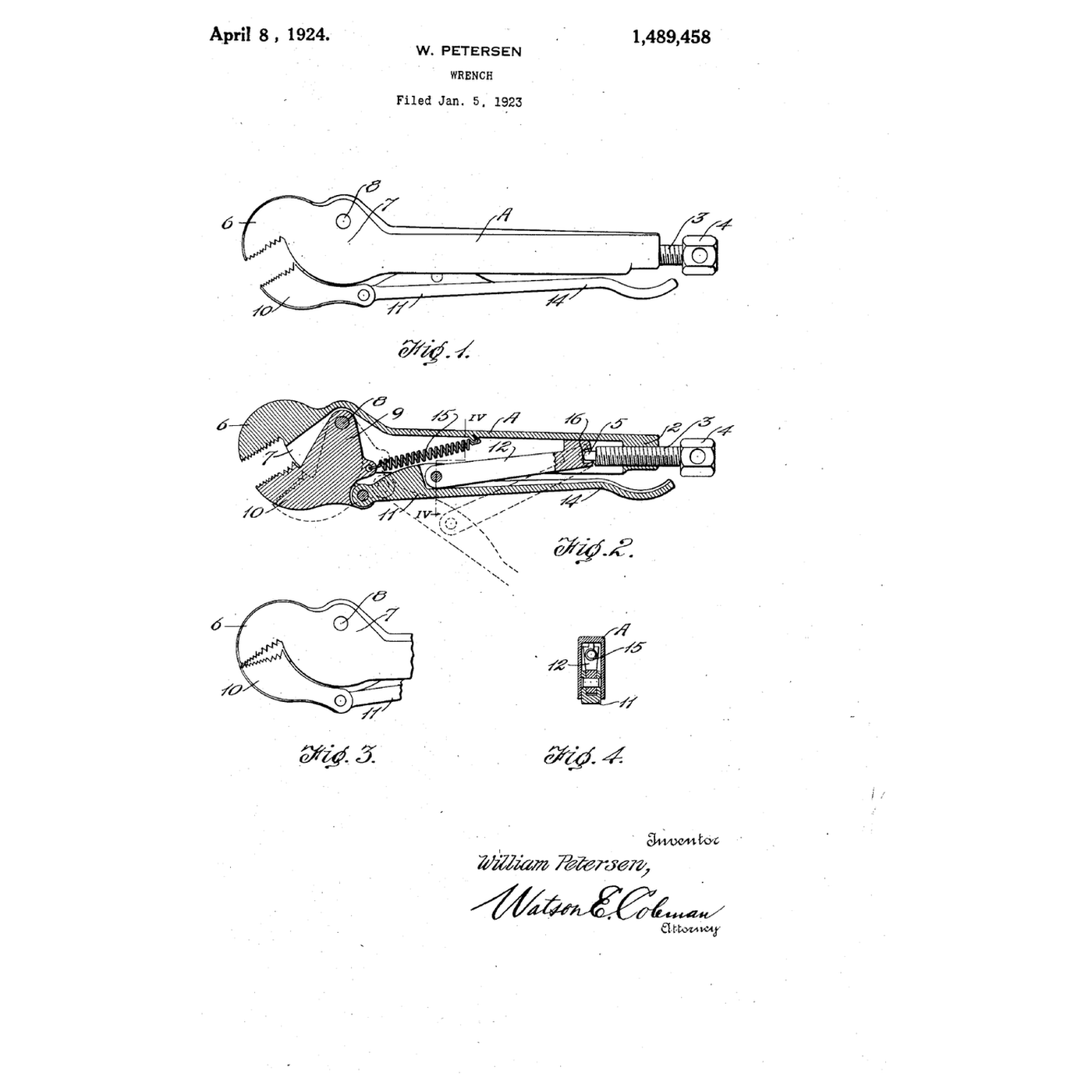
William Petersen of De Witt, Nebraska, assignor of one-half to Jules A. Bibe, filed US 1,489,458 on 5 January 1923; it was granted on 8 April 1924. A channel-section handle carries a stationary jaw; the movable jaw pivots on a pin and is closed by an "articulated lever" of two sections bearing on the point of a screw threaded through the end of the handle. A spring opens the jaw. With the operating handle swung "beyond center" and the screw adjusted, the tool holds "with the grip of a vise".
This rung works out the toggle's force as it straightens, sets the grip with the screw, and tests it.
འགོ་བཙུགས
About 2 hours
ལམ་སྟོན
1
1
Toggle force through centre
Toggle force through centre
Jupyter ཚང་དེབ་མངོན་གསལ་འབད་དོ་…
2
2
The same over-centre lock on a bench
The same over-centre lock on a bench
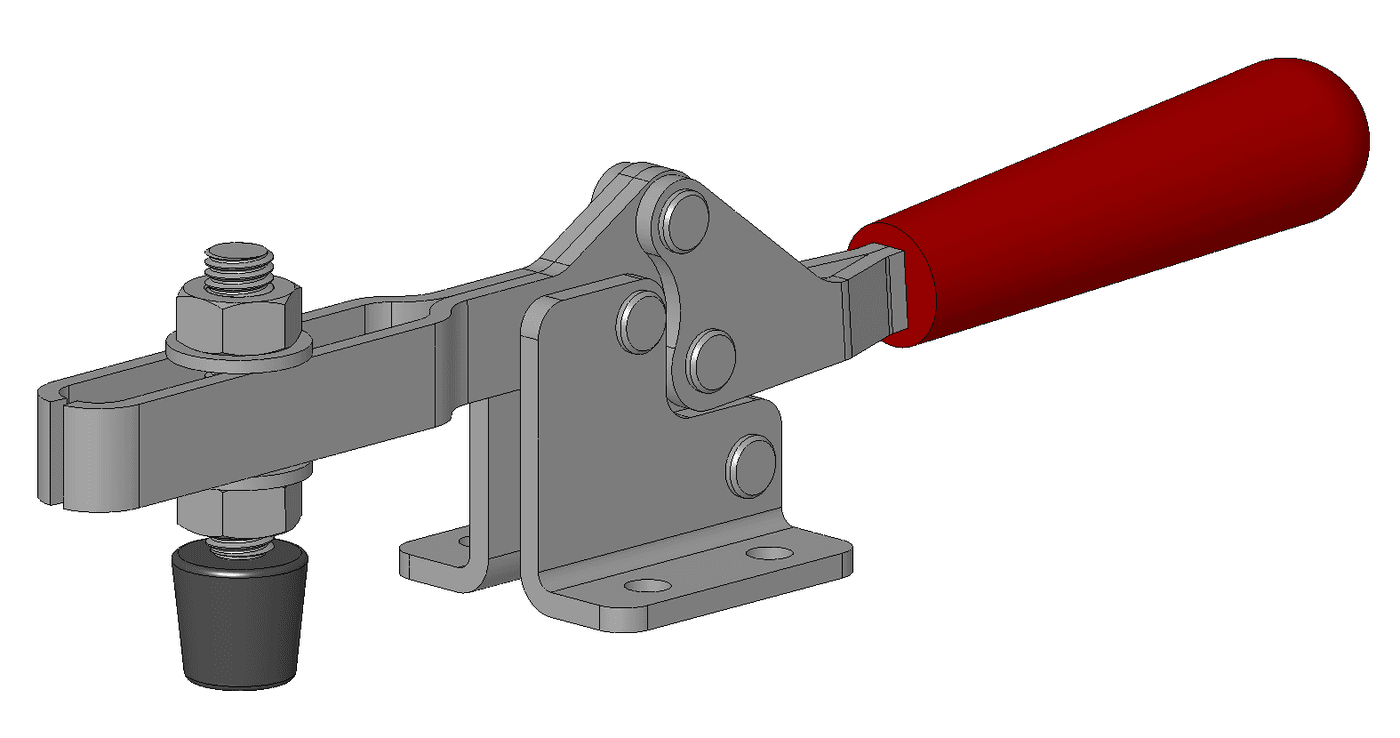
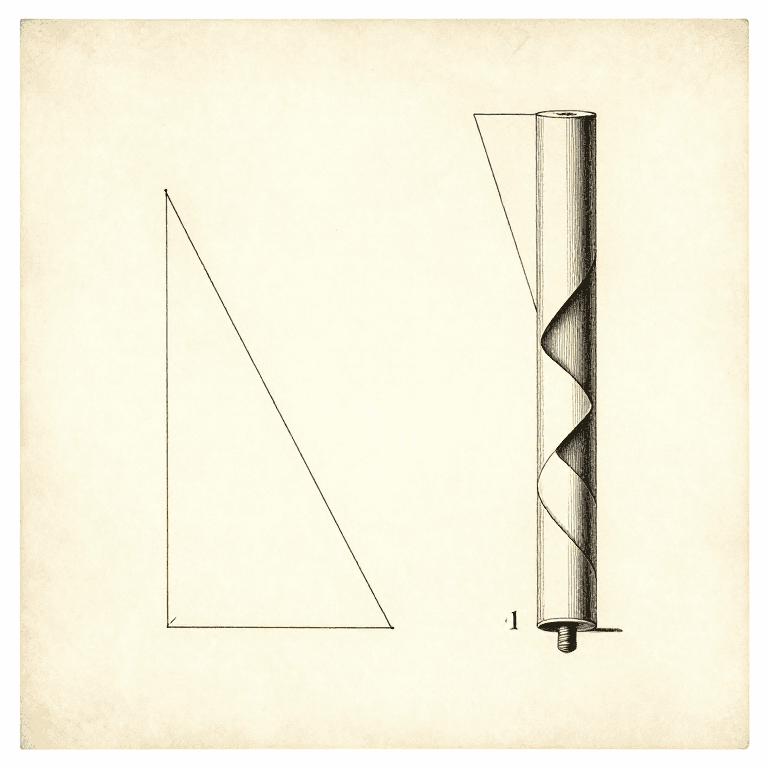
The toggle clamp uses the same two-link lock to hold work flat. The embedded blueprint explains the geometry.
3
3
Read US 1,489,458
Read US 1,489,458
Petersen's handle A is "of channel formation" with its outer end closed, and a shank 3 threaded through that end with a head 4 for turning it and a point 5 inside. The stationary jaw 6 at the other end has its working face at "approximately 22½ degrees" to the handle. The movable jaw 10 pivots on a pin 8.
Section 11 of the articulated lever pivots on the movable jaw and is "extended to provide an operating handle 14"; section 12 reaches into the handle, where a pocket 16 in its end receives the point 5 of the shank. Pressing the lever forces the movable jaw toward the stationary one. A coil spring 15 opens the jaw again, "so that my improved tool may be employed with substantially the same convenience and the effectiveness as a ratchet wrench."
Turning the shank moves the lever's fulcrum and so sets the jaw opening. The patent says the tool "can be engaged with the work with the grip of a vise and particularly when the operating handle 14 has been swung outward and the handle A is beyond center and the shank 3 adjusted to further force the jaw 10 into engagement with the work". It is meant to serve as pliers, ratchet wrench and pipe wrench.
4
4
Set, lock and measure the grip
Set, lock and measure the grip
Close locking pliers on a hex nut threaded onto a bolt in the bench vise. Turn the adjusting screw until the handles just close with a firm snap, and lock them. Let go: the pliers stay on.
Hook the spring scale to the handle end and pull square to it until the nut turns; record the reading. Give the screw a quarter turn tighter, lock again, and repeat. Watch the handle as it snaps over: feel the force rise to a peak as the links straighten and fall as they pass it.
Release with the release lever (modern pliers) and look inside the handle: find the two links, the screw's point and the spring, and match them to Petersen's 11, 12, 3 and 15.
གོམ་པ་འདིའི་རྫས་རིགས:
 ཟུར་དྲུག་སྐྱོགས་ཤིང་གི་བསྡུ་ཚན།1 དུམ་བུ།
 ཟུར་དྲུག་གི་ནཊ།2 དུམ་བུ།
ལག་ཆས་དགོས་མཁོ:
 རང་བཞིན་ལྕགས་སྒྲོག་གི་ཀམ་ཆས། (Vise-Grip)
 ལས་ཅོག་གི་འཛིན་ཆས།
 ཤུགས་འཇལ་ཆས་ (སི་པིརིང་སྲང)
 ཨང་རྟགས་ཚད་འཇལ་ཆས་ ཨིནཅི 6
5
5
Locking pliers that will not hold
Locking pliers that will not hold
Locking pliers troubleshooting.
Flow
Loading...
6
6
History and honest limits
History and honest limits
**William Petersen** filed US 1,489,458 on 5 January 1923 and it was granted on 8 April 1924, half assigned to Jules A. Bibe of De Witt. He had filed an earlier wrench patent, US 1,392,443, granted 4 October 1921. Later locking pliers added a release lever.
**Honest limits.** The link-force formula ignores friction and assumes rigid links; the stiffness and screw pitch in the notebook are examples, not Petersen's figures.
རྫས་རིགས
2- 1 དུམ་བུ།ས་ཆ་འཛིན
- 2 དུམ་བུ།ས་ཆ་འཛིན
ལག་ཆས་དགོས་མཁོ
4- རང་བཞིན་ལྕགས་སྒྲོག་གི་ཀམ་ཆས། (Vise-Grip)ཁེ་ཕོགས 10%ས་ཆ་འཛིན
- ས་ཆ་འཛིན
- ས་ཆ་འཛིན
- ས་ཆ་འཛིན
འབྲེལ་ཡོད་བིལུ་པིརིན་ཊི
བིལུ་པིརིན་ཊི་འདི་ཚུ་ཐབས་ལམ་དང་རྫས་རིགས། སྤྱི་ཆོས་བགོ་བཤའ་བྱེད

CC0 སྤྱི་དབང
བིལུ་པིརིན་ཊི་འདི་CC0 འོག་བཀྲམས་ཡོད། ཁྱེད་རང་གིས་ཆོག་མཆན་མ་བཞེས་པར་ཕབ་ལེན་དང་བཟོ་བཅོས། བགོ་བཤའ། དགོས་མཁོ་གང་ལའང་བཀོལ་སྤྱོད་བྱས་ཆོག
བཟོ་མཁན་ལ་རྒྱབ་སྐྱོར་བྱེད་པའི་ཆེད་ཁོང་ཚོའི་བིལུ་པིརིན་ཊི་བརྒྱུད་ཐོན་སྐྱེད་ཉོ། བཟོ་མཁན་གྱིས བཟོ་མཁན་གྱི་ཁེ་ཕོགས ཚོང་པས་གཏན་འཁེལ་བྱས་པ། ཡང་ན་བིལུ་པིརིན་ཊི་འདིའི་པར་གསར་བཟོས་ཏེ་ཁྱེད་རང་གི་བིལུ་པིརིན་ཊི་ནང་མཐུད་སྦྲེལ་བྱས་ཏེ་ཡོང་སྒོ་བགོ་བཤའ་བྱེད།