སྒྱུ་རྩལ
མཛེས་སྡུག་དང་བདེ་ཐང
བཟོ་རིག
རིག་གནས་དང་ལོ་རྒྱུས
དགའ་སྟོན
ཁོར་ཡུག
ཟས་དང་བཏུང་རྫས
ཕྱིར་འཕྲུལ་རིག
ཚན་རིག
རྩེད་འགྲན
རིག་རྩལ
གྱོན་རུང



One Handle for Many Garden Tools: A Square Tenon and a Thumb Nut
A garden shed full of hoes, rakes and forks is mostly handles. One good handle could serve them all, if the heads could not twist or work loose.
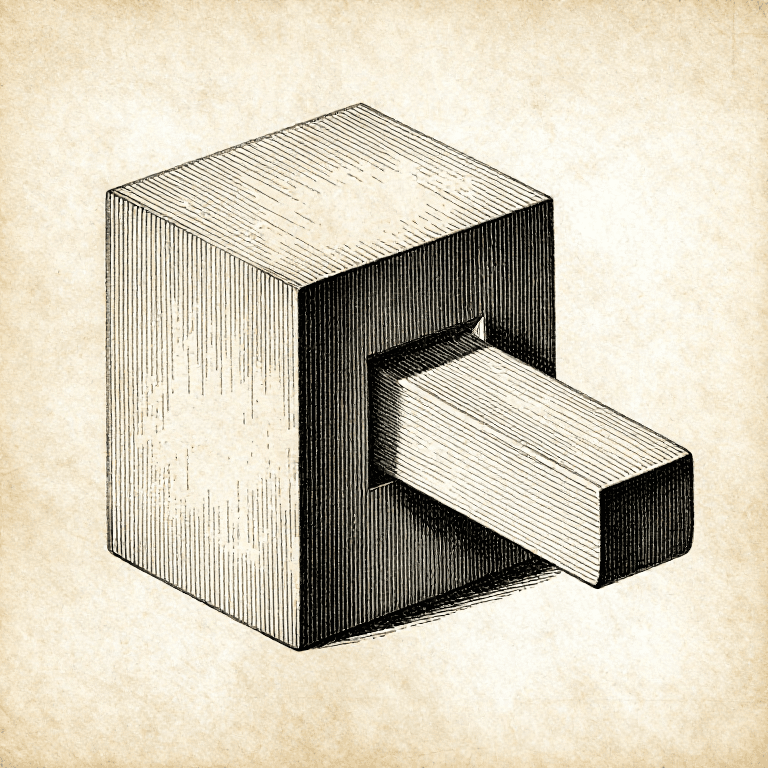
James D. Royse of Cane Valley, Kentucky, received US 208,854, dated 8 October 1878 (filed 5 August 1878), for a handle whose socket ends in "a square tenon, b, and screw c". Each tool has a mortise that fits over the tenon, and "these projections and corresponding recesses prevent the tool from turning upon the handle".
This rung works out why a square tenon holds a head that a round spigot would let turn, then fits two heads to one handle with a square tenon and a wing nut.
བར་མ
About 3 hours
ལམ་སྟོན
1
1
Friction against a square tenon
Friction against a square tenon
Jupyter ཚང་དེབ་མངོན་གསལ་འབད་དོ་…
2
2
A square peg in a square hole
A square peg in a square hole
The embedded blueprint explains the mortise and tenon in wood. Royse puts the same joint in iron, between a handle and its heads.
3
3
Read US 208,854
Read US 208,854
"My invention is an improvement in hand garden implements, by means of which a number of different tools may be readily and securely attached to a single handle, making a convenient combination for gardeners' uses."
"The tool is secured firmly in its position upon the square tenon by means of the nut or thumb-screw f. By this arrangement a single handle may serve for any number of tools desired, as they can be attached or detached in a moment, and without trouble."
He shows "a double hoe with broad and narrow blades, a rake and cultivator, a hoe and plow, and a digging or manure fork; but the handle may be also applied to a spade, a shovel, and many other tools used in the garden."
4
4
Fit two heads to one square-tenon handle
Fit two heads to one square-tenon handle
Take the heads off a garden hoe and a garden rake. On the end of a hardwood handle, fit a steel plate cut and filed to a square tenon with a hole through it. Pass a carriage bolt through the handle end and the plate so its thread stands out beyond the tenon.
Cut a square hole in a small steel plate for each head, fitting closely over the tenon, and fix the plate to the head. Slide a head on, spin the wing nut down and hoe. Swap to the rake.
Then try the same head with a round hole instead. Strike the ground off-centre and see whether it turns. Compare with the notebook.
གོམ་པ་འདིའི་རྫས་རིགས:
 ཡུ་བའི་དོན་ལུ་ཤིང་སྲ་བ།1 དུམ་བུ།
 ལྕགས་ལེབ།1 དུམ་བུ།
 མགོ་ཟླུམ་གྱི་བོལ་ཊུ།1 དུམ་བུ།
 གཤོག་པ་ཅན་གྱི་ནཊ།1 དུམ་བུ།
ལག་ཆས་དགོས་མཁོ:
 ལྡུམ་རའི་ཐོག་ཙེ།
 ལྡུམ་རའི་གསེབ་ཆས།
 ལྕགས་གཏུབ་སོག་ལེ།
 ལྕགས་ཀྱི་དར་མ།
 ཐག་མེད་ཕུག་འཕྲུལ།
 ཕུག་མགོའི་ཚོགས་ཆས།
 ལས་ཅོག་གི་འཛིན་ཆས།
5
5
A head that turns, rattles or will not come off
A head that turns, rattles or will not come off
Interchangeable handle troubleshooting.
Flow
Loading...
6
6
History and honest limits
History and honest limits
**James D. Royse** of Cane Valley, Adair County, Kentucky, filed US 208,854 on 5 August 1878; it is dated 8 October 1878. He braces the hoe shanks with a riveted piece so the blades keep their angle.
**Honest limits.** The notebook gives rough face forces for an ideal square in a square hole, and treats friction as simple. Real tenons have clearance and wear. The blows, offset, clamp and sizes are examples. Whether your head turns is the measurement.
རྫས་རིགས
4- 1 དུམ་བུ།ས་ཆ་འཛིན
- 1 དུམ་བུ།ས་ཆ་འཛིན
- 1 དུམ་བུ།ས་ཆ་འཛིན
- གཤོག་པ་ཅན་གྱི་ནཊ།ཁེ་ཕོགས 10%1 དུམ་བུ།ས་ཆ་འཛིན
ལག་ཆས་དགོས་མཁོ
7- ས་ཆ་འཛིན
- ས་ཆ་འཛིན
- ས་ཆ་འཛིན
- ས་ཆ་འཛིན
- 1 vendor sell this, none ship to you yetས་ཆ་འཛིན
- ས་ཆ་འཛིན
- ས་ཆ་འཛིན
འབྲེལ་ཡོད་བིལུ་པིརིན་ཊི
བིལུ་པིརིན་ཊི་འདི་ཚུ་ཐབས་ལམ་དང་རྫས་རིགས། སྤྱི་ཆོས་བགོ་བཤའ་བྱེད
CC0 སྤྱི་དབང
བིལུ་པིརིན་ཊི་འདི་CC0 འོག་བཀྲམས་ཡོད། ཁྱེད་རང་གིས་ཆོག་མཆན་མ་བཞེས་པར་ཕབ་ལེན་དང་བཟོ་བཅོས། བགོ་བཤའ། དགོས་མཁོ་གང་ལའང་བཀོལ་སྤྱོད་བྱས་ཆོག
བཟོ་མཁན་ལ་རྒྱབ་སྐྱོར་བྱེད་པའི་ཆེད་ཁོང་ཚོའི་བིལུ་པིརིན་ཊི་བརྒྱུད་ཐོན་སྐྱེད་ཉོ། བཟོ་མཁན་གྱིས བཟོ་མཁན་གྱི་ཁེ་ཕོགས ཚོང་པས་གཏན་འཁེལ་བྱས་པ། ཡང་ན་བིལུ་པིརིན་ཊི་འདིའི་པར་གསར་བཟོས་ཏེ་ཁྱེད་རང་གི་བིལུ་པིརིན་ཊི་ནང་མཐུད་སྦྲེལ་བྱས་ཏེ་ཡོང་སྒོ་བགོ་བཤའ་བྱེད།