སྒྱུ་རྩལ
མཛེས་སྡུག་དང་བདེ་ཐང
བཟོ་རིག
རིག་གནས་དང་ལོ་རྒྱུས
དགའ་སྟོན
ཁོར་ཡུག
ཟས་དང་བཏུང་རྫས
ཕྱིར་འཕྲུལ་རིག
ཚན་རིག
རྩེད་འགྲན
རིག་རྩལ
གྱོན་རུང
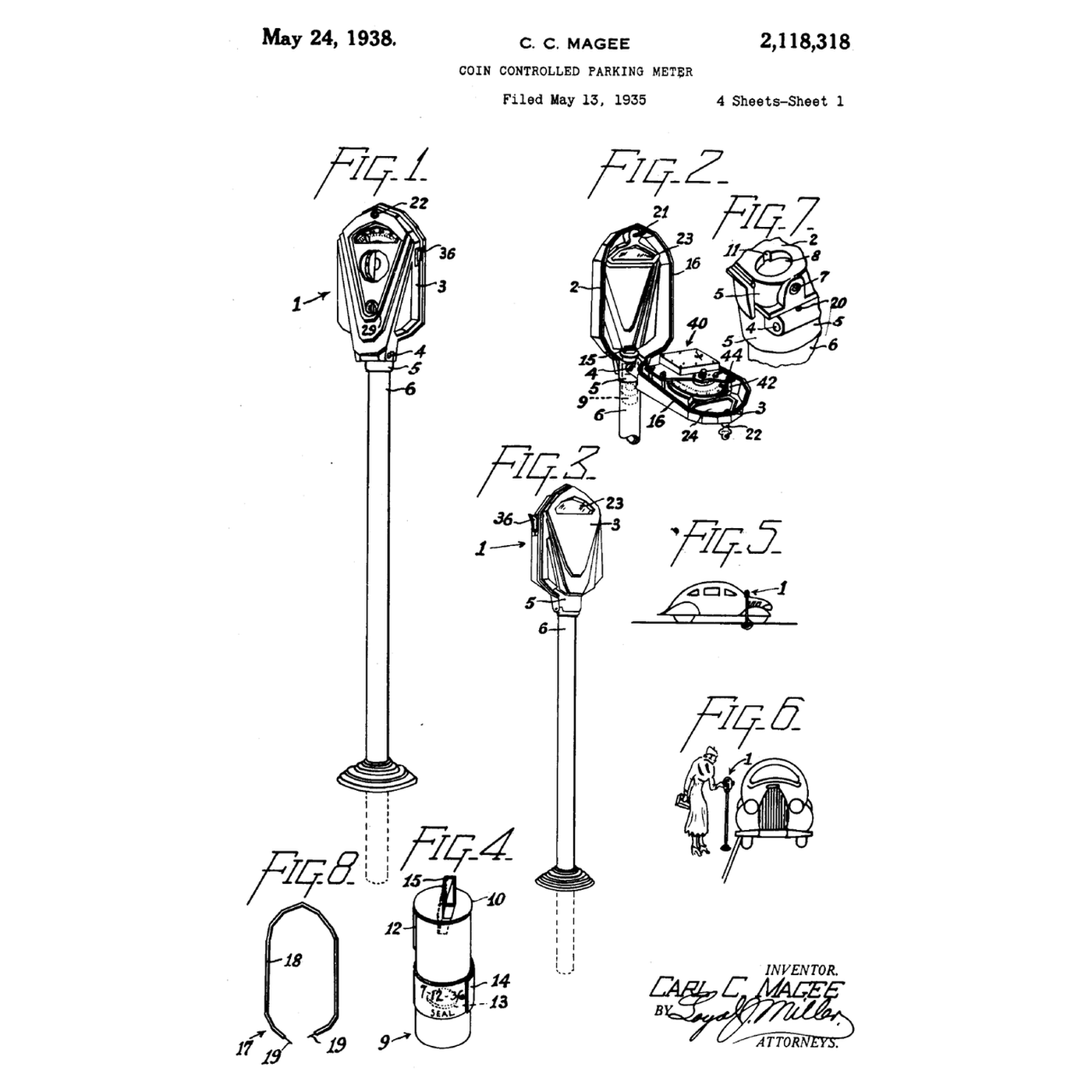


The Parking Meter: A Coin That Unlocks a Clock
By the 1930s city streets were lined with cars parked all day, and shops lost the customers who could not stop. A parking meter rations the kerb: a coin buys a set time, and a signal shows anyone passing when it has run out.
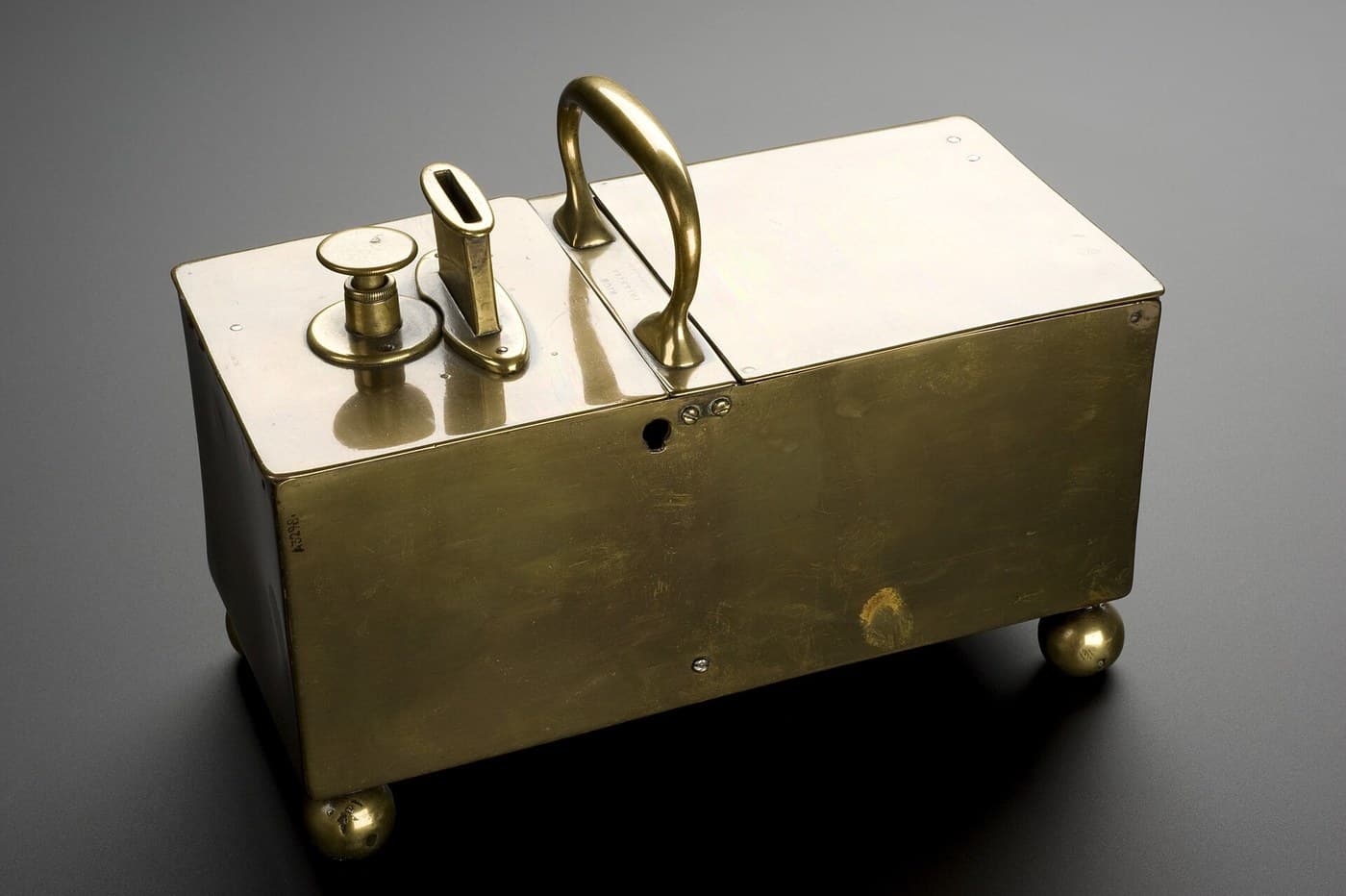
Carl C. Magee of Oklahoma City, assignor to the Dual Parking Meter Company, filed US 2,118,318, *Coin Controlled Parking Meter*, on 13 May 1935; it was granted 24 May 1938. Inside a lockable head on a post, a coin completes the winding mechanism; turning the handle winds a spring; an escapement-governed train runs it down; a signal shows while the time lasts and vanishes when it has elapsed. The last coin shows in a window, and the coins fall into a sealed container so the collections can be checked. Oklahoma City installed Magee's meters in July 1935.
This rung designs the gear train and the spring for a one-hour meter and builds a coin-interlocked timer from a wind-up motor.
བར་མ
About 5 hours
ལམ་སྟོན
1
1
Gear ratio and spring energy
Gear ratio and spring energy
Jupyter ཚང་དེབ་མངོན་གསལ་འབད་དོ་…
2
2
One parking, as the patent describes it
One parking, as the patent describes it
Blockly གི་ལཱ་གི་ས་གནས
Loading Blockly workspace...
3
3
What keeps the time
What keeps the time
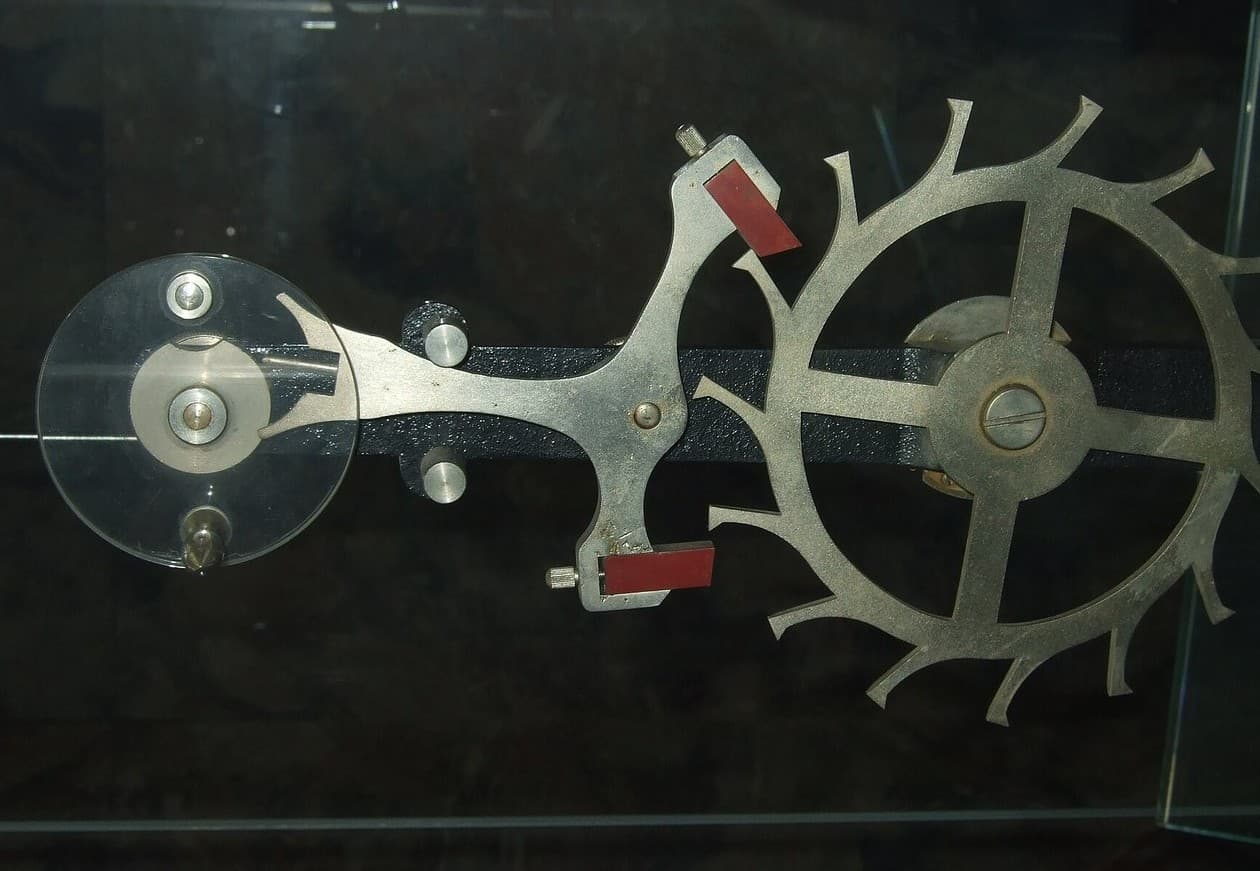
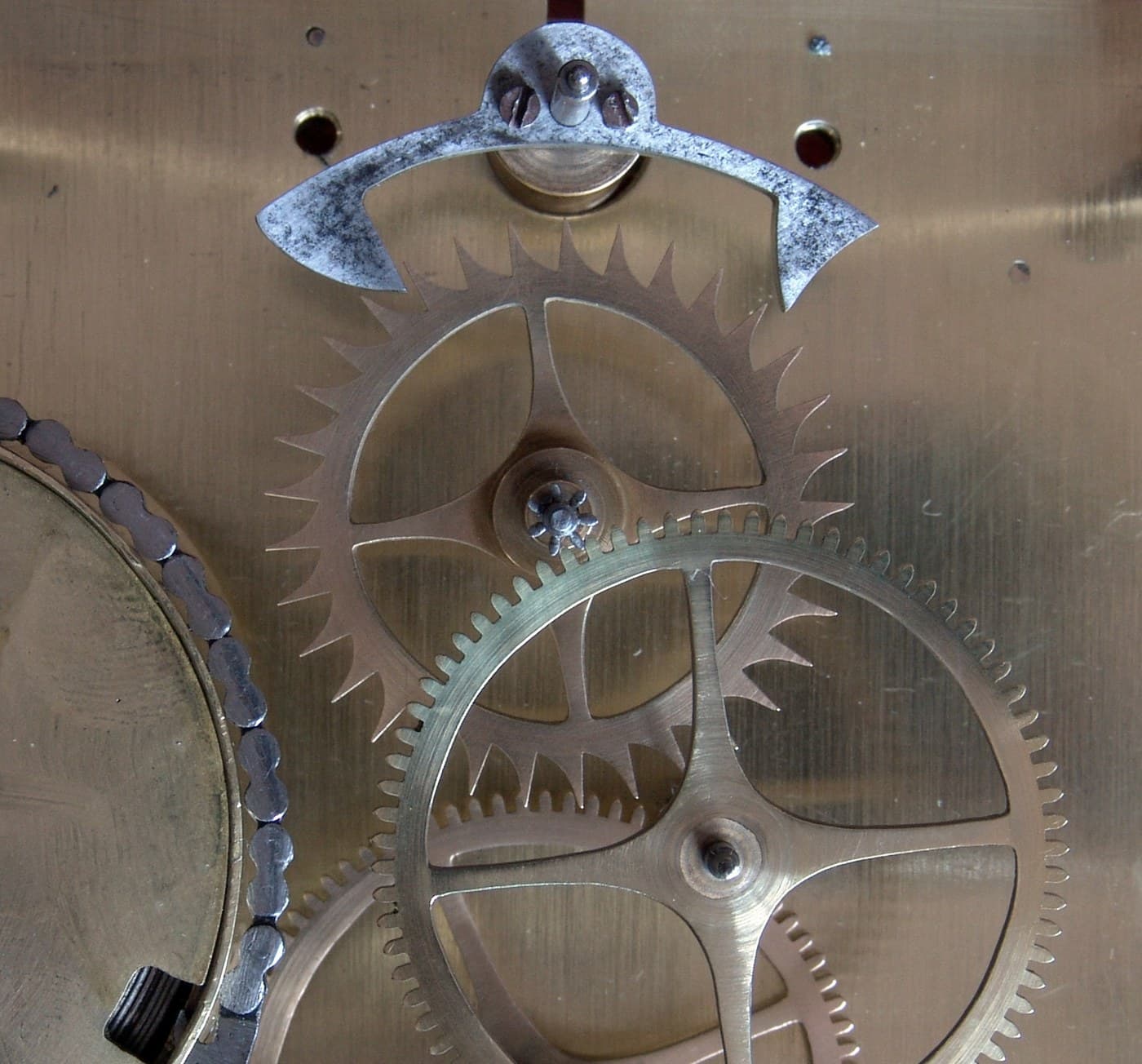
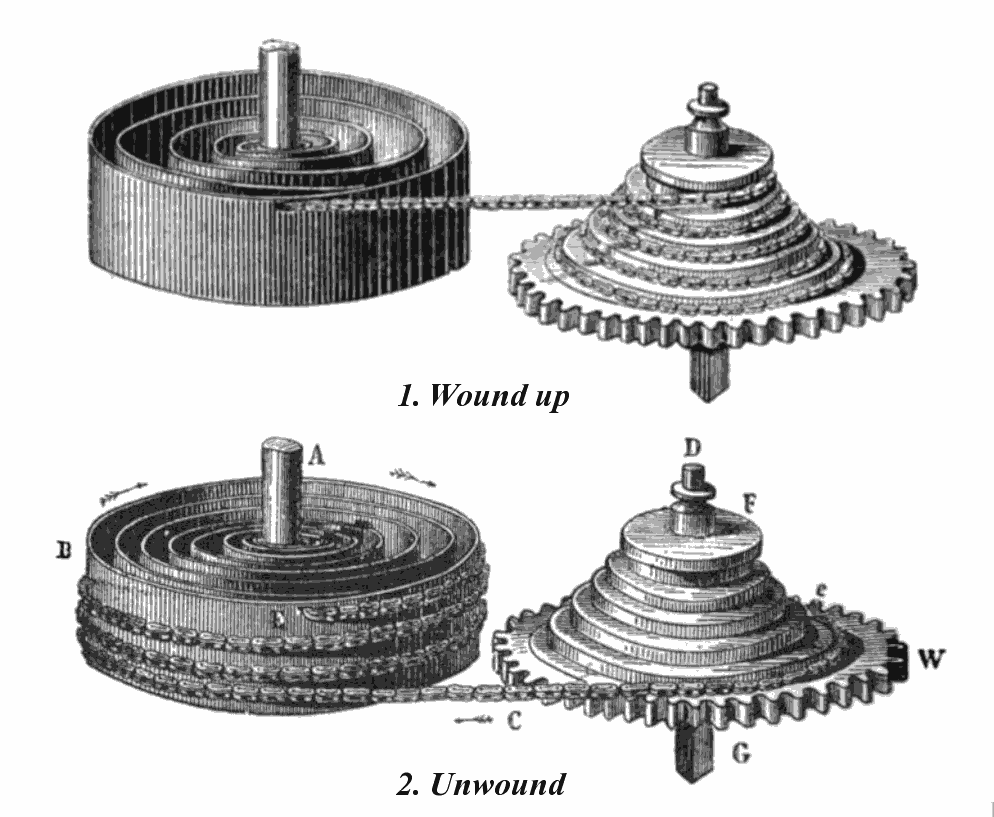
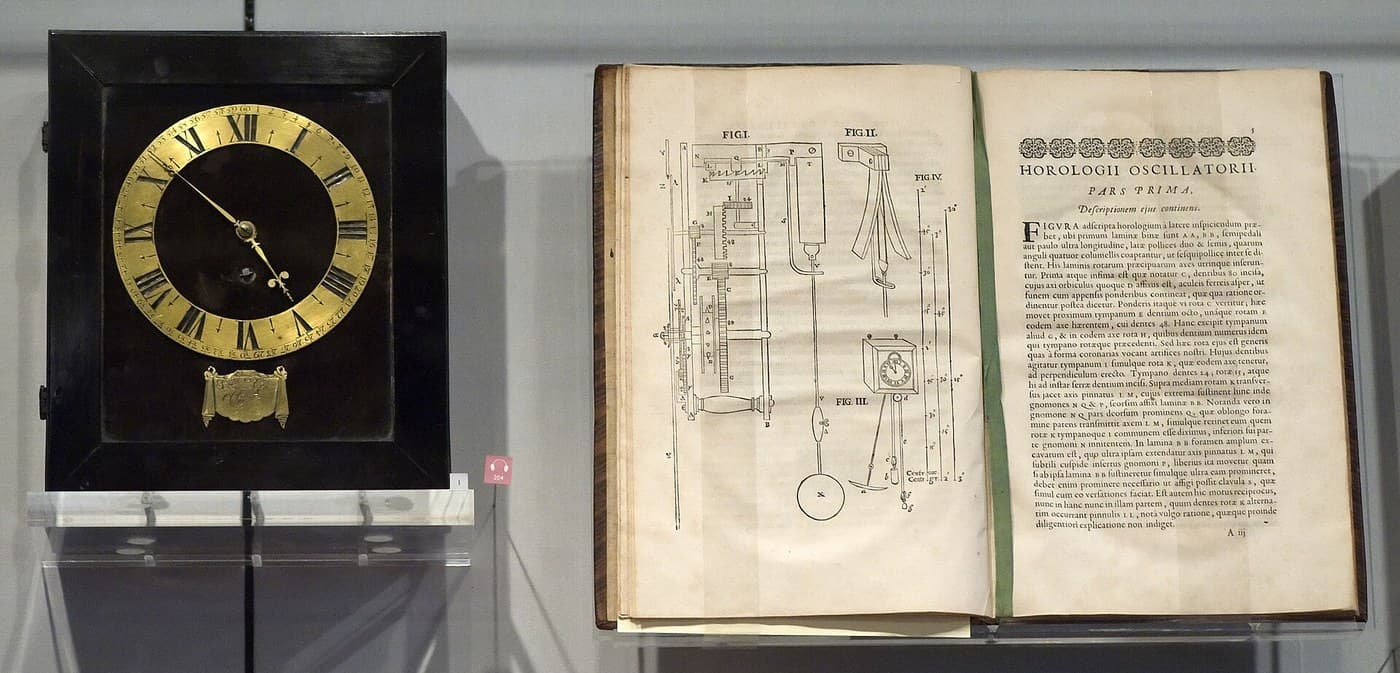
The meter's clockwork is governed by an escapement. The embedded blueprint shows how an escapement releases a gear train one tooth at a time.
4
4
Build a coin-interlocked timer
Build a coin-interlocked timer
Take a wind-up motor mechanism and fit a pointer to its slowest output shaft; mark the run-down time of a full wind on a card dial behind it.
Make the winding key the interlock, as Magee's coin was. 3D-print a crank that drives the winding shaft through a sliding coupling: two halves with a slot between them exactly as wide as the coin. Without a coin the outer half turns freely; drop a coin into the slot and it locks the halves together, so the crank winds the spring. Put a ramp below so that when the crank has turned half a revolution the coin falls out of the slot into a box.
Try it without a coin: the crank spins, nothing winds. With a coin: one wind, the pointer runs down across its dial. Time a full run and compare with the card.
གོམ་པ་འདིའི་རྫས་རིགས:
 འཁྱིལ་བཏང་གི་མོ་ཊར་འཕྲུལ་འཁོར།1 དུམ་བུ།
 ཟངས་ཀྱི་ཏམ།3 དུམ་བུ།
 ཤིང་ལེབ་སྦྱར་མ།1 དུམ་བུ།
 འཕྲུལ་གྱི་སི་ཀུརུ།6 དུམ་བུ།
 ཤིང་སྲ་གི་ཕུར་པ།1 དུམ་བུ།
ལག་ཆས་དགོས་མཁོ:
 FDM 3D པར་སྐྲུན་འཕྲུལ་ཆས།
 PETG སྐུད་པ་
 ཐག་མེད་ཕུག་འཕྲུལ།
 ཕུག་མགོའི་ཚོགས་ཆས།
 ཨང་རྟགས་ཚད་འཇལ་ཆས་ ཨིནཅི 6
 ཆུ་ཚོད་བཀག་ཆས།
5
5
A meter that takes the coin but gives no time
A meter that takes the coin but gives no time
Coin-operated timer faults.
Flow
Loading...
6
6
History and honest limits
History and honest limits
**Carl C. Magee** of Oklahoma City filed **US 2,118,318** on 13 May 1935, assigned to the Dual Parking Meter Company; granted 24 May 1938. Oklahoma City installed 150 of his meters along 14 blocks downtown in July 1935, charging five cents an hour; within a few years they spread to cities across the United States and abroad.
**Honest limits.** The notebook's beat rate, train losses and spring figures are illustrative, not Magee's. The printed interlock accepts anything the size of the coin — real meters gauge a coin's diameter, thickness and sometimes its metal.
རྫས་རིགས
5- འཁྱིལ་བཏང་གི་མོ་ཊར་འཕྲུལ་འཁོར།ཁེ་ཕོགས 10%1 དུམ་བུ།ས་ཆ་འཛིན
- 3 དུམ་བུ།ས་ཆ་འཛིན
- 1 དུམ་བུ།ས་ཆ་འཛིན
- 6 དུམ་བུ།ས་ཆ་འཛིན
- 1 དུམ་བུ།ས་ཆ་འཛིན
ལག་ཆས་དགོས་མཁོ
6- ས་ཆ་འཛིན
- ས་ཆ་འཛིན
- 1 vendor sell this, none ship to you yetས་ཆ་འཛིན
- ས་ཆ་འཛིན
- ས་ཆ་འཛིན
- ས་ཆ་འཛིན
འབྲེལ་ཡོད་བིལུ་པིརིན་ཊི
བིལུ་པིརིན་ཊི་འདི་ཚུ་ཐབས་ལམ་དང་རྫས་རིགས། སྤྱི་ཆོས་བགོ་བཤའ་བྱེད


CC0 སྤྱི་དབང
བིལུ་པིརིན་ཊི་འདི་CC0 འོག་བཀྲམས་ཡོད། ཁྱེད་རང་གིས་ཆོག་མཆན་མ་བཞེས་པར་ཕབ་ལེན་དང་བཟོ་བཅོས། བགོ་བཤའ། དགོས་མཁོ་གང་ལའང་བཀོལ་སྤྱོད་བྱས་ཆོག
བཟོ་མཁན་ལ་རྒྱབ་སྐྱོར་བྱེད་པའི་ཆེད་ཁོང་ཚོའི་བིལུ་པིརིན་ཊི་བརྒྱུད་ཐོན་སྐྱེད་ཉོ། བཟོ་མཁན་གྱིས བཟོ་མཁན་གྱི་ཁེ་ཕོགས ཚོང་པས་གཏན་འཁེལ་བྱས་པ། ཡང་ན་བིལུ་པིརིན་ཊི་འདིའི་པར་གསར་བཟོས་ཏེ་ཁྱེད་རང་གི་བིལུ་པིརིན་ཊི་ནང་མཐུད་སྦྲེལ་བྱས་ཏེ་ཡོང་སྒོ་བགོ་བཤའ་བྱེད།