སྒྱུ་རྩལ
མཛེས་སྡུག་དང་བདེ་ཐང
བཟོ་རིག
རིག་གནས་དང་ལོ་རྒྱུས
དགའ་སྟོན
ཁོར་ཡུག
ཟས་དང་བཏུང་རྫས
ཕྱིར་འཕྲུལ་རིག
ཚན་རིག
རྩེད་འགྲན
རིག་རྩལ
གྱོན་རུང
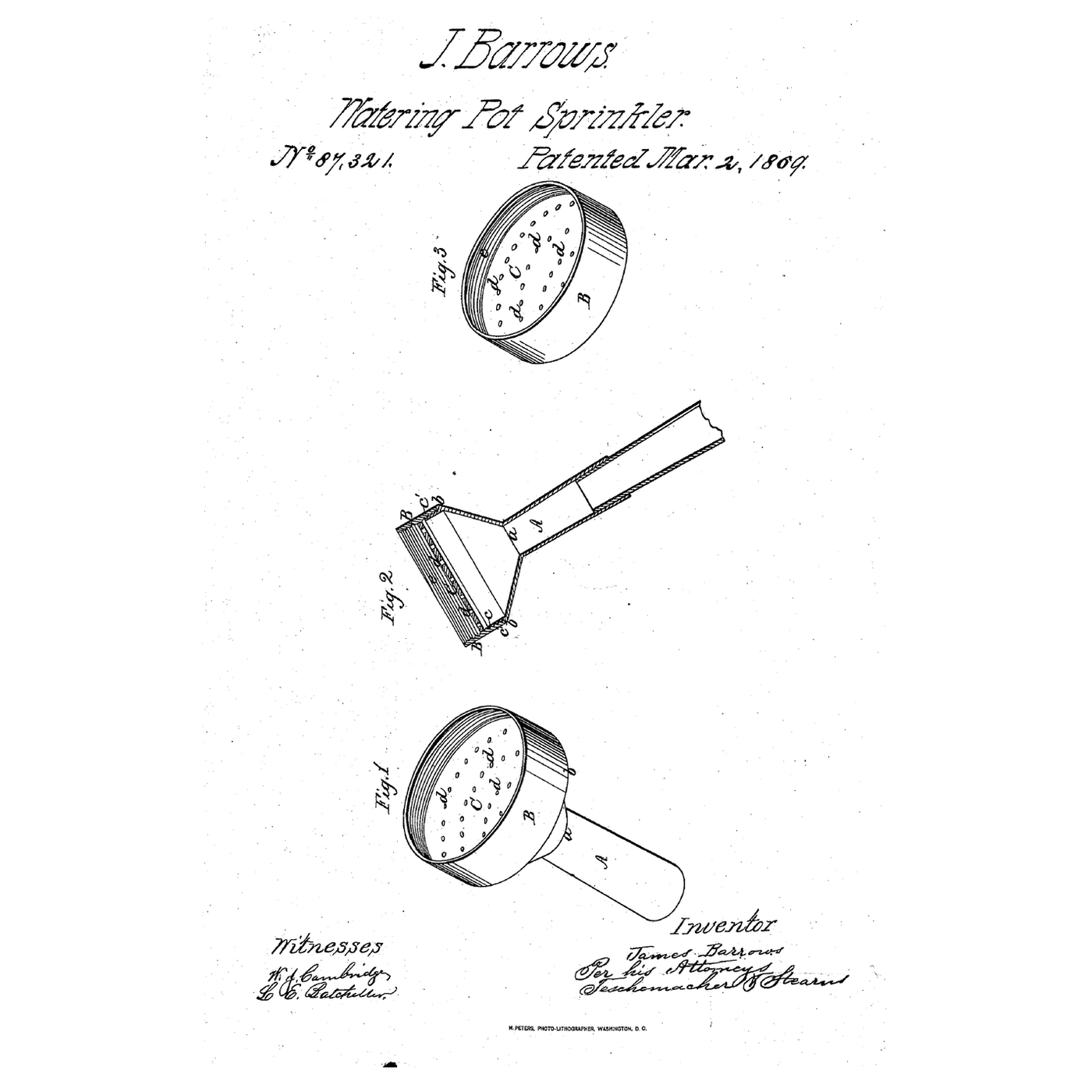


The Reversible Rose: Turn the Sprinkler Round and the Water Clears It
A watering-can rose turns a single stream into a gentle shower through many small holes. Grit in the water clogs them, and cleaning them out one by one is slow.
James Barrows of Hyde Park, Massachusetts, received US 87,321, dated 2 March 1869, for "a removable and reversible perforated cap for watering-pots": when the holes clog, "the band may be unscrewed, and its position reversed", and "the force of the water within the watering-pot" is "sufficient to instantly wash away the obstruction."
This rung computes how the flow falls as holes clog, then times a can with holes taped over and cleared.
འགོ་བཙུགས
About 1 hour
ལམ་སྟོན
1
1
Holes, head and flow
Holes, head and flow
Jupyter ཚང་དེབ་མངོན་གསལ་འབད་དོ་…
2
2
Watering, before cans
Watering, before cans
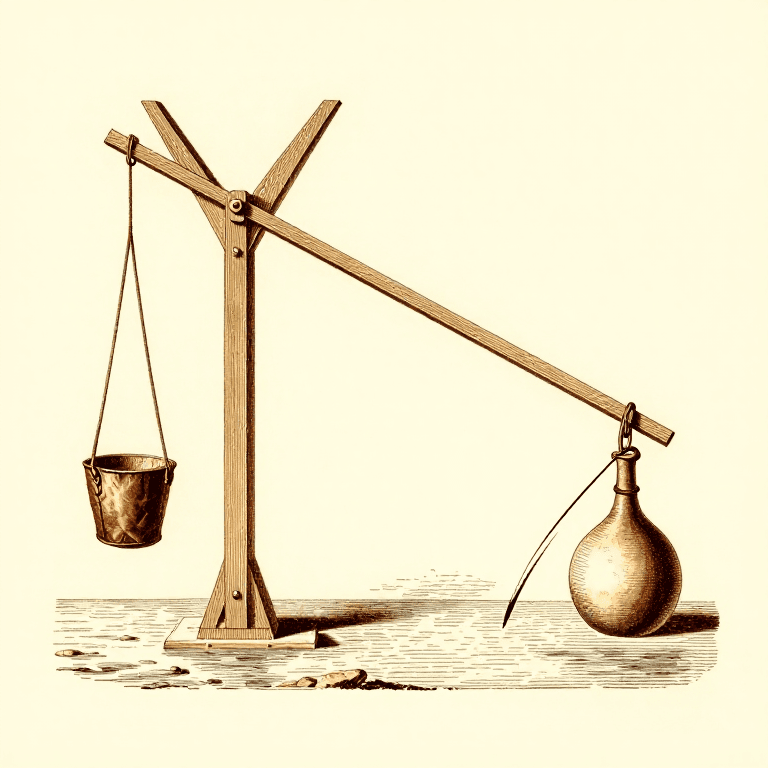
The embedded blueprint lifts water for irrigation with a counterweighted lever; the can and its rose put it gently where it is needed.
3
3
Read US 87,321
Read US 87,321
"The spout of a watering-pot, of the ordinary construction, is provided with a stationary perforated 'rose,' or nozzle, through which the water passes in jets upon the ground, plant, or other article or place to be sprinkled." "Owing to extraneous matter contained in the water, the perforations become closed, and the water ceases to flow until the obstruction is removed, which operation is tedious, and inconvenient to perform."
The perforated plate crosses the middle of a ring threaded at both ends, so that when the perforations "become clogged by obstructions collecting on the inner face of the plate, the band may be unscrewed, and its position reversed, when it can be readily returned to its place, the force of the water within the watering-pot being sufficient to instantly wash away the obstruction."
He adds that it "may also be applied to a syringe or sprinkler for clothes, or other purposes".
4
4
Time a can, clogged and cleared
Time a can, clogged and cleared
Fill a watering can with 5 litres, hold it at a steady tilt over a bucket, and time how long it takes to empty through the rose. Count the holes in the rose.
Tape over a fifth of the holes from the inside and time it again; then two fifths. Compare how the time grows with the notebook. Finally sprinkle a pinch of fine sand into the can, pour, and watch the holes clog; take the rose off, turn it round if it can be, and see whether the water clears it.
གོམ་པ་འདིའི་རྫས་རིགས:
 ཆུ།1 དུམ་བུ།
 ཁེབས་ནིའི་སྦྱར་ཤོག།1 དུམ་བུ།
 བྱེ་མ་ཞིབ་མོ།10 g
ལག་ཆས་དགོས་མཁོ:
 ཆུ་གཏོང་ཟོམ།
 ལྕགས་ཀྱི་ཟོམ།
 ཆུ་ཚོད་བཀག་ཆས།
 ཚད་འཇལ་ཟོ་ལི།
5
5
A rose that dribbles, spurts or clogs
A rose that dribbles, spurts or clogs
Watering-can rose troubleshooting.
Flow
Loading...
6
6
History and honest limits
History and honest limits
**James Barrows** of Hyde Park, Norfolk County, Massachusetts, received US 87,321, dated 2 March 1869.
**Honest limits.** The flow model treats every hole as the same simple orifice under a steady head; in a tilted can the head changes as it empties, and partly blocked holes are not simply open or shut. Sizes and counts are examples. Your stopwatch times are the measurement.
རྫས་རིགས
3- 1 དུམ་བུ།ས་ཆ་འཛིན
- 1 དུམ་བུ།ས་ཆ་འཛིན
- 10 gས་ཆ་འཛིན
ལག་ཆས་དགོས་མཁོ
4- ས་ཆ་འཛིན
- ས་ཆ་འཛིན
- ས་ཆ་འཛིན
- ས་ཆ་འཛིན
འབྲེལ་ཡོད་བིལུ་པིརིན་ཊི
བིལུ་པིརིན་ཊི་འདི་ཚུ་ཐབས་ལམ་དང་རྫས་རིགས། སྤྱི་ཆོས་བགོ་བཤའ་བྱེད



CC0 སྤྱི་དབང
བིལུ་པིརིན་ཊི་འདི་CC0 འོག་བཀྲམས་ཡོད། ཁྱེད་རང་གིས་ཆོག་མཆན་མ་བཞེས་པར་ཕབ་ལེན་དང་བཟོ་བཅོས། བགོ་བཤའ། དགོས་མཁོ་གང་ལའང་བཀོལ་སྤྱོད་བྱས་ཆོག
བཟོ་མཁན་ལ་རྒྱབ་སྐྱོར་བྱེད་པའི་ཆེད་ཁོང་ཚོའི་བིལུ་པིརིན་ཊི་བརྒྱུད་ཐོན་སྐྱེད་ཉོ། བཟོ་མཁན་གྱིས བཟོ་མཁན་གྱི་ཁེ་ཕོགས ཚོང་པས་གཏན་འཁེལ་བྱས་པ། ཡང་ན་བིལུ་པིརིན་ཊི་འདིའི་པར་གསར་བཟོས་ཏེ་ཁྱེད་རང་གི་བིལུ་པིརིན་ཊི་ནང་མཐུད་སྦྲེལ་བྱས་ཏེ་ཡོང་སྒོ་བགོ་བཤའ་བྱེད།