སྒྱུ་རྩལ
མཛེས་སྡུག་དང་བདེ་ཐང
བཟོ་རིག
རིག་གནས་དང་ལོ་རྒྱུས
དགའ་སྟོན
ཁོར་ཡུག
ཟས་དང་བཏུང་རྫས
ཕྱིར་འཕྲུལ་རིག
ཚན་རིག
རྩེད་འགྲན
རིག་རྩལ
གྱོན་རུང
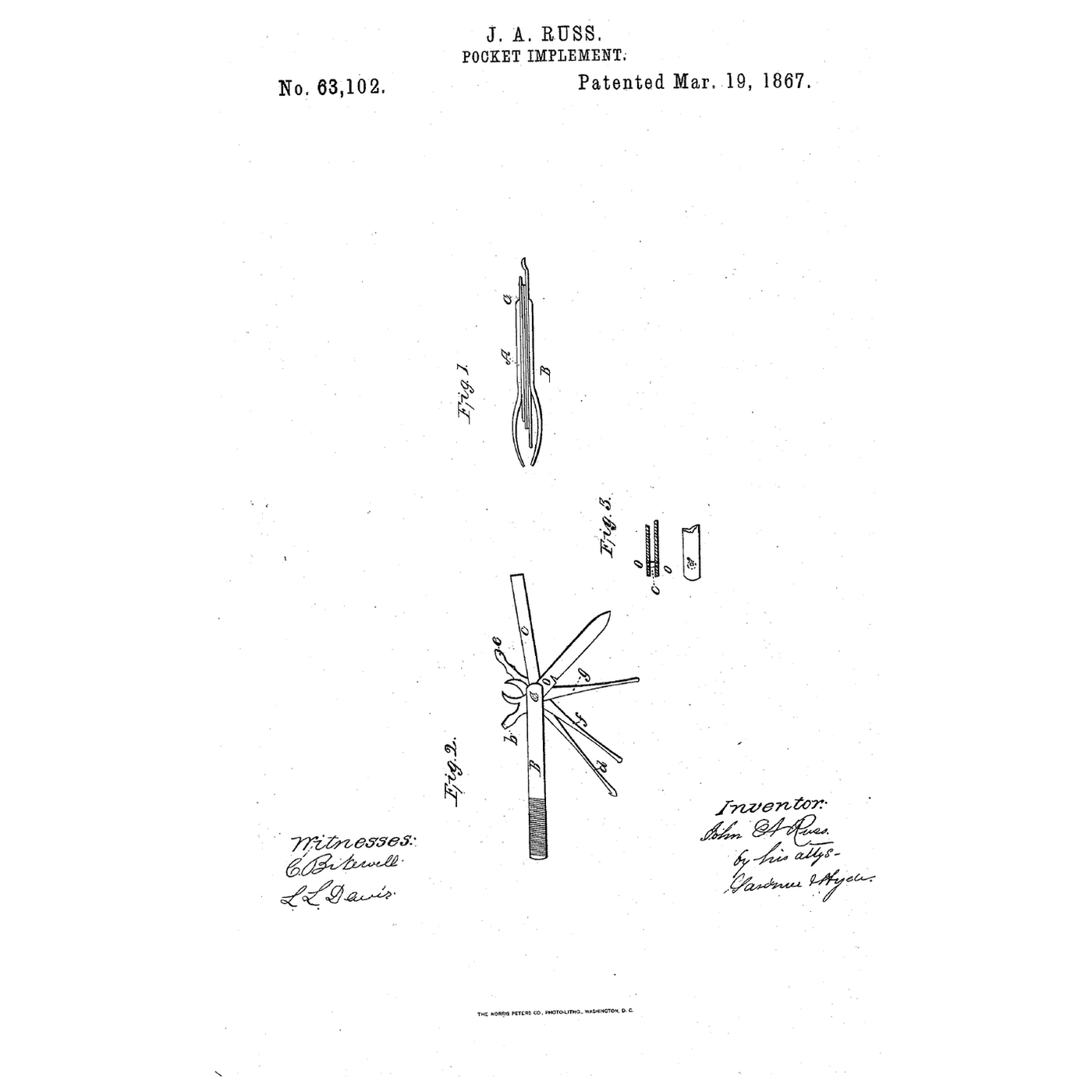


The Tweezer Pocket Implement: Knife, Rule, Hook, Calipers and File Hung Inside a Pair of Tweezers
A pocket or a lady's work-box fills up with small tools: tweezers, a knife, a rule, a crochet hook, calipers, a file.
John A. Russ of Springfield, Massachusetts, received US 63,102, dated 19 March 1867, for "a combination of small and useful tools, arranged in a compact and convenient form so that it can be carried in the pocket or kept in a lady's work-box." Two pieces riveted together near one end form tweezers; hung on the same rivet between them are a knife blade whose shank is a screwdriver, a rule, a crochet hook and an ear-spoon, and two pieces shaped as calipers or dividers; a file is cut on the outside of one jaw. The rivet has square tenons so it cannot turn loose.
This rung works out the grip of the tweezers, with a work check, then cuts the pieces from spring and stainless steel, hangs them on one rivet, and uses each tool.
བར་མ
About 5 hours
ལམ་སྟོན
1
1
Tweezer grip
Tweezer grip
Jupyter ཚང་དེབ་མངོན་གསལ་འབད་དོ་…
2
2
Tools in one before it
Tools in one before it
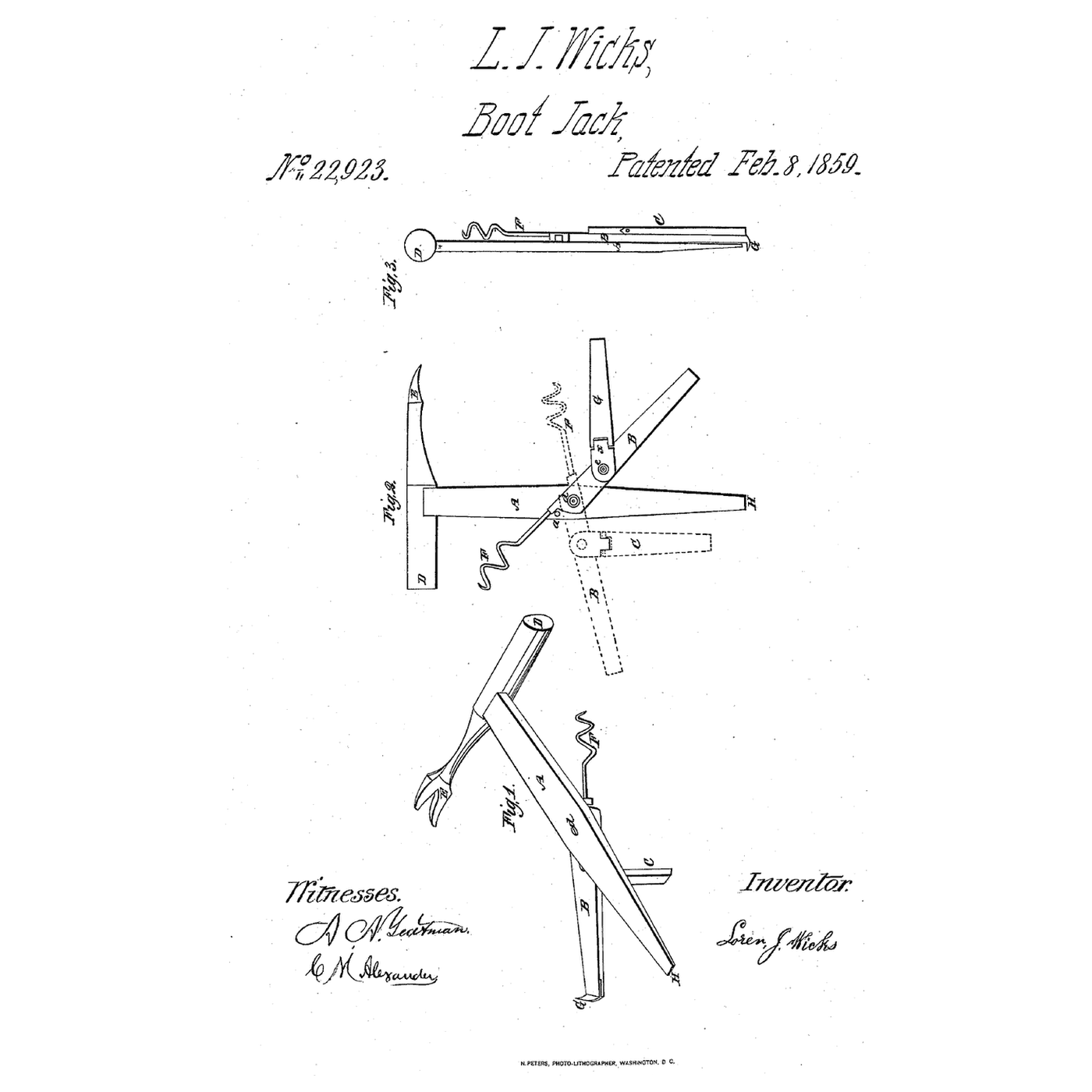
The embedded blueprint puts several tools on a bootjack's arms. Russ hangs several small tools inside a pair of tweezers, for the pocket.
3
3
Read US 63,102
Read US 63,102
"In construction I form my device of two pieces, A and B, riveted together near one end, and forming at the other a pair of tweezers working on the rivet C. Inside these pieces, and hung upon the same rivet, are several small instruments, namely, a knife-blade, a, having its shank continued and formed into a screw-driver, b, a rule, c, divided as desired, a crochet-hook, d, and an ear-spoon, e, formed of the same piece and working on the rivet at the junction of their shanks, and two pieces, f and g, which are formed at their ends so as to produce a pair of callipers and a pair of dividers"
"In order that the pieces A and B shall be held firmly in place and not be liable to get out of place, I form the rivet with shoulders and square tenons, O O′, which fit in square slots through the pieces A and B, and are thus riveted and securely attached."
4
4
Make the implement and use each tool
Make the implement and use each tool
**Jaws.** Cut two 9 cm strips of spring steel 8 mm wide. Round their tips and bend them so they spring apart. File cross-cut teeth on the outside of one as the nail file.
**Tools.** From stainless steel sheet cut: a small knife blade with its shank filed square as a screwdriver; a strip marked in millimetres with a scriber as the rule; a strip with a small hook filed at one end and a spoon dished at the other; and two narrow legs with points turned in at one end and out at the other, as calipers and dividers. Drill each near its shank for the rivet.
**Rivet.** Stack the jaws with the tools between them on a short steel rivet with washers, and peen it so the tools swing out and fold back with light friction.
**Test.** Pick a splinter from wood with the tweezers, measure a button with the rule, set the calipers to a thread spool, crochet a short chain, and file a rough edge.
གོམ་པ་འདིའི་རྫས་རིགས:
 སི་པིང་ལྕགས་ཀྱི་ཐིག་ལེབ།0.2 མི་ཊར།
 ཁ་ཟེ་མི་ཆགས་པའི་ལྕགས་ལེབ1 དུམ་བུ།
 ལྕགས་འཇམ་གྱི་དབྱུག་ཟླུམ།0.02 མི་ཊར།
 ལེབ་ཏོག་ཏོའི་ཝཱ་ཤར།4 དུམ་བུ།
ལག་ཆས་དགོས་མཁོ:
 ལྕགས་ལེབ་གཏུབ་ནིའི་ཇེམ་ཙི།
 ལྕགས་གཏུབ་སོག་ལེ།
 ཁབ་དར་མའི་ཚོགས་ཆས།
 བཤེར་ཆས (ལག་པའི་བཤེར་ཆས)
 ལས་ཅོག་གི་འཛིན་ཆས།
 ཐོ་བ།
ཐོ་བ། ཐག་མེད་ཕུག་འཕྲུལ།
 ཕུག་མགོའི་ཚོགས་ཆས།
 ཐིག་འཛུགས་ཁབ།
 ཐིག་ཤིང་།
 ཨང་རྟགས་ཚད་འཇལ་ཆས་ ཨིནཅི 6
 ཀོ་བའི་ལས་ལག་ཤུབས།
 གསལ་བའི་ཉེན་སྲུང་མིག་ཤེལ།
5
5
An implement whose tools flop, stick or will not grip
An implement whose tools flop, stick or will not grip
Tweezer pocket implement troubleshooting.
Flow
Loading...
6
6
History and honest limits
History and honest limits
**John A. Russ** of Springfield, Hampden County, Massachusetts, received US 63,102, dated 19 March 1867. The pieces f and g were arranged for inside or outside calipers, the file was cut on the outside of one of the jaws A or B for shaping the nails and like purposes, and the whole shut up between the jaws. His claim is the instrument as a new article of manufacture, consisting of the various tools mentioned, combined and arranged as described.
**Honest limits.** Hand-cut spring and stainless steel stand in for his made pieces, and a round rivet with washers for his square-tenoned rivet unless you file it square. The notebook treats the jaws as rigid levers; its forces and lengths are examples. Your use of each tool is the result.
རྫས་རིགས
4- 0.2 མི་ཊར།ས་ཆ་འཛིན
- 1 དུམ་བུ།ས་ཆ་འཛིན
- 0.02 མི་ཊར།ས་ཆ་འཛིན
- 4 དུམ་བུ།ས་ཆ་འཛིན
ལག་ཆས་དགོས་མཁོ
13- ས་ཆ་འཛིན
- ས་ཆ་འཛིན
- ས་ཆ་འཛིན
- ས་ཆ་འཛིན
- ས་ཆ་འཛིན
- ས་ཆ་འཛིན
- 1 vendor sell this, none ship to you yetས་ཆ་འཛིན
- ས་ཆ་འཛིན
- ས་ཆ་འཛིན
- ས་ཆ་འཛིན
- ས་ཆ་འཛིན
- ས་ཆ་འཛིན
- ས་ཆ་འཛིན
འབྲེལ་ཡོད་བིལུ་པིརིན་ཊི
བིལུ་པིརིན་ཊི་འདི་ཚུ་ཐབས་ལམ་དང་རྫས་རིགས། སྤྱི་ཆོས་བགོ་བཤའ་བྱེད


CC0 སྤྱི་དབང
བིལུ་པིརིན་ཊི་འདི་CC0 འོག་བཀྲམས་ཡོད། ཁྱེད་རང་གིས་ཆོག་མཆན་མ་བཞེས་པར་ཕབ་ལེན་དང་བཟོ་བཅོས། བགོ་བཤའ། དགོས་མཁོ་གང་ལའང་བཀོལ་སྤྱོད་བྱས་ཆོག
བཟོ་མཁན་ལ་རྒྱབ་སྐྱོར་བྱེད་པའི་ཆེད་ཁོང་ཚོའི་བིལུ་པིརིན་ཊི་བརྒྱུད་ཐོན་སྐྱེད་ཉོ། བཟོ་མཁན་གྱིས བཟོ་མཁན་གྱི་ཁེ་ཕོགས ཚོང་པས་གཏན་འཁེལ་བྱས་པ། ཡང་ན་བིལུ་པིརིན་ཊི་འདིའི་པར་གསར་བཟོས་ཏེ་ཁྱེད་རང་གི་བིལུ་པིརིན་ཊི་ནང་མཐུད་སྦྲེལ་བྱས་ཏེ་ཡོང་སྒོ་བགོ་བཤའ་བྱེད།