སྒྱུ་རྩལ
མཛེས་སྡུག་དང་བདེ་ཐང
བཟོ་རིག
རིག་གནས་དང་ལོ་རྒྱུས
དགའ་སྟོན
ཁོར་ཡུག
ཟས་དང་བཏུང་རྫས
ཕྱིར་འཕྲུལ་རིག
ཚན་རིག
རྩེད་འགྲན
རིག་རྩལ
གྱོན་རུང
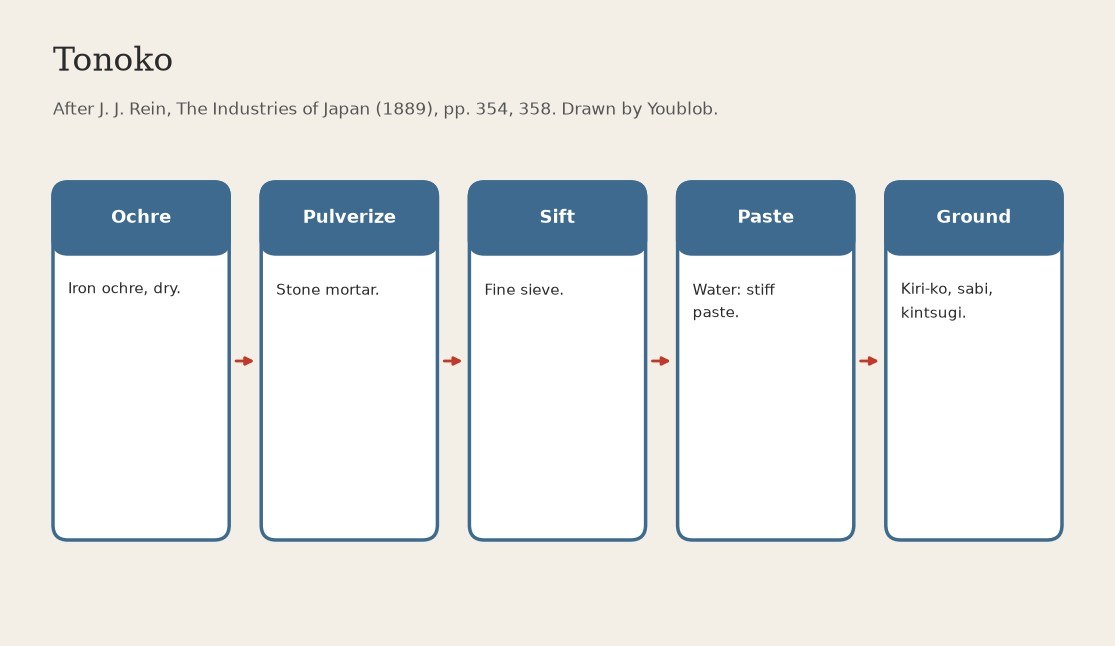


Tonoko: Iron Ochre Pulverized for Japanese Lacquer Groundwork (after Rein 1889)
Japanese lacquerers build a hard ground under the lacquer from a powder they call to-no-ko. Rein, who studied the workshops in the 1870s, names it plainly: iron ochre powder. Stirred with water to a stiff paste and tempered with raw lacquer, it becomes the kiri-ko and sabi grounds, and the sabi putty of kintsugi.
Result: tonoko, iron ochre ground to a fine powder.
Source: J. J. Rein, The Industries of Japan (1889), pp. 354 and 358. Rein says only 'pulverized'; mortar and sieve are ours. Picture drawn by Youblob.
འགོ་བཙུགས
2 hours
ལམ་སྟོན
1
1
Pulverize the ochre
Pulverize the ochre
Crush and grind dry iron ochre in a stone mortar. Ours: until it is a fine, even powder.
གོམ་པ་འདིའི་རྫས་རིགས:
 ས་ཚོན་སེར་པོ།1 as required
ལག་ཆས་དགོས་མཁོ:
 རྡོའི་གཏུན་ཁུང་དང་གཏུན་ཤིང་།
2
2
Sift fine
Sift fine
Ours: pass the powder through a fine sieve and grind the coarse rest again. Keep it dry in a closed jar.
ལག་ཆས་དགོས་མཁོ:
 ཚག་མ་ཕྲ་བ།
 ཁ་བཅད་ཡོད་པའི་ཤེལ་སྣོད།
3
3
Check: a stiff paste
Check: a stiff paste
A little stirred with water should make a smooth, stiff paste, as for kiri-ko, where it is then tempered with raw lacquer, a little brick dust and paste.
ལག་ཆས་དགོས་མཁོ:
 ཆུ།
རྫས་རིགས
1- 1 as requiredས་ཆ་འཛིན
ལག་ཆས་དགོས་མཁོ
4- ས་ཆ་འཛིན
- ས་ཆ་འཛིན
- ས་ཆ་འཛིན
- ས་ཆ་འཛིན
བིལུ་པིརིན་ཊི་འདི་གིས་བཟོ་མི

CC0 སྤྱི་དབང
བིལུ་པིརིན་ཊི་འདི་CC0 འོག་བཀྲམས་ཡོད། ཁྱེད་རང་གིས་ཆོག་མཆན་མ་བཞེས་པར་ཕབ་ལེན་དང་བཟོ་བཅོས། བགོ་བཤའ། དགོས་མཁོ་གང་ལའང་བཀོལ་སྤྱོད་བྱས་ཆོག
བཟོ་མཁན་ལ་རྒྱབ་སྐྱོར་བྱེད་པའི་ཆེད་ཁོང་ཚོའི་བིལུ་པིརིན་ཊི་བརྒྱུད་ཐོན་སྐྱེད་ཉོ། བཟོ་མཁན་གྱིས བཟོ་མཁན་གྱི་ཁེ་ཕོགས ཚོང་པས་གཏན་འཁེལ་བྱས་པ། ཡང་ན་བིལུ་པིརིན་ཊི་འདིའི་པར་གསར་བཟོས་ཏེ་ཁྱེད་རང་གི་བིལུ་པིརིན་ཊི་ནང་མཐུད་སྦྲེལ་བྱས་ཏེ་ཡོང་སྒོ་བགོ་བཤའ་བྱེད།