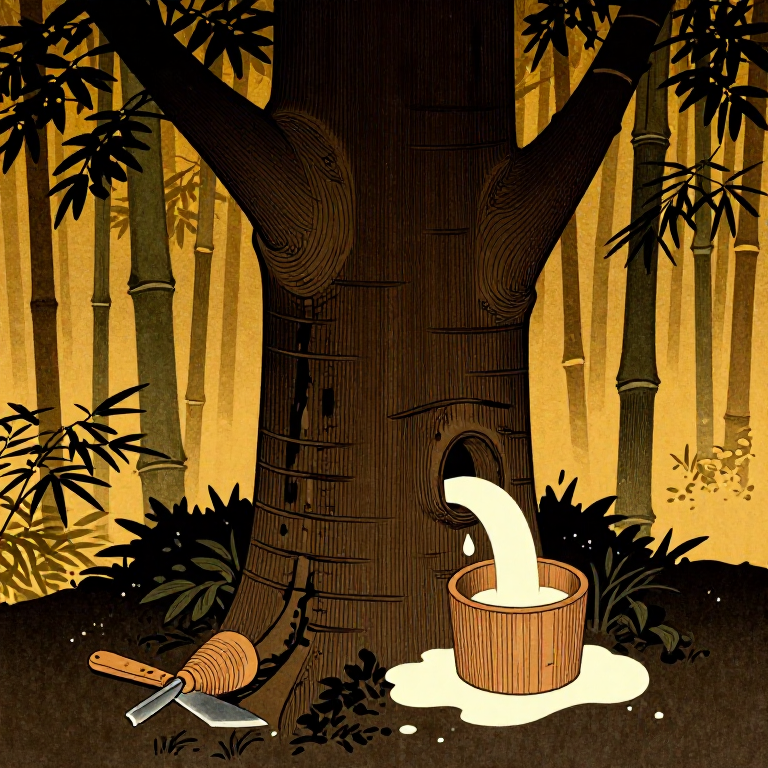

漆掻き採集 — ウルシノキから天然漆を採る伝統技法
ལམ་སྟོན
ウルシノキを理解する
ウルシノキを理解する
ウルシノキ(Toxicodendron vernicifluum)はウルシ科の落葉高木で、高さ10〜20メートルに成長します。原産地は中国南部からヒマラヤ地域で、日本には縄文時代(約9,000年前)に渡来したと考えられています。樹皮は灰白色で滑らかですが、成長とともに縦に浅い裂け目が入ります。葉は奇数羽状複葉で、7〜15枚の小葉からなります。漆液は樹皮の内側にある乳管細胞に蓄えられており、主成分はウルシオール(60〜65%)、水分(20〜25%)、ゴム質(5〜7%)、含窒素物(2〜5%)、ラッカーゼ酵素(約1%)です。ウルシオールは空気中の酸素とラッカーゼ酵素の作用で重合し、極めて耐久性の高い塗膜を形成します。
採取に適したウルシノキを選定する
採取に適したウルシノキを選定する
漆掻きに適したウルシノキは、幹の直径が15cm以上(胸高周囲約47cm以上)の成木で、樹齢10〜15年のものが最適です。幹がまっすぐで、樹皮に傷や病変がないものを選びます。健康なウルシノキの樹皮は灰白色で、指で軽く押すと弾力があります。日当たりの良い南向き斜面に生育する木は漆液の分泌量が多い傾向があります。日本の主要な漆産地は岩手県浄法寺地区(国産漆の約75%を生産)、茨城県大子町、栃木県日光市です。漆掻き職人は「漆木見」という目利きの技術を持ち、樹皮の色・質感・環境から漆の質と量を予測します。
ལག་ཆས་དགོས་མཁོ:
 འཇལ་ཐག
 རྟགས་བཀོད་ཀྱི་ས་ཀར།
漆掻きの安全対策を行う
漆掻きの安全対策を行う
ウルシオールは強い接触性皮膚炎(漆かぶれ)を引き起こします。症状はツタウルシ(poison ivy)と同様で、激しいかゆみ、発赤、水疱が現れ、重症の場合は全身に広がります。感受性には個人差があり、初めての接触では症状が出ないことがありますが、2回目以降は強い反応が出ることが多いです。作業前に全ての露出肌をカバーします。長袖・長ズボンの作業着を着用し、袖口と裾は紐で縛ります。厚手のゴム手袋を二重に着け、手首をテープで密封します。顔は防護ゴーグルで目を守り、タオルで額を覆います。作業後は直ちに石鹸と冷水で皮膚を洗います。漆が付着した衣服は他の洗濯物と分けて洗います。
གོམ་པ་འདིའི་རྫས་རིགས:
 རས་ཀྱི་ཕུ་དུང་རིང་བའི་ལཱ་གི་ཀེར་ཆུང1 དུམ་བུ།
 རས་ཀྱི་དོར་མ་རིངམ1 དུམ་བུ།
 ནའི་ཊི་རཱིལ་གྱི་ལག་ཤུབས།4 དུམ་བུ།
 སྦྱར་བྱེད་རྒྱབ་སྐྱོར་གྱི་ཁ་བསྡམ་ཤོག་ཐག།1 དྲིལ་མ།
 ཁ་བཀག་པའི་ཉེན་སྲུང་མིག་ཤེལ།1 དུམ་བུ།
 རས་བལ་གྱི་གདོང་ཕྱིས།2 དུམ་བུ།
漆掻き道具を準備する
漆掻き道具を準備する
漆掻きの道具は「漆掻き鉋(かんな)」と呼ばれる専用の刃物が中心です。主要な道具は三種類あります。「皮剥ぎ鉋」は外樹皮を薄く削るためのもので、刃幅は約3cmの平刃です。「掻き鉋」は漆液を採取するための溝を切る道具で、刃先がU字型に湾曲しており、幅約4mm、深さ約1.5mmの溝を切ります。「へら」は溝から滲み出た漆液を掻き集めるための竹製の薄いヘラで、先端は丸く仕上げてあります。漆を受ける容器は「漆桶」と呼ばれる小さな木製の筒で、容量は約50〜100mlです。全ての道具は使用前後に菜種油で拭いて漆の付着を防ぎます。
གོམ་པ་འདིའི་རྫས་རིགས:
 ཀེ་ནོ་ལ་མར།200 milliliter
 རས་བལ་གཙང་སྦྲ་རས།3 དུམ་བུ།
ལག་ཆས་དགོས་མཁོ:
 ཤུན་པ་འབྱེད་ནིའི་ཤིང་ཟེ། (ཀ་ཝ་ཧ་གི་ཀ་ན)
 ལཱཀ་བཤུ་ནིའི་ཤིང་བཤུ (ཀ་ཀི་ཀན་ན)
 སྨྱུག་མའི་འཕྱག་སྒྲོག (ཧེ་ར)
 རྩི་བསྡུ་ནིའི་ཤིང་ཕོར (urushi oke)
 རྡོ་བརྡར་རྩུབ་ཚད་ ༡༠༠༠
採取時期と季節の手順を理解する
採取時期と季節の手順を理解する
漆掻きは6月から10月にかけて行われ、時期によって採れる漆の品質が異なります。「初辺(はつへん)」は6月中旬〜7月上旬で、最初の採取。漆液は水分が多く、色は乳白色で、「荒味漆」と呼ばれます。「盛辺(さかりへん)」は7月中旬〜8月下旬で、最も品質の高い漆が採れる時期。気温25〜30度、湿度70%以上の条件で分泌量が最大になります。この時期の漆は「盛漆」と呼ばれ、透明度が高く、最高級品とされます。「遅辺(おそへん)」は9月〜10月上旬で、漆の分泌量が減少し始めます。「裏目掻き」は10月中旬〜下旬の最終採取で、翌年は木を伐採するため(殺し掻き方式の場合)、樹皮を大きく剥いで最後の漆を絞り出します。
外樹皮を削る(目立て)
外樹皮を削る(目立て)
採取の最初の作業は「目立て」です。皮剥ぎ鉋を使い、幹の採取予定箇所の外樹皮(コルク層)を薄く削り取ります。削る範囲は幅約10cm、高さ約5cmの楕円形の区画です。削る深さは外樹皮だけで、緑色の内樹皮(師部)を傷つけてはいけません。内樹皮が見えたら削るのを止めます。削り面は滑らかに仕上げ、木屑をきれいに払い落とします。目立ては実際の採取の3〜4日前に行い、内樹皮の表面が乾燥して薄い膜を形成するのを待ちます。この膜が採取時に漆液を溝に留める役割を果たします。1本の木に対して、地上50cmから2mの高さまでの範囲に、片側に4〜6段の目立て面を設けます。
ལག་ཆས་དགོས་མཁོ:
ཤུན་པ་འབྱེད་ནིའི་ཤིང་ཟེ། (ཀ་ཝ་ཧ་གི་ཀ་ན) ལག་པའི་ཕྱགས་མ་ཆུང་ཀུ།
横溝を切る(漆掻き)
横溝を切る(漆掻き)
目立てから3〜4日後、いよいよ漆掻きの本作業を行います。掻き鉋を持ち、目立てで露出した内樹皮に横方向の溝を切ります。溝は水平からやや斜め上向きに切り、長さ約4〜5cm、深さ約1〜1.5mm、幅約3〜4mmです。溝を切ると、数秒後に乳白色の漆液が滲み出てきます。溝は内樹皮の乳管細胞を横断するように切ることが重要で、縦に切ると乳管に沿って流れてしまい、効率が悪くなります。1回の採取で1つの目立て面に1本の溝を切ります。次回の採取(通常4〜5日後)には、前回の溝の約5mm上に新しい溝を切ります。こうして1シーズンで1つの面に8〜10本の溝が階段状に並びます。
ལག་ཆས་དགོས་མཁོ:
ལཱཀ་བཤུ་ནིའི་ཤིང་བཤུ (ཀ་ཀི་ཀན་ན)滲み出た漆液を集める
滲み出た漆液を集める
溝を切ってから15〜30分ほど待つと、漆液が溝に沿って溜まります。竹ヘラを使い、溝に溜まった漆液を丁寧に掻き集め、漆桶に移します。漆液は空気に触れると酸化重合が始まるため、採取後は速やかに密閉容器に移す必要があります。1本の溝から採れる漆液はわずか0.5〜1.5mlです。1本の木の1回の採取で全ての溝から合計5〜15ml程度が採れます。1シーズン(約20回の採取)を通じて、1本の木から約150〜200mlの漆液が採れます。採取は早朝(午前5時〜8時頃)に行うのが最適で、湿度が高く気温がまだ上がっていない時間帯は漆液の分泌が活発です。
ལག་ཆས་དགོས་མཁོ:
སྨྱུག་མའི་འཕྱག་སྒྲོག (ཧེ་ར)རྩི་བསྡུ་ནིའི་ཤིང་ཕོར (urushi oke)採取した漆液を移し替えて保管する
採取した漆液を移し替えて保管する
漆桶に集めた漆液は、その日のうちに密閉できる保管容器に移し替えます。伝統的には木製の「漆樽」が使われますが、現在はポリエチレン製の密閉容器も使用されます。容器に移す際、漆桶の内壁に付着した漆も竹ヘラで丁寧に掻き出します。漆液は光と空気を避けて保管する必要があり、容器の蓋をしっかり閉め、暗所に置きます。保管温度は15〜25度が適切で、極端な高温や低温は漆の品質を損ないます。採取日、木の番号、天候、気温を記録しておくと、後の品質管理に役立ちます。生漆(きうるし)の状態では、適切に保管すれば数年間品質を保てます。
གོམ་པ་འདིའི་རྫས་རིགས:
 མི་ལི་ལི་ཊར་ ༥༠༠ གི་པོ་ལི་ཨེ་ཐི་ལིན་རླུང་ལུང་མེད་པའི་སྣོད2 དུམ་བུ།
 ཐོ་བཀོད་ཀྱི་ཐོ་དེབ།1 དུམ་བུ།
ལག་ཆས་དགོས་མཁོ:
སྨྱུག་མའི་འཕྱག་སྒྲོག (ཧེ་ར)生漆を濾過する(漆漉し)
生漆を濾過する(漆漉し)
採取した生漆には樹皮の破片、木屑、虫などの異物が混入しています。これを除去するために「漆漉し(うるしこし)」を行います。伝統的には「吉野紙」と呼ばれる極薄の和紙を使います。吉野紙を二つ折りにして漉し台の上に広げ、生漆を少量ずつ載せます。紙の上から手のひらで押し出すように漆を絞ります。この作業は必ずゴム手袋を着用して行います。吉野紙は漆の粘度に応じて使い分け、粗漉しには厚手の紙、仕上げ漉しには極薄の紙を使います。濾過された漆は「生正味漆(きしょうみうるし)」と呼ばれ、この段階で塗料としての基本品質が確保されます。
གོམ་པ་འདིའི་རྫས་རིགས:
 ཡོ་ཤི་ནོ་ཚགས་ཤོག་ རྩུབ་པའི་རིམ་པ10 ལེབ་གཟུགས།
 ཡོ་ཤི་ནོ་ཚགས་ཤོག་ ཕྲ་བའི་རིམ་པ10 ལེབ་གཟུགས།
ལག་ཆས་དགོས་མཁོ:
 བཙག་ནིའི་ཤིང་ལེབ (ཀོ་ཤི་དའི)
 ནཱའི་ཊིརཡལ་ར་བིར་གྱི་ལག་ཤུབས།མི་ལི་ལི་ཊར་ ༥༠༠ གི་པོ་ལི་ཨེ་ཐི་ལིན་རླུང་ལུང་མེད་པའི་སྣོད
漆を攪拌して均質化する(なやし)
漆を攪拌して均質化する(なやし)
濾過した漆は「なやし」と呼ばれる攪拌工程で均質化します。浅い木製の鉢(漆鉢)に生漆を入れ、木製のヘラで一定方向にゆっくりと攪拌します。この作業は漆の中の水分を均一に分散させ、ウルシオールとゴム質の混合状態を安定させる目的があります。攪拌は2〜3時間かけてゆっくり行い、急いではいけません。攪拌中は漆の表面に空気の泡が入らないよう、ヘラを漆の中に沈めたまま動かします。なやしを行うと漆の透明度が増し、塗膜の仕上がりが美しくなります。室内の温度は20〜25度、湿度は65〜75%が適切です。
ལག་ཆས་དགོས་མཁོ:
 གཏིང་དམའ་བའི་ལཱཀ་བཏང་བའི་ཤིང་ཕོར (ཨུ་རུ་ཤི་བ་ཆི)
 ཤིང་གི་སྦྱོར་ཐུར
 མཚེར་ཚད་འཇལ་ཆས།
 ཁྱིམ་ནང་གི་ཚ་ཚད་འཇལ་ཆས།
漆の等級を判定する
漆の等級を判定する
漆は採取時期と品質によって等級が定められています。最高級は「盛辺(さかりへん)」の時期に採れた「盛漆」で、透明度が高く、乾燥後に深い飴色になります。蒔絵や沈金などの高級漆芸に使われます。「初辺漆」は水分が多く乳白色で、下塗りや中塗りに使われます。「裏目漆」は最終採取の漆で、暗褐色で粘度が高く、接着剤や下地固めに使われます。品質の判定は、漆を薄くガラス板に塗り、硬化後の透明度、色調、硬さ、光沢を評価します。硬化には温度20〜25度、湿度70〜85%の環境(漆風呂と呼ばれる湿度調整箱)で24〜48時間かかります。漆は他の塗料と異なり、湿度が高いほど速く硬化するという独特の性質を持っています。
གོམ་པ་འདིའི་རྫས་རིགས:
 ཤེལ་གྱི་བརྟག་ཞིབ་ལེབ།5 དུམ་བུ།
ལག་ཆས་དགོས་མཁོ:
 རྩི་སྐམ་ནིའི་སྒྲོམ་ (ཨུ་རུ་ཤི་བུ་རོ)མཚེར་ཚད་འཇལ་ཆས།ཁྱིམ་ནང་གི་ཚ་ཚད་འཇལ་ཆས།
 ལཱཀ་གི་སྤུས་ཚད་གཞི་བསྟུན་རེའུ་མིག
道具の手入れと保管
道具の手入れと保管
漆掻きの全作業が終わったら、道具の手入れを徹底します。掻き鉋と皮剥ぎ鉋の刃先は菜種油を染み込ませた布で拭き、漆の固着を防ぎます。刃先が鈍くなったら砥石で研ぎ直します。竹ヘラは菜種油に浸して保管し、乾燥による割れを防ぎます。漆桶も菜種油で内面を拭いておきます。使用した手袋やテープは漆が付着しているため、一般廃棄物として処分し、焼却してはいけません(ウルシオールの蒸気は呼吸器に有害です)。作業着は石鹸と水で手洗いし、漆が完全に落ちたことを確認してから他の衣類と一緒にします。全ての道具は直射日光と高温を避け、風通しの良い場所で保管します。
གོམ་པ་འདིའི་རྫས་རིགས:
ཀེ་ནོ་ལ་མར།100 milliliterརས་བལ་གཙང་སྦྲ་རས།3 དུམ་བུ།ལག་ཆས་དགོས་མཁོ:
རྡོ་བརྡར་རྩུབ་ཚད་ ༡༠༠༠རྫས་རིགས
15- 1 དུམ་བུ།ས་ཆ་འཛིན
- 1 དུམ་བུ།ས་ཆ་འཛིན
- 4 དུམ་བུ།ས་ཆ་འཛིན
- ས་ཆ་འཛིན
- 1 དུམ་བུ།ས་ཆ་འཛིན
- 2 དུམ་བུ།ས་ཆ་འཛིན
- 300 milliliterས་ཆ་འཛིན
- 3 དུམ་བུ།ས་ཆ་འཛིན
- ས་ཆ་འཛིན
- 1 དུམ་བུ།ས་ཆ་འཛིན
- 10 ལེབ་གཟུགས།ས་ཆ་འཛིན
- 10 ལེབ་གཟུགས།ས་ཆ་འཛིན
- 5 དུམ་བུ།ས་ཆ་འཛིན
- 4 དུམ་བུ།ས་ཆ་འཛིན
- 1 དུམ་བུ།ས་ཆ་འཛིན
ལག་ཆས་དགོས་མཁོ
18- 1 vendor sell this, none ship to you yetས་ཆ་འཛིན
- ས་ཆ་འཛིན
- ས་ཆ་འཛིན
- ས་ཆ་འཛིན
- ས་ཆ་འཛིན
- ས་ཆ་འཛིན
- ས་ཆ་འཛིན
- ས་ཆ་འཛིན
- ས་ཆ་འཛིན
- ས་ཆ་འཛིན
- ས་ཆ་འཛིན
- ས་ཆ་འཛིན
བིལུ་པིརིན་ཊི་འདི་གིས་བཟོ་མི
CC0 སྤྱི་དབང
བིལུ་པིརིན་ཊི་འདི་CC0 འོག་བཀྲམས་ཡོད། ཁྱེད་རང་གིས་ཆོག་མཆན་མ་བཞེས་པར་ཕབ་ལེན་དང་བཟོ་བཅོས། བགོ་བཤའ། དགོས་མཁོ་གང་ལའང་བཀོལ་སྤྱོད་བྱས་ཆོག
བཟོ་མཁན་ལ་རྒྱབ་སྐྱོར་བྱེད་པའི་ཆེད་ཁོང་ཚོའི་བིལུ་པིརིན་ཊི་བརྒྱུད་ཐོན་སྐྱེད་ཉོ། བཟོ་མཁན་གྱིས བཟོ་མཁན་གྱི་ཁེ་ཕོགས ཚོང་པས་གཏན་འཁེལ་བྱས་པ། ཡང་ན་བིལུ་པིརིན་ཊི་འདིའི་པར་གསར་བཟོས་ཏེ་ཁྱེད་རང་གི་བིལུ་པིརིན་ཊི་ནང་མཐུད་སྦྲེལ་བྱས་ཏེ་ཡོང་སྒོ་བགོ་བཤའ་བྱེད།