སྒྱུ་རྩལ
མཛེས་སྡུག་དང་བདེ་ཐང
བཟོ་རིག
རིག་གནས་དང་ལོ་རྒྱུས
དགའ་སྟོན
ཁོར་ཡུག
ཟས་དང་བཏུང་རྫས
ཕྱིར་འཕྲུལ་རིག
ཚན་རིག
རྩེད་འགྲན
རིག་རྩལ
གྱོན་རུང
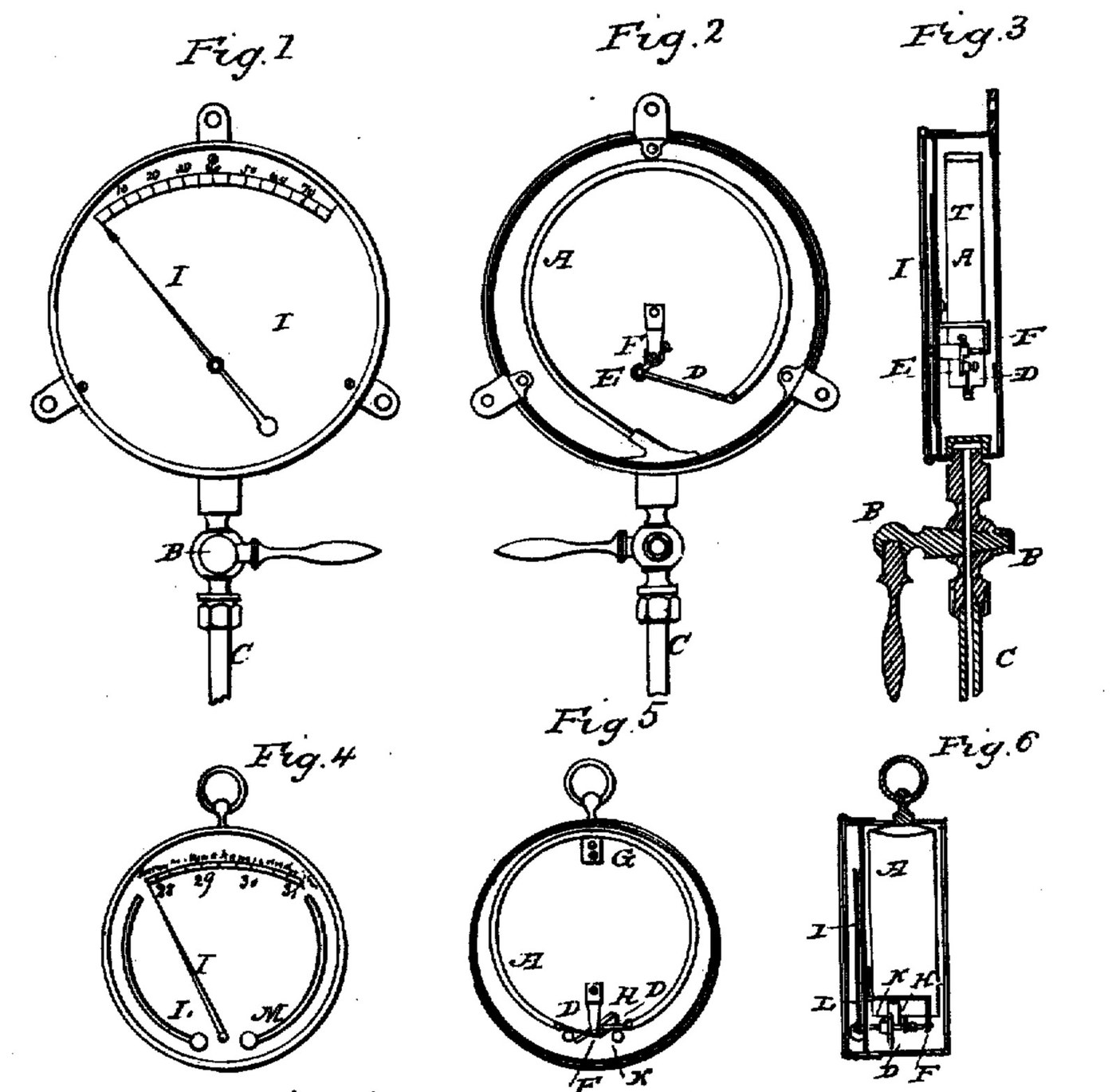


Vacuum Gauge: Flattened Curved Tube Driving an Index (Bourdon, US 9,163)
A vacuum gauge shows how far a line or vessel has been pumped below atmospheric pressure. Eugène Bourdon (US 9,163, 1852) found that a thin metal tube, flattened and bent into a curve, straightens a little under internal pressure and curls up more when the air is drawn out of it.
One end is open to the line through a cock; the closed end drives a lever on a spindle that carries the index. With the air withdrawn the index moves the opposite way to a pressure gauge, "and the instrument is then a vacuum gage."
Source: E. Bourdon, "Pressure-Gage", US Patent 9,163 (1852). Picture: its Figs. 1-6.
མཐོ་རིམ
Unknown
ལམ་སྟོན
1
1
Read Bourdon
Read Bourdon
"If the air be withdrawn from the interior of the tube A by means of an air pump or otherwise the curvature of the tube is increased and the index moves in the opposite direction and the instrument is then a vacuum gage."
2
2
Make the tube
Make the tube
Flatten a thin metal tube so its section is no longer round (Bourdon draws oval, flat, cross and Y sections) and bend it into a near circle. Close one end (how is not given) and leave the other open. Bourdon: the wall depends on the size, motion, pressure and metal; his only figure is brass about 1/100 in. thick for a barometer about 4 in. across. The metal, wall and size for the vacuum gauge are not given.
གོམ་པ་འདིའི་རྫས་རིགས:
 མ་ཤེས་པའི་ལྕགས་རིགས།1 tube
ལག་ཆས་དགོས་མཁོ:
 དབྱིབས་བཟོ་ཐངས་མ་ཤེས་པ།
 མ་ཤེས་པའི་ཚད།
3
3
Fit the movement
Fit the movement
Fix the open end of the tube in the case, connected through a cock to a pipe to the line or vessel. Join the closed end by a link to a short lever on a small spindle that carries the index (or drive the spindle by a toothed sector and pinion, or by a silk thread wound round it and kept tight by a spring). The lever multiplies the tube's movement at the index.
གོམ་པ་འདིའི་རྫས་རིགས:
 ཕྱེ་སྒོ་མ་ཤེས་པ།1 cockམ་ཤེས་པའི་ལྕགས་རིགས།1 link, lever, spindle and indexམ་ཤེས་པའི་ལྕགས་རིགས།1 case
ལག་ཆས་དགོས་མཁོ:
 འཁོད་བཞག་ཕུག་འཕྲུལ།
 ཕུག་མགོའི་ཚོགས་ཆས།
 བཤེར་ཆས (ལག་པའི་བཤེར་ཆས)
4
4
Graduate the dial
Graduate the dial
Fit a dial behind the index. Bourdon graduates the arc by submitting the instrument to known pressures alongside an ordinary mercury gauge and marking each on the dial; equal steps of pressure give nearly equal degrees. Connect the gauge to a pump drawing the air out: the tube curls more and the index moves the opposite way to a pressure gauge. The reference used to mark a vacuum scale is not given.
གོམ་པ་འདིའི་རྫས་རིགས:
 ངོ་མ་ཤེས་པའི་རྒྱུ་ཆ།1 dial
ལག་ཆས་དགོས་མཁོ:
 རླུང་འཐེན་འཕྲུལ་ཆས།
རྫས་རིགས
3- 1 caseས་ཆ་འཛིན
- 1 cockས་ཆ་འཛིན
- 1 dialས་ཆ་འཛིན
ལག་ཆས་དགོས་མཁོ
6- ས་ཆ་འཛིན
- ས་ཆ་འཛིན
- ས་ཆ་འཛིན
- ས་ཆ་འཛིན
- ས་ཆ་འཛིན
- 1 vendor sell this, none ship to you yetས་ཆ་འཛིན
བིལུ་པིརིན་ཊི་འདི་གིས་བཟོ་མི
CC0 སྤྱི་དབང
བིལུ་པིརིན་ཊི་འདི་CC0 འོག་བཀྲམས་ཡོད། ཁྱེད་རང་གིས་ཆོག་མཆན་མ་བཞེས་པར་ཕབ་ལེན་དང་བཟོ་བཅོས། བགོ་བཤའ། དགོས་མཁོ་གང་ལའང་བཀོལ་སྤྱོད་བྱས་ཆོག
བཟོ་མཁན་ལ་རྒྱབ་སྐྱོར་བྱེད་པའི་ཆེད་ཁོང་ཚོའི་བིལུ་པིརིན་ཊི་བརྒྱུད་ཐོན་སྐྱེད་ཉོ། བཟོ་མཁན་གྱིས བཟོ་མཁན་གྱི་ཁེ་ཕོགས ཚོང་པས་གཏན་འཁེལ་བྱས་པ། ཡང་ན་བིལུ་པིརིན་ཊི་འདིའི་པར་གསར་བཟོས་ཏེ་ཁྱེད་རང་གི་བིལུ་པིརིན་ཊི་ནང་མཐུད་སྦྲེལ་བྱས་ཏེ་ཡོང་སྒོ་བགོ་བཤའ་བྱེད།