སྒྱུ་རྩལ
མཛེས་སྡུག་དང་བདེ་ཐང
བཟོ་རིག
རིག་གནས་དང་ལོ་རྒྱུས
དགའ་སྟོན
ཁོར་ཡུག
ཟས་དང་བཏུང་རྫས
ཕྱིར་འཕྲུལ་རིག
ཚན་རིག
རྩེད་འགྲན
རིག་རྩལ
གྱོན་རུང
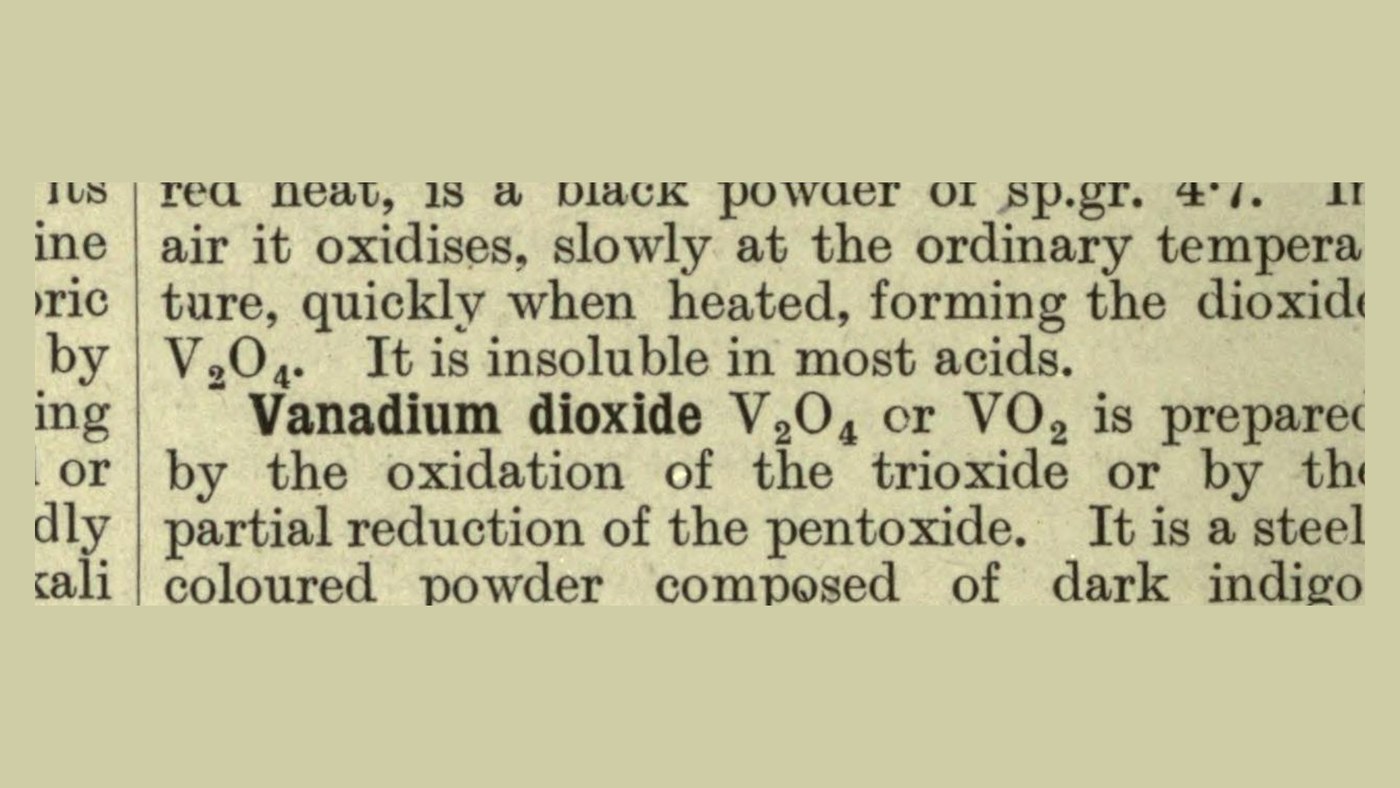


Vanadium Trioxide: the Pentoxide Reduced with Carbon at Red Heat (Thorpe, 1913)
Vanadium trioxide, a black powder, made by heating vanadium pentoxide with carbon to a red heat. It is the oxide Gin reduced with ferro-silicon to make ferro-vanadium.
Hot trioxide takes up oxygen quickly and turns back to the dioxide, so it is kept out of the air while hot.
Source: T. E. Thorpe, Dictionary of Applied Chemistry vol. V (1913), p. 610. Picture: the book's text.
བར་མ
Unknown
ལམ་སྟོན
1
1
Mix pentoxide and carbon
Mix pentoxide and carbon
Grind vanadium pentoxide with carbon. Proportions are not given.
གོམ་པ་འདིའི་རྫས་རིགས:
 བ་ན་ཌི་ཡམ་ཨོག་སཱའིཌ།1 དུམ་བུ།
 ཀར་བོན།1 དུམ་བུ།
ལག་ཆས་དགོས་མཁོ:
 གཏུན་ཁུང་དང་གཏུན་ཤིང་།
2
2
Reduce at red heat
Reduce at red heat
Heat the mixture in a crucible to a red heat; the pentoxide is reduced to the trioxide, a black powder.
ལག་ཆས་དགོས་མཁོ:
 ཞུན་སྣོད།
 མཱཕལ་ཐབ
3
3
Cool out of air
Cool out of air
In air the trioxide oxidises slowly when cold and quickly when hot, forming the dioxide (Thorpe); so cool it with the crucible covered (our step).
ལག་ཆས་དགོས་མཁོ:
ཞུན་སྣོད།མཐུད་སྦྲེལ་བིལུ་པིརིན་ཊི་རྫས་རིགས
བིལུ་པིརིན་ཊི་འདི་གིས་བཟོ་མི

CC0 སྤྱི་དབང
བིལུ་པིརིན་ཊི་འདི་CC0 འོག་བཀྲམས་ཡོད། ཁྱེད་རང་གིས་ཆོག་མཆན་མ་བཞེས་པར་ཕབ་ལེན་དང་བཟོ་བཅོས། བགོ་བཤའ། དགོས་མཁོ་གང་ལའང་བཀོལ་སྤྱོད་བྱས་ཆོག
བཟོ་མཁན་ལ་རྒྱབ་སྐྱོར་བྱེད་པའི་ཆེད་ཁོང་ཚོའི་བིལུ་པིརིན་ཊི་བརྒྱུད་ཐོན་སྐྱེད་ཉོ། བཟོ་མཁན་གྱིས བཟོ་མཁན་གྱི་ཁེ་ཕོགས ཚོང་པས་གཏན་འཁེལ་བྱས་པ། ཡང་ན་བིལུ་པིརིན་ཊི་འདིའི་པར་གསར་བཟོས་ཏེ་ཁྱེད་རང་གི་བིལུ་པིརིན་ཊི་ནང་མཐུད་སྦྲེལ་བྱས་ཏེ་ཡོང་སྒོ་བགོ་བཤའ་བྱེད།