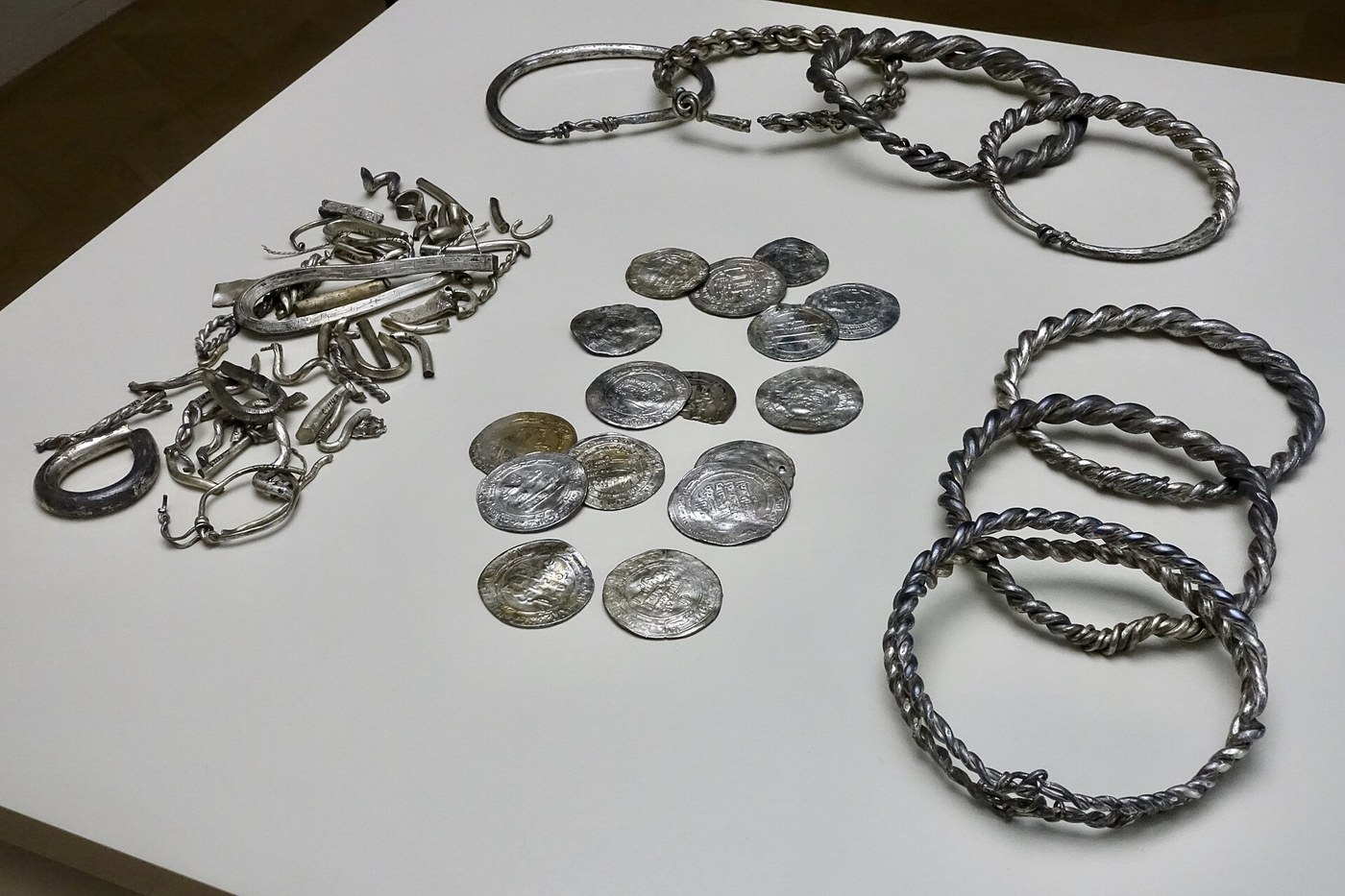


Viking Silver Arm Ring
A Viking arm ring was not primarily jewellery. It was money you wore. Silver in the Norse world circulated by weight, not by face value, so a ring of known weight was a portable, wearable account balance — and when you needed to pay for something, you cut a piece off.
That practice produced hacksilver: chopped fragments of rings, ingots, brooches and coins, weighed on small portable scales at the moment of the transaction. Hoards full of deliberately hacked silver are one of the most characteristic finds of the Viking age, and they are why so many surviving arm rings are incomplete.
This blueprint forges a twisted rod arm ring in silver, finished with flattened tapering terminals — the common Scandinavian form. It is straightforward smithing: anneal, twist, bend, finish. The interesting part is the last step, where the object turns out to be a legal instrument as much as an ornament.
ལམ་སྟོན
Weigh the silver before you start
Weigh the silver before you start
Weigh your stock and write the figure down. In the Norse system the value was the weight — an arm ring was understood as so many units of silver, and recording it is period-correct as well as useful.
གོམ་པ་འདིའི་རྫས་རིགས:
 སི་ཊར་ལིང་དངུལ་གྱི་སྐུད་པ0.6 མི་ཊར།
Cut two equal lengths
Cut two equal lengths
Cut two 260 mm lengths of 4 mm silver rod. Two rods twisted together give the characteristic rope texture; a single rod twisted just looks bent.
ལག་ཆས་དགོས་མཁོ:
 གསེར་མགར་གྱི་སོག་ལེ།
Anneal both rods
Anneal both rods
Heat each rod to a dull cherry red — 600 to 650 °C — in dim light. Air-cool 10 seconds, then quench. Quenching sterling straight from red heat can crack it.
ལག་ཆས་དགོས་མཁོ:
 པོ་རོ་པེན་གྱི་མེ་ལྕེ།
 མེ་བཟོད་སོ་ཕག
Pickle off the firescale
Pickle off the firescale
Pickle 5 minutes in citric acid at 1 part acid to 5 parts water. Oxide trapped inside a twist is impossible to remove afterwards.
གོམ་པ་འདིའི་རྫས་རིགས:
 སི་ཊི་རིཀ་སྐྱུར་རྫས།100 g
Clamp and twist the pair
Clamp and twist the pair
Clamp both rods together at one end in the vice, grip the other end, and twist steadily. Aim for one full turn per 15 mm. Twist evenly — pausing leaves a visible slack section.
ལག་ཆས་དགོས་མཁོ:
 ལས་ཅོག་གི་འཛིན་ཆས།
Re-anneal when the twist stiffens
Re-anneal when the twist stiffens
When the rods start to resist, stop and anneal again. Forcing a work-hardened twist snaps it, usually at the tightest turn.
ལག་ཆས་དགོས་མཁོ:
པོ་རོ་པེན་གྱི་མེ་ལྕེ།Forge the terminals flat
Forge the terminals flat
Hammer the last 40 mm at each end flat and tapering, about 2 mm thick. Flattened tapering terminals are the standard Scandinavian finish and they also make the ends comfortable against the arm.
ལག་ཆས་དགོས་མཁོ:
 རྒྱབ་ཐིག་གི་ཐོ་བ།
Punch a simple stamped decoration
Punch a simple stamped decoration
Punch dots, triangles or crosses into the flattened terminals. Viking-age punched ornament is geometric and repetitive — resist the urge to engrave a scene.
ལག་ཆས་དགོས་མཁོ:
 བརྐོས་རིས་ཀྱི་བུ་རིན།
Bend to an open oval
Bend to an open oval
Bend the twisted bar around a former into an open oval sized to the upper arm, leaving a 30 mm gap. The gap lets it spring on and off; a closed ring has to be forced over the hand.
ལག་ཆས་དགོས་མཁོ:
 གསེར་མགར་གྱི་ཆུ་ཙེ་ཆ་ཚང་།
Work-harden the finished ring
Work-harden the finished ring
Tap the whole ring lightly all over with a rawhide or wooden mallet. Do not anneal after this. Annealed silver at this size will bend out of shape the first time it is knocked.
ལག་ཆས་དགོས་མཁོ:
 རྐོ་བརྐོ་ནིའི་ཤིང་གི་ཐོ་བ།
Burnish and re-weigh
Burnish and re-weigh
Burnish the high points of the twist so they catch light against the darker valleys. Weigh the finished ring and compare with step 1 — the difference is what you lost in filing and forging.
ལག་ཆས་དགོས་མཁོ:
 ཨེ་གེཊ་ཀྱི་མདངས་བཏོན་ཆས།
History & Context
History & Context
Silver by weight, not by coin. Across much of the Viking world silver circulated as bullion. Value was determined by weighing and by assessing purity, not by a stamped denomination — which is why Viking-age graves and hoards so often contain small folding balances and sets of weights. A merchant carried the means of valuation with him.
Hacksilver. To pay, you cut. A fragment was hacked off a ring, ingot, brooch or coin and weighed out to the required amount. This is why so much Viking silver survives as deliberately chopped pieces, and why an intact arm ring is comparatively rare — most were eventually spent. An arm ring is best understood as a wallet you could not easily drop.
Weight units. Rings were often made to standardised weights, commonly cited around 26.6 g for the eyrir and about 8.6 g for the ortug. Treat specific figures with some caution: standards varied by region and period, and much of the precision in popular sources is firmer than the evidence supports.
Oath rings — and a caveat. Rulers rewarded loyal retainers with silver arm rings, and Norse law codes and the Icelandic sagas describe oaths sworn on rings kept at temple altars. This is genuinely attested but the sagas were written down centuries after the events they describe, by Christian authors, so they are literary evidence about how later Icelanders imagined the pagan past as much as records of it. The ring-giving itself is on much firmer ground — "ring-giver" is a standard poetic term for a lord.
Why twisted rods. Twisting two or more rods together is faster than carving a pattern, stiffens the bar considerably, and produces a texture that reads clearly at a distance and in poor light. It also makes hacking a fragment slightly easier to do neatly. Practical, decorative and financial reasons pointing the same way is usually why a form persists.
རྫས་རིགས
2- 0.6 མི་ཊར།ས་ཆ་འཛིན
- 100 gས་ཆ་འཛིན
ལག་ཆས་དགོས་མཁོ
9- ས་ཆ་འཛིན
- ས་ཆ་འཛིན
- ས་ཆ་འཛིན
- ས་ཆ་འཛིན
- ས་ཆ་འཛིན
- ས་ཆ་འཛིན
- ས་ཆ་འཛིན
- ས་ཆ་འཛིན
- ས་ཆ་འཛིན
བིལུ་པིརིན་ཊི་འདི་གིས་བཟོ་མི

CC0 སྤྱི་དབང
བིལུ་པིརིན་ཊི་འདི་CC0 འོག་བཀྲམས་ཡོད། ཁྱེད་རང་གིས་ཆོག་མཆན་མ་བཞེས་པར་ཕབ་ལེན་དང་བཟོ་བཅོས། བགོ་བཤའ། དགོས་མཁོ་གང་ལའང་བཀོལ་སྤྱོད་བྱས་ཆོག
བཟོ་མཁན་ལ་རྒྱབ་སྐྱོར་བྱེད་པའི་ཆེད་ཁོང་ཚོའི་བིལུ་པིརིན་ཊི་བརྒྱུད་ཐོན་སྐྱེད་ཉོ། བཟོ་མཁན་གྱིས བཟོ་མཁན་གྱི་ཁེ་ཕོགས ཚོང་པས་གཏན་འཁེལ་བྱས་པ། ཡང་ན་བིལུ་པིརིན་ཊི་འདིའི་པར་གསར་བཟོས་ཏེ་ཁྱེད་རང་གི་བིལུ་པིརིན་ཊི་ནང་མཐུད་སྦྲེལ་བྱས་ཏེ་ཡོང་སྒོ་བགོ་བཤའ་བྱེད།