སྒྱུ་རྩལ
མཛེས་སྡུག་དང་བདེ་ཐང
བཟོ་རིག
རིག་གནས་དང་ལོ་རྒྱུས
དགའ་སྟོན
ཁོར་ཡུག
ཟས་དང་བཏུང་རྫས
ཕྱིར་འཕྲུལ་རིག
ཚན་རིག
རྩེད་འགྲན
རིག་རྩལ
གྱོན་རུང
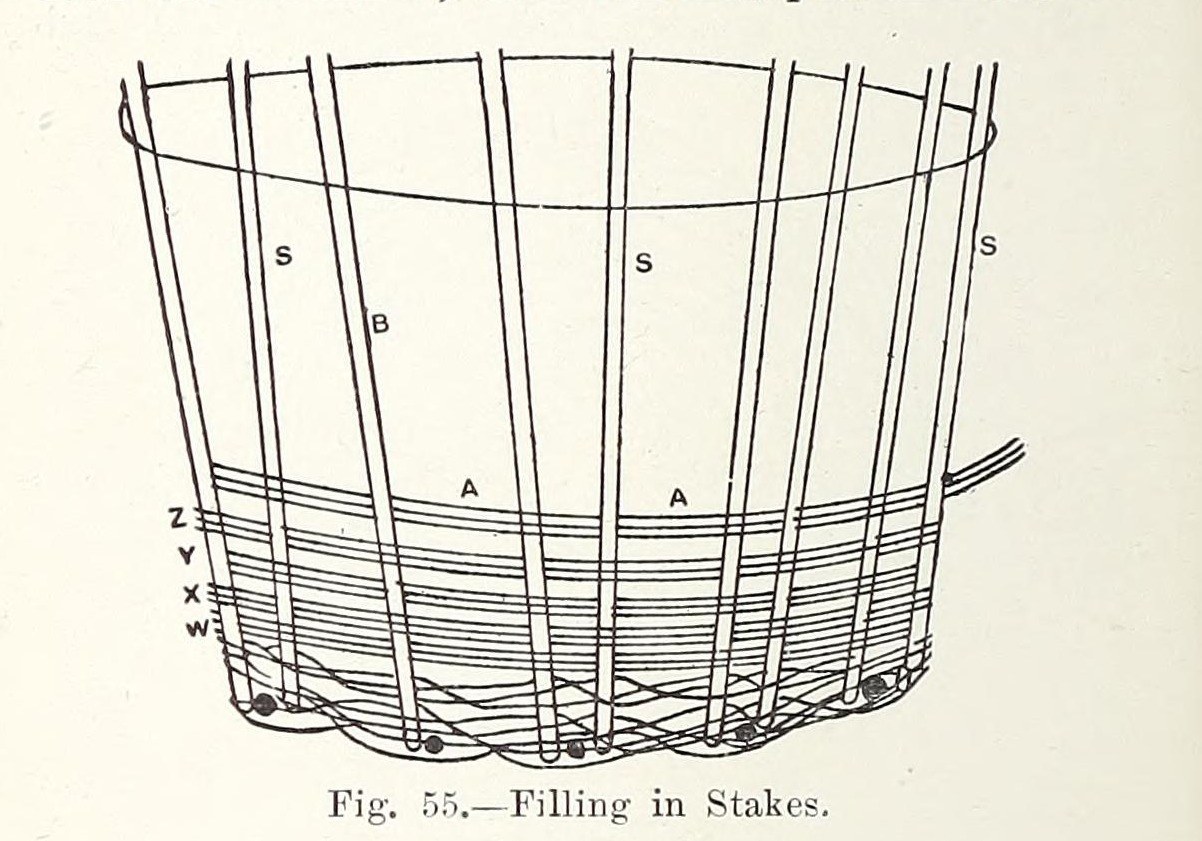


Wicker Harvesting Baskets: the Round Willow Cob (Hasluck, 1903)
The basket-maker's round 'cob': a crowned round bottom 8 in across, flaring sides slewed to 11 in across at 11 in deep, a laid border and a rope-wrapped bow handle across the top.
Variable: slewed (eight and a half pairs of stakes) or the better randed white cob (nine pairs).
Source: Paul N. Hasluck, Basket Work of All Kinds (1903), pp. 48-54. Picture: Fig. 55 of the book.
བར་མ
Unknown
ལམ་སྟོན
1
1
Lay the slarth
Lay the slarth
Cut four sticks about 11 in long and shave them along the middle so one pair crosses the other. Lay them under your feet (Fig. 52) and tie them with two rods, one of whose butts forms a half stick, so the bottom has four and a half sticks. Work the tie-rods round to open the sticks into nine parts (Figs. 53-54), keeping a crown in the bottom.
གོམ་པ་འདིའི་རྫས་རིགས:
 སྟུག་བའི་ལྕང་མའི་ཡལ་ག4 11 in
 ལྕང་མའི་ཡལ་ག2 tie-rods
ལག་ཆས་དགོས་མཁོ:
 ཡལ་ག་གཏུབ་ནིའི་ཇེམ་ཙི།
 ཤིང་ལེབ་ལེབ།
 ཆུ།
2
2
Slew and pair the bottom
Slew and pair the bottom
Fill in by working two rods together (slewing), adding a rod now and then, until the bottom is 7 1/2 in across; then pair off with two pointed rods to 8 in. Push the ends in, pick the bottom and cut the sticks off with the shears.
གོམ་པ་འདིའི་རྫས་རིགས:
ལྕང་མའི་ཡལ་ག1 slewing, pairingལག་ཆས་དགོས་མཁོ:
ཡལ་ག་གཏུབ་ནིའི་ཇེམ་ཙི། ཇེམ་ཆེན
3
3
Stake and upset
Stake and upset
Push in eight and a half pairs of stakes, one each side of eight sticks and one by the ninth. Prick them up and gather them in a hoop several times larger than the bottom, since the cob needs a 3 in spring at the border. Drive them level with the iron. Upset with the tops of four rods (7 to 9 in of tip cut off), each in front of three stakes and behind the fourth; after one round drop to three rods, each in front of two and behind the third, and piece the butts.
གོམ་པ་འདིའི་རྫས་རིགས:
 ལྕང་མའི་ཕུར་པ།17 8 1/2 pairsལྕང་མའི་ཡལ་ག7 upsetting
ལག་ཆས་དགོས་མཁོ:
ཡལ་ག་གཏུབ་ནིའི་ཇེམ་ཙི། ཐོ་བ།
 ཕྲ་རིང་འཛུལ་བའི་ཁབ།
4
4
Slew the sides
Slew the sides
Pin the bottom to the board with the small bodkin or weight it, and fill in the stakes with a three-rod slew (Fig. 55), adding a butt inside as each top finishes outside. Let the sides spring gradually to 11 in across at 11 in deep; a round of white rods halfway up brightens it. Level with a two- or one-rod slew and pair off with two rods.
གོམ་པ་འདིའི་རྫས་རིགས:
ལྕང་མའི་ཡལ་ག1 slewingལག་ཆས་དགོས་མཁོ:
ཕྲ་རིང་འཛུལ་བའི་ཁབ།ཐོ་བ།5
5
Border and bow handle
Border and bow handle
Push two pointed sticks down the slewing at opposite sides to keep the handle place. Lay down five stakes and border as for a square basket (Fig. 56), finishing by cramming. Wet the two sticks with the sponge and pull them out; point, bend and push in a stick for the bow handle and wrap it with twisted rods as for the square basket.
གོམ་པ་འདིའི་རྫས་རིགས:
སྟུག་བའི་ལྕང་མའི་ཡལ་ག1 bowལྕང་མའི་ཡལ་ག4 handle wrapལག་ཆས་དགོས་མཁོ:
 སི་པོན་ཇི།ཡལ་ག་གཏུབ་ནིའི་ཇེམ་ཙི།སྟུག་བའི་ལྕང་མའི་ཡལ་ག
རྫས་རིགས
3- ས་ཆ་འཛིན
- 4 handle wrapས་ཆ་འཛིན
- 17 8 1/2 pairsས་ཆ་འཛིན
མཐུད་སྦྲེལ་བིལུ་པིརིན་ཊི་རྫས་རིགས

བིལུ་པིརིན་ཊི་འདི་གིས་བཟོ་མི

CC0 སྤྱི་དབང
བིལུ་པིརིན་ཊི་འདི་CC0 འོག་བཀྲམས་ཡོད། ཁྱེད་རང་གིས་ཆོག་མཆན་མ་བཞེས་པར་ཕབ་ལེན་དང་བཟོ་བཅོས། བགོ་བཤའ། དགོས་མཁོ་གང་ལའང་བཀོལ་སྤྱོད་བྱས་ཆོག
བཟོ་མཁན་ལ་རྒྱབ་སྐྱོར་བྱེད་པའི་ཆེད་ཁོང་ཚོའི་བིལུ་པིརིན་ཊི་བརྒྱུད་ཐོན་སྐྱེད་ཉོ། བཟོ་མཁན་གྱིས བཟོ་མཁན་གྱི་ཁེ་ཕོགས ཚོང་པས་གཏན་འཁེལ་བྱས་པ། ཡང་ན་བིལུ་པིརིན་ཊི་འདིའི་པར་གསར་བཟོས་ཏེ་ཁྱེད་རང་གི་བིལུ་པིརིན་ཊི་ནང་མཐུད་སྦྲེལ་བྱས་ཏེ་ཡོང་སྒོ་བགོ་བཤའ་བྱེད།