艺术
美容与健康
工艺
文化与历史
娱乐
环境
食品与饮料
逆向工程
科学
体育
技术
可穿戴设备
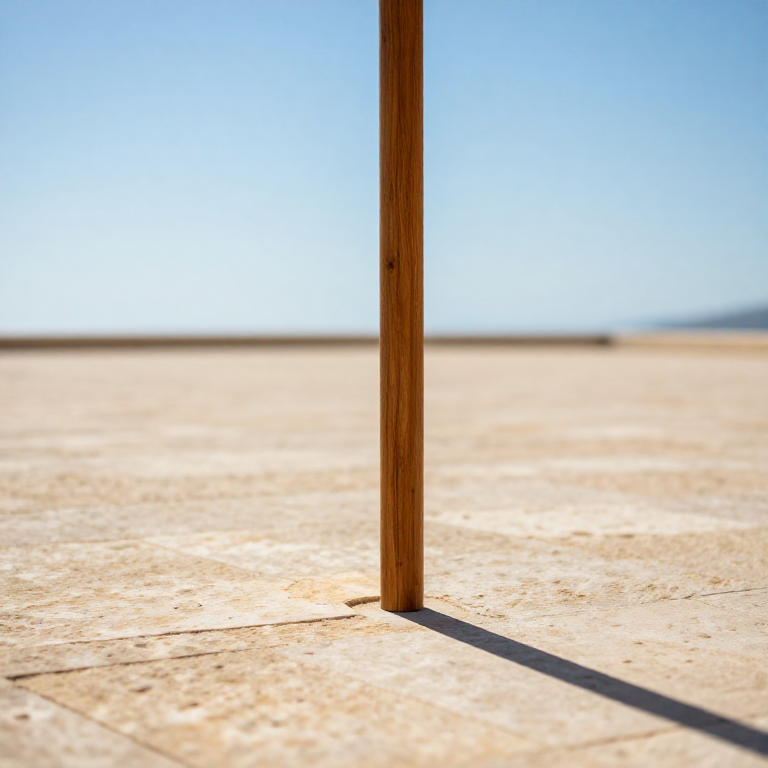

Measuring the Circumference of the Earth — Eratosthenes' Shadow Method
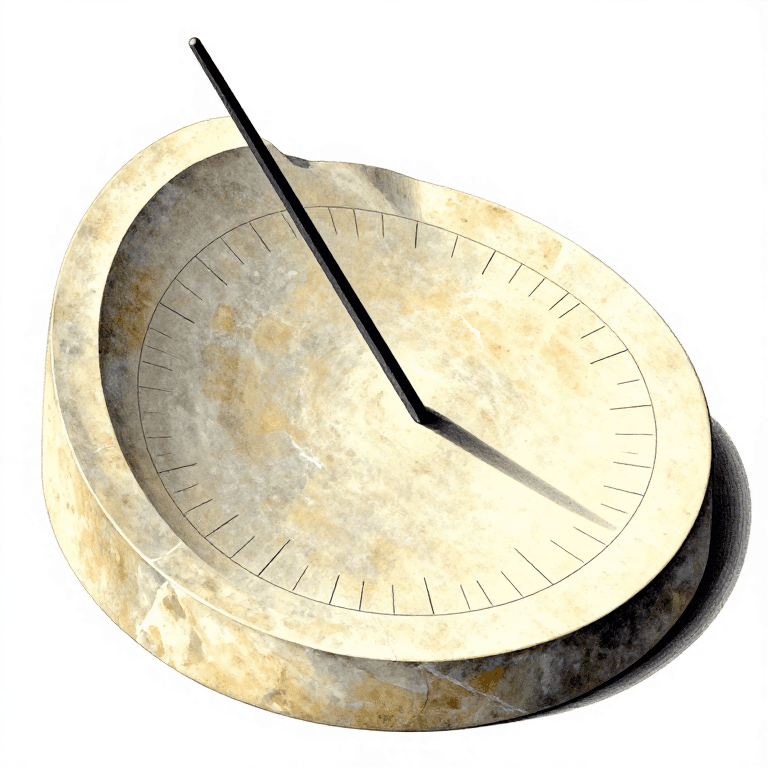
Around 240 BC the Greek scholar Eratosthenes, chief librarian at Alexandria, measured the size of the whole Earth with nothing but a vertical stick, its shadow, and a known distance. He knew that at noon on the summer solstice the Sun stood directly over Syene (modern Aswan) — sunlight reached the bottom of a deep well and cast no shadow. At Alexandria, far to the north, a vertical rod at the same moment cast a shadow of about 7.2°. That angle is one-fiftieth of a full circle, so the Earth's circumference had to be fifty times the distance between the two cities. This blueprint reproduces his measurement with a gnomon and a plumb line — and lands within a few percent of the true value, as he did.
中级
3
说明
1
1
Understand the principle
Understand the principle
The Sun is so far away that its rays reach Earth effectively parallel. If a vertical rod casts no shadow at one place and a shadow at another at the very same moment, the shadow angle equals the difference in latitude between the two places. Measure that angle and the ground distance, and simple proportion gives the whole circumference.
2
2
Build a vertical gnomon
Build a vertical gnomon
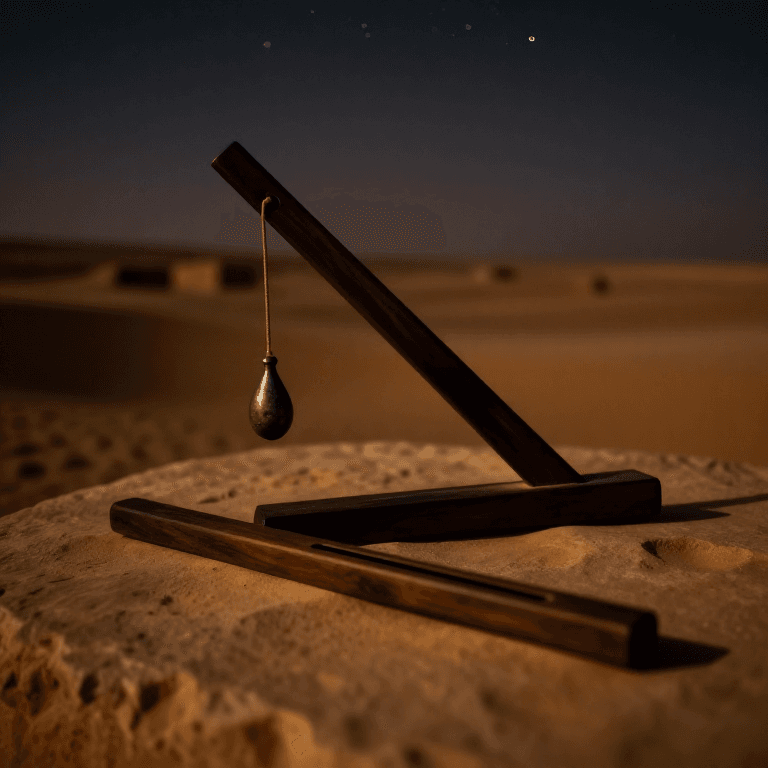
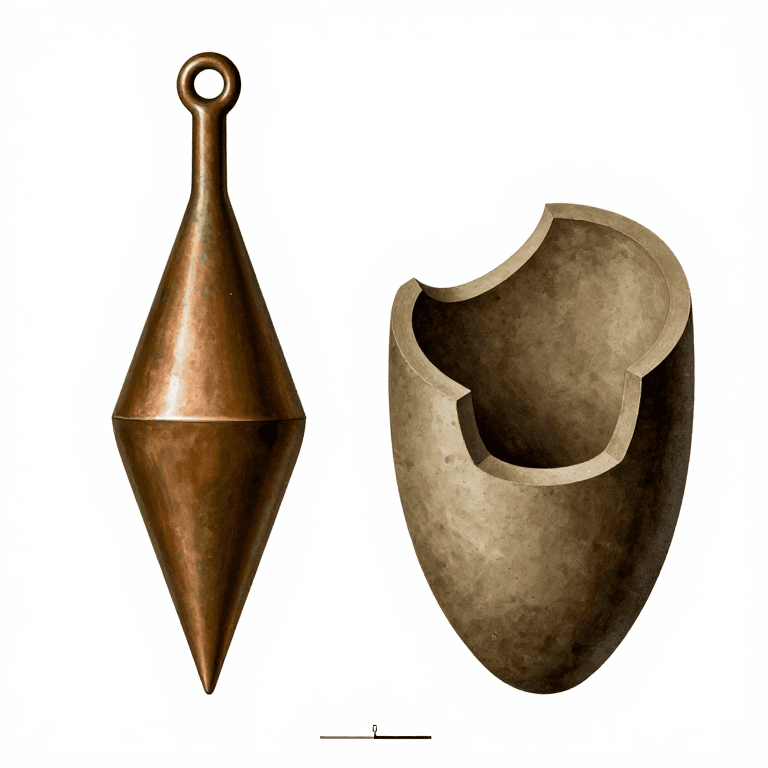
Fix a straight dowel upright at the centre of a flat board — this is the gnomon. Hang a plumb line (a string with a small weight) beside it and adjust until the rod is exactly parallel to the string, so it is truly vertical. Any lean will spoil the angle.
此步骤所需材料:
 木榫条1 个
 红桤木板1 个
所需工具:
 棉质厨用绳
棉质厨用绳3
3
Find true north and the noon line
Find true north and the noon line
Mark the north-south meridian line across the board so you can recognise local solar noon — the instant the shadow is shortest and points due north. A gnomon's shadow swings shortest exactly at midday.
所需工具:
 弹线盒
弹线盒4
4
Measure at solar noon
Measure at solar noon
At local solar noon (ideally on the summer solstice, when the effect is largest and matches Eratosthenes' day), the shadow is at its shortest. This is the single moment when you take your reading.
5
5
Mark and measure the shadow
Mark and measure the shadow
Mark the tip of the shadow with chalk. Measure the shadow's length from the base of the rod to that mark, and measure the height of the rod above the board. Record both lengths carefully in the same units.
所需工具:
弹线盒棉质厨用绳6
6
Work out the shadow angle
Work out the shadow angle
The angle of the Sun from vertical equals arctan(shadow length ÷ rod height). Eratosthenes found this angle to be about 7.2°. Because 360° ÷ 7.2° = 50, his shadow angle was exactly one-fiftieth of a full circle.
7
7
Take the north-south distance
Take the north-south distance
You need the distance due north-south to a place where the Sun is overhead (no shadow) at that same moment. Eratosthenes used Syene, about 5,000 stadia — roughly 800 km — south of Alexandria. Use a known map distance between your site and that reference latitude.
所需工具:
棉质厨用绳8
8
Compute the circumference
Compute the circumference
Since the shadow angle is one-fiftieth of a circle, the full circumference is fifty times the distance: 50 × 800 km = 40,000 km. Eratosthenes' own figures gave 50 × 5,000 = 250,000 stadia. In general, circumference = distance × (360° ÷ shadow angle).
9
9
Check against the true value
Check against the true value
The Earth's real circumference is about 40,075 km around the equator. A careful reading with a stick and its shadow lands within a few percent — the same accuracy Eratosthenes reached around 240 BC, proving the size of the planet can be found from a shadow and a length of string.

相关蓝图
这些蓝图共享知识——技术、材料或原理

CC0 公共领域
此蓝图以 CC0 协议发布。你可以自由复制、修改、分发和使用此作品,无需征得许可。
通过购买蓝图中的产品支持创客,他们将获得 创客佣金 (由供应商设定),或创建此蓝图的新版本并将其作为连接包含在你自己的蓝图中以分享收入。