

Preparing Carbon Ink from Soot and Gum — Ancient Writing Ink
说明
Collect Lampblack
Collect Lampblack
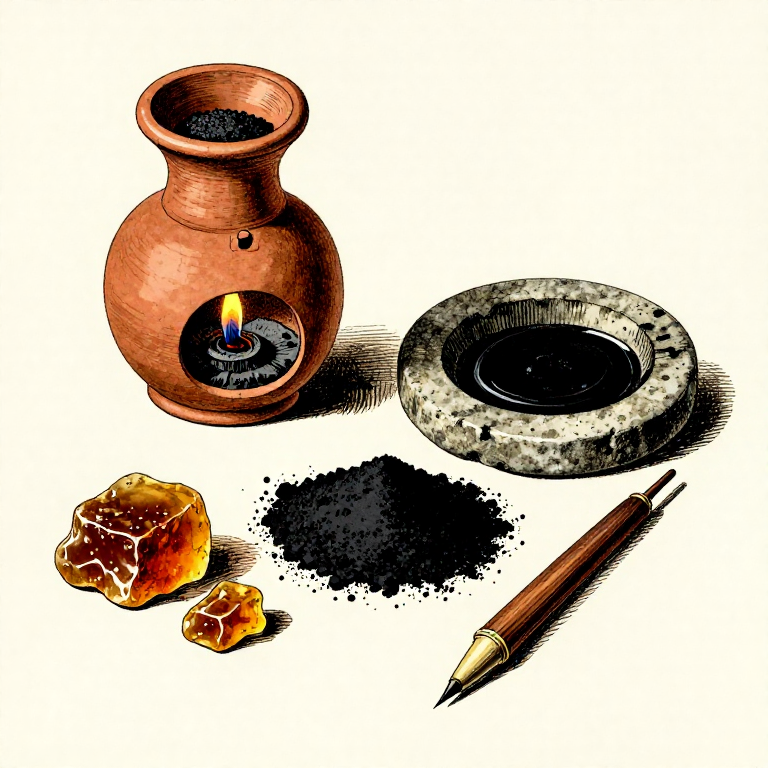
Light an oil lamp (burning olive oil, sesame oil, or animal fat) or a small fire of resinous pine wood. Hold a pottery shard, flat stone, or the bottom of a clay pot in the smoke plume, about 5-10 cm above the flame. The incomplete combustion of the oil or resin produces fine carbon particles (soot) that deposit on the cool surface. Collect soot for 15-30 minutes, scraping it off periodically with a bone or wooden spatula. Pine resin and sesame oil produce the finest, blackest soot. The soot particles are primarily amorphous carbon, typically 20-100 nanometres in diameter — far finer than charcoal powder.
此步骤所需材料:
 灯烟墨1-2 tablespoons 个
 阿拉伯胶1 tablespoon 个
 水small amount 个
 炉膛(锻火)1 lamp 个
所需工具:
 扁石(抹刀/整形工具)
 Slide Pot - Small (10k Linear Taper)
Prepare the Binder
Prepare the Binder
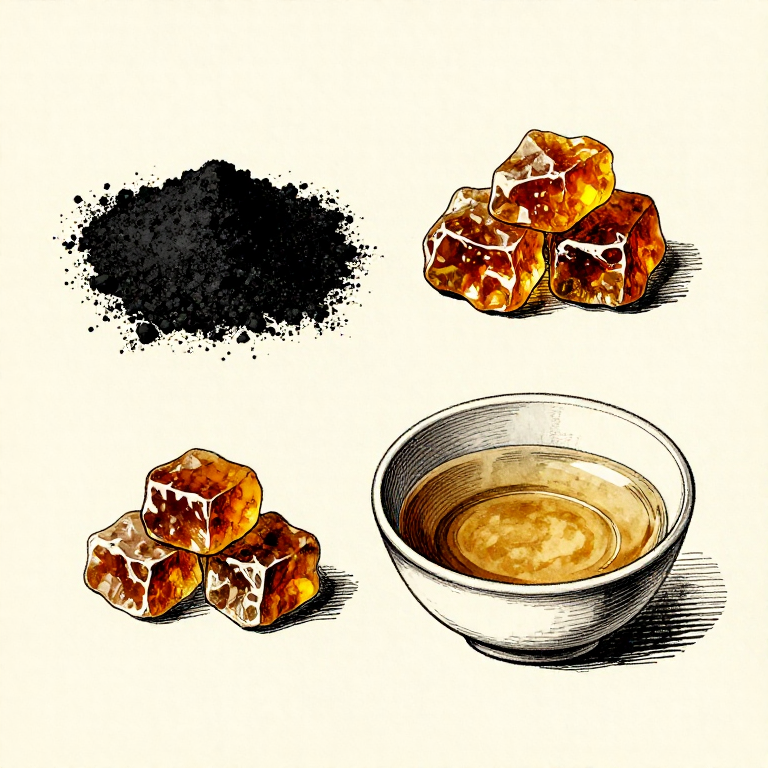
Dissolve gum arabic in a small amount of warm water. Gum arabic is the dried sap of Acacia senegal and related species, widely available across North Africa and the Near East. It dissolves readily in water to form a slightly viscous, transparent solution. If gum arabic is unavailable, other plant gums work as substitutes: gum tragacanth, honey, or egg white (glair) were all used historically. The binder serves two functions: it suspends the carbon particles evenly in the liquid and it adheres the ink to the writing surface once dry.
Grind and Mix
Grind and Mix
Place the collected soot on a flat stone (a grinding palette) and add the gum arabic solution gradually. Grind the mixture with a small round stone (muller) using a circular motion, working the soot into the binder thoroughly. The grinding breaks up any clumps of carbon and disperses the particles evenly through the gum solution. Continue grinding for 10-15 minutes — the longer you grind, the smoother and more uniform the ink. Add water drop by drop to achieve the desired consistency: thick and paste-like for brush writing, more fluid for reed pen use. The ratio is approximately 1 part soot to 1 part gum arabic solution by volume.
Test the Ink
Test the Ink
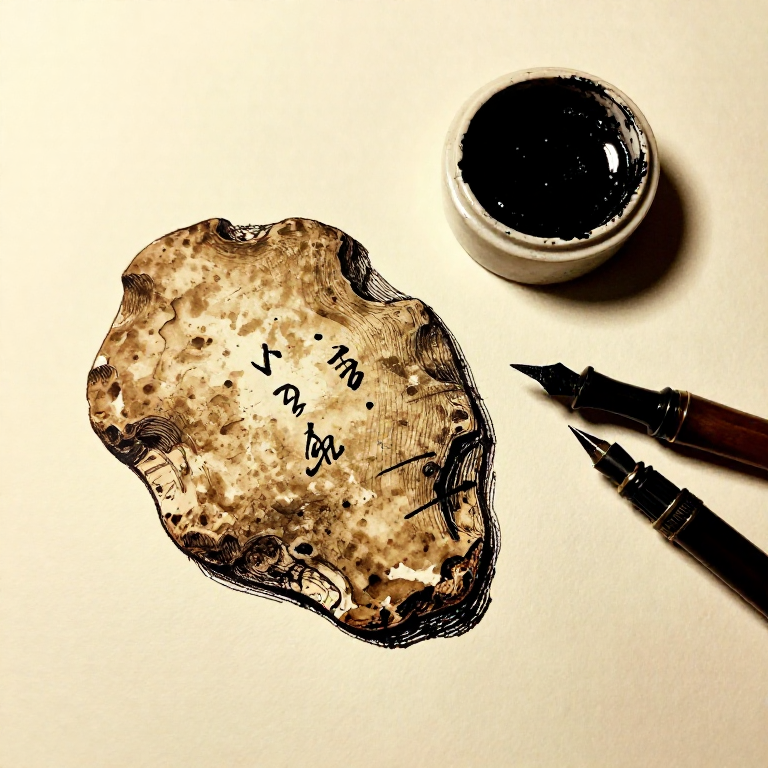
Test the ink by writing on a clean pottery shard (ostracon) or a scrap of papyrus with a reed pen. The ink should flow smoothly from the pen without dripping, produce a dense black line, and dry within a few seconds to a matte black finish. If the ink is too thick and clogs the pen, add more water. If it is too thin and the lines appear grey or transparent, add more soot. If the dried ink flakes off the surface when rubbed, add more gum arabic — the binder concentration is too low. Well-made carbon ink dries to an intense, permanent black that cannot be faded by light exposure.
Storage and Ink Cakes
Storage and Ink Cakes
Liquid carbon ink can be stored in a sealed shell, pot, or hollow reed section. It keeps for weeks if stored in a cool place, but will eventually develop mould from the organic gum component. For long-term storage, pour the ink paste into a mould (a shell or small depression in stone) and allow it to dry completely into a solid ink cake. To use, simply rub the ink cake against a wet grinding stone with a few drops of water — exactly like Chinese and Japanese ink sticks, which use the identical formulation. Dried ink cakes store indefinitely and were a valuable trade commodity throughout the ancient world. Egyptian scribal kits from 2000 BCE contain dried ink cakes, palette stones, and reed pens as a complete portable writing set.
此蓝图制作

CC0 公共领域
此蓝图以 CC0 协议发布。你可以自由复制、修改、分发和使用此作品,无需征得许可。
通过购买蓝图中的产品支持创客,他们将获得 创客佣金 (由供应商设定),或创建此蓝图的新版本并将其作为连接包含在你自己的蓝图中以分享收入。