艺术
美容与健康
工艺
文化与历史
娱乐
环境
食品与饮料
逆向工程
科学
体育
技术
可穿戴设备
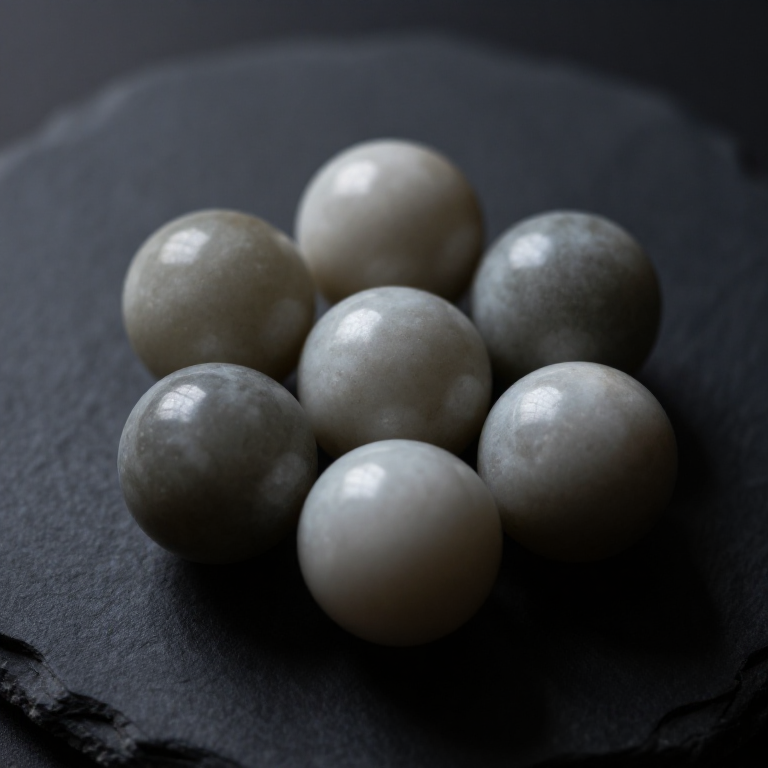


Perfect Numbers — Find the Numbers That Equal Their Own Parts
A hands-on maths project: take 6 counters, find every way to divide them into equal groups, and discover that the group-sizes add back up to 6 -- a 'perfect' number. A Python cell checks 6 and 28, and a compendium reaches a 2,300-year-old unsolved mystery.
初学者
30 minutes
说明
1
1
A number equal to its parts
A number equal to its parts
Some numbers have a magical property: add up all the smaller numbers that divide them, and you get the number back. The Greeks called these 'perfect'. You will find one with a handful of counters.
2
2
Lay out six counters
Lay out six counters
Take 6 counters (beads, buttons or coins). Find every way to divide them into equal groups: one group of 6, or 2 groups of 3, or 3 groups of 2, or 6 groups of 1. The group-SIZES that work (the divisors smaller than 6) are 1, 2 and 3.
此步骤所需材料:
 玻璃珠1 个
3
3
Add up the parts
Add up the parts
Add those divisors: 1 + 2 + 3 = 6. The parts add back up to the number itself -- 6 is perfect! Now try 28 with 28 counters: its divisors are 1, 2, 4, 7 and 14, and they add to 28. Try 10 or 12 and you will find they do NOT work, which is why perfect numbers are so rare.
4
4
Check with the computer
Check with the computer
正在加载 Jupyter 笔记本…
所需工具:
 台式电脑
台式电脑5
5
Compendium: an unsolved mystery
Compendium: an unsolved mystery
What your counters lead to. (1) The perfect numbers are strikingly rare: 6, 28, 496, 8128, then none until 33,550,336. (2) Around 300 BC Euclid found a recipe: whenever 2-to-the-power-p minus 1 is prime, you can build a perfect number from it -- which links them to the famous 'Mersenne primes' that a worldwide computer project still hunts today. (3) Every perfect number ever found is EVEN. (4) After 2,300 years, two questions Euclid could have asked remain unanswered: are there infinitely many, and does an ODD perfect number exist? Nobody has ever found one -- or proved one cannot exist. You have just handled the front edge of an open problem in mathematics.
相关蓝图
这些蓝图共享知识——技术、材料或原理

CC0 公共领域
此蓝图以 CC0 协议发布。你可以自由复制、修改、分发和使用此作品,无需征得许可。
通过购买蓝图中的产品支持创客,他们将获得 创客佣金 (由供应商设定),或创建此蓝图的新版本并将其作为连接包含在你自己的蓝图中以分享收入。