

艺术
美容与健康
工艺
文化与历史
娱乐
环境
食品与饮料
绿色未来
逆向工程
科学
体育
技术
可穿戴设备
Preserving Food by Canning — Appert's Heat-and-Seal Method That Fed Armies
Bombur

创建者

Bombur

25. 六月 2026US
2
0
0
0
0

Preserving Food by Canning — Appert's Heat-and-Seal Method That Fed Armies

In 1810 a French confectioner named Nicolas Appert won a prize from Napoleon's government for solving a problem that had plagued every army and navy in history: how to keep food from spoiling. His answer was deceptively simple — pack food in a sealed container and heat it thoroughly. Food preserved this way kept for months, even years, and the modern canning industry was born.

Appert did not know why it worked; it would take Louis Pasteur, fifty years later, to show that heat kills the microbes that spoil food and the seal keeps new ones out. But the method worked perfectly without that knowledge. Soon glass jars gave way to soldered tin cans — lighter, unbreakable, and ideal for soldiers and sailors — and canned food spread around the world.

Canning sits alongside salting, drying, and smoking as one of humanity's great preservation methods, but it was the first to keep food fresh-tasting and the first born of the industrial age. One caution it shares with all low-acid preserving: ordinary boiling does not destroy the spores of botulism, so low-acid foods must be acidified or pressure-canned — a lesson learned long after Appert.

初学者
2-4 hours depending on the food

说明

1

Understand the principle

Canning rests on two ideas: heat the food enough to destroy the organisms that spoil it, and seal it so no new organisms can get in. Appert found this by trial; Pasteur later showed the spoilers are microbes. Do both well and food keeps for years.
2

Choose and prepare the food

Pick fresh, sound produce or meat and prepare it as you would to eat — wash, peel, trim, and cut to size. Anything already going off cannot be rescued by canning, so start with the best quality you have.

此步骤所需材料:

Fresh ProduceFresh Produce2 公斤
3

Prepare the jars

Use thick, heat-resistant glass jars with mouths that can be sealed. Wash them and their lids and scald them in boiling water just before filling, so you are not sealing spoilage organisms in with the food.

此步骤所需材料:

Glass JarGlass Jar6
4

Pack the jars

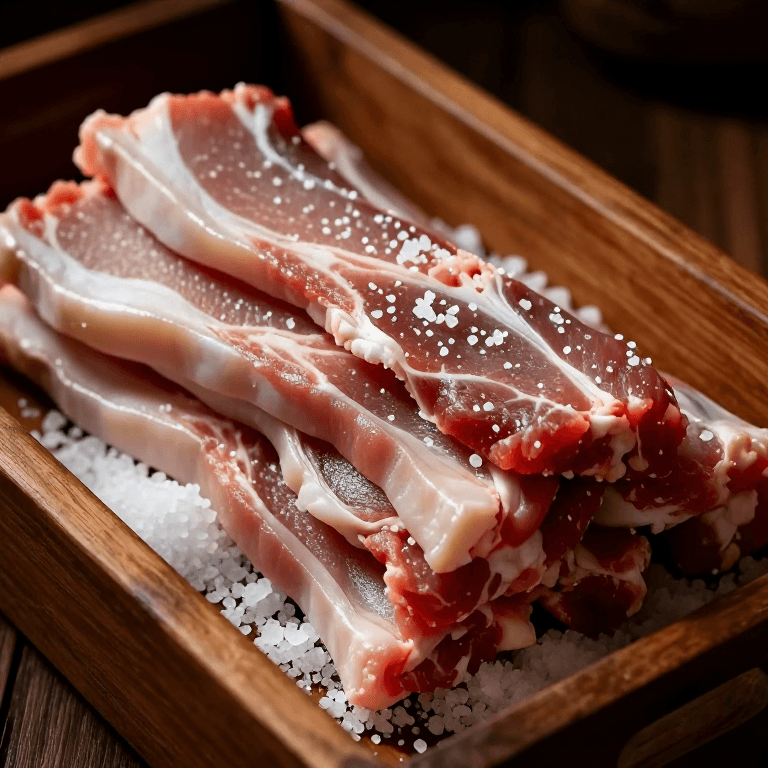
Pack the food firmly into the hot jars and cover it with hot liquid — brine for vegetables and meat, light syrup for fruit, or broth. Leave a small headspace at the top so the contents can expand and a vacuum can form on cooling.

此步骤所需材料:

Table SaltTable Salt50
5

Seal the jars

Close each jar. Appert's original way was a cork rammed in, wired down, and sealed over with wax; a modern jar uses a lid with a rubber gasket. Either way the seal must be tight enough to hold a vacuum once the air inside is driven out by heat.

此步骤所需材料:

BeeswaxBeeswax100
6

Heat in a boiling water bath

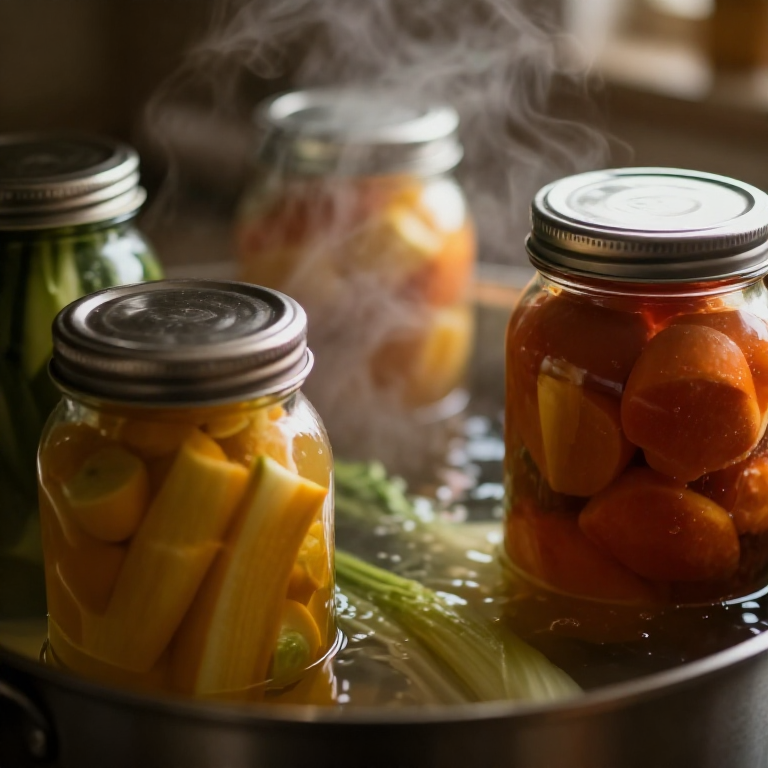
Stand the sealed jars in a deep pot, cover them with water, and bring it to a rolling boil. The heat must soak right through to the centre of each jar and hold there long enough to destroy the spoilage organisms inside.

此步骤所需材料:

WaterWater8

所需工具:

StockpotStockpot
7

Time by the food

Acidic foods like most fruit need only a modest boil, because acid itself discourages spoilage. Low-acid foods like vegetables and meat need much longer and hotter treatment — and for true safety against botulism, a pressure canner rather than a plain water bath.

所需工具:

ThermometerThermometer
8

Cool and check the seal

Lift the jars out and let them cool undisturbed. As the contents cool they shrink and pull the lid down into a vacuum, often with an audible pop. A properly sealed lid is dished inward and does not flex when pressed.

所需工具:

Jar TongsJar Tongs
9

Reject any failures

Discard any jar whose lid bulges, hisses, leaks, or smells wrong when opened — these are signs of spoilage or a failed seal. With low-acid foods, when in doubt, throw it out: spoiled canned food can be dangerous, not merely unpleasant.
10

Store cool and dark

Label each jar with its contents and date and store them somewhere cool, dark, and dry. Kept sealed and out of the light, properly canned food stays good for many months and often years.
11

Move to the tin can

For armies, ships, and shops, tin-plated iron cans replaced fragile jars: food is sealed inside by soldering the lid, then the whole can is boiled. Cans are light and unbreakable — though the can opener was not invented until decades after the can itself.

此步骤所需材料:

Tin CanTin Can6
12

Respect the botulism rule

The one hard rule: boiling water does not kill the spores of Clostridium botulinum, which thrive in sealed low-acid food and produce a deadly toxin. Either acidify low-acid foods, or process them in a pressure canner hot enough to destroy the spores. Acidic foods like fruit and pickles are safe by the simple boiling method.

材料

6

所需工具

3

CC0 公共领域

此蓝图以 CC0 协议发布。你可以自由复制、修改、分发和使用此作品,无需征得许可。

通过购买蓝图中的产品支持创客,他们将获得 创客佣金 (由供应商设定),或创建此蓝图的新版本并将其作为连接包含在你自己的蓝图中以分享收入。

讨论

(0)

登录 加入讨论

加载评论中...