艺术
美容与健康
工艺
文化与历史
娱乐
环境
食品与饮料
逆向工程
科学
体育
技术
可穿戴设备
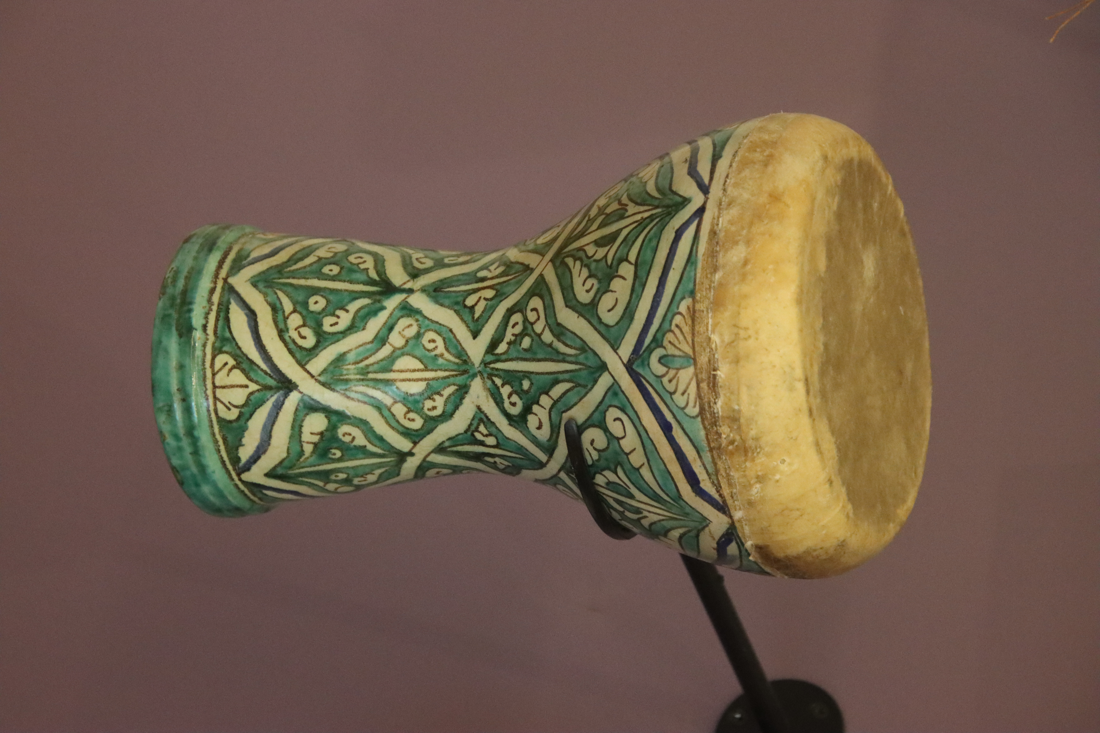
Terry Ballard · CC BY 2.0
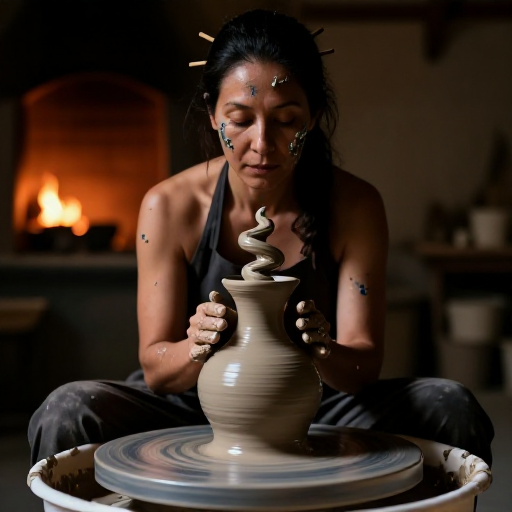

Making a Darbuka — The Goblet Drum of the Middle East
Make a darbuka: a goblet-shaped clay drum with a single skin head, played with quick fingers. A deep 'doum' rings from the centre and a crisp 'tek' snaps off the rim. A buildable ceramics-and-drum school project in the membrane drum and how a goblet body shapes its voice.
初学者
45 minutes
说明
1
1
A drum shaped like a goblet
A drum shaped like a goblet
The darbuka is a goblet-shaped drum with one skin head. Struck in the centre it booms a deep 'doum'; flicked at the rim it snaps a crisp 'tek'. Its narrow waist and open bottom shape the sound.
2
2
Prepare the clay
Prepare the clay
Wedge a large ball of clay firmly to press out every air bubble.
此步骤所需材料:
 低温陶土1500 克
3
3
Form the goblet body
Form the goblet body
Shape a goblet: a wide open bowl at the top for the drumhead, narrowing to a waist, then flaring to an open foot at the bottom. Keep the walls even and fairly thin.
所需工具:
 陶艺工具套装
4
4
Open the bottom
Open the bottom
Leave the bottom of the foot fully OPEN. The sound made by the head travels down the hollow body and out of this opening — it is a built-in loudspeaker for the bass.
5
5
Dry and fire it
Dry and fire it
Dry the body slowly for several days until bone-dry, then fire it hard in a kiln. For a no-kiln class, use air-dry clay instead.
6
6
Cut the head
Cut the head
Cut a round piece of rawhide a little larger than the wide top of the goblet.
此步骤所需材料:
 生皮1 个
生皮1 个7
7
Head the drum
Head the drum
Soak the hide, stretch it drum-tight over the wide top, and lash it down around the rim. Let it dry hard — a tighter head gives a higher, crisper sound.
此步骤所需材料:
 蕉麻捆扎绳1 个
8
8
Play doum and tek
Play doum and tek
Tuck the drum under one arm. Strike the CENTRE of the head with your palm for the deep 'doum', and flick the EDGE with your fingertips for the sharp 'tek'. Alternate them to build the rhythm.
9
9
Compendium — the goblet membrane drum
Compendium — the goblet membrane drum
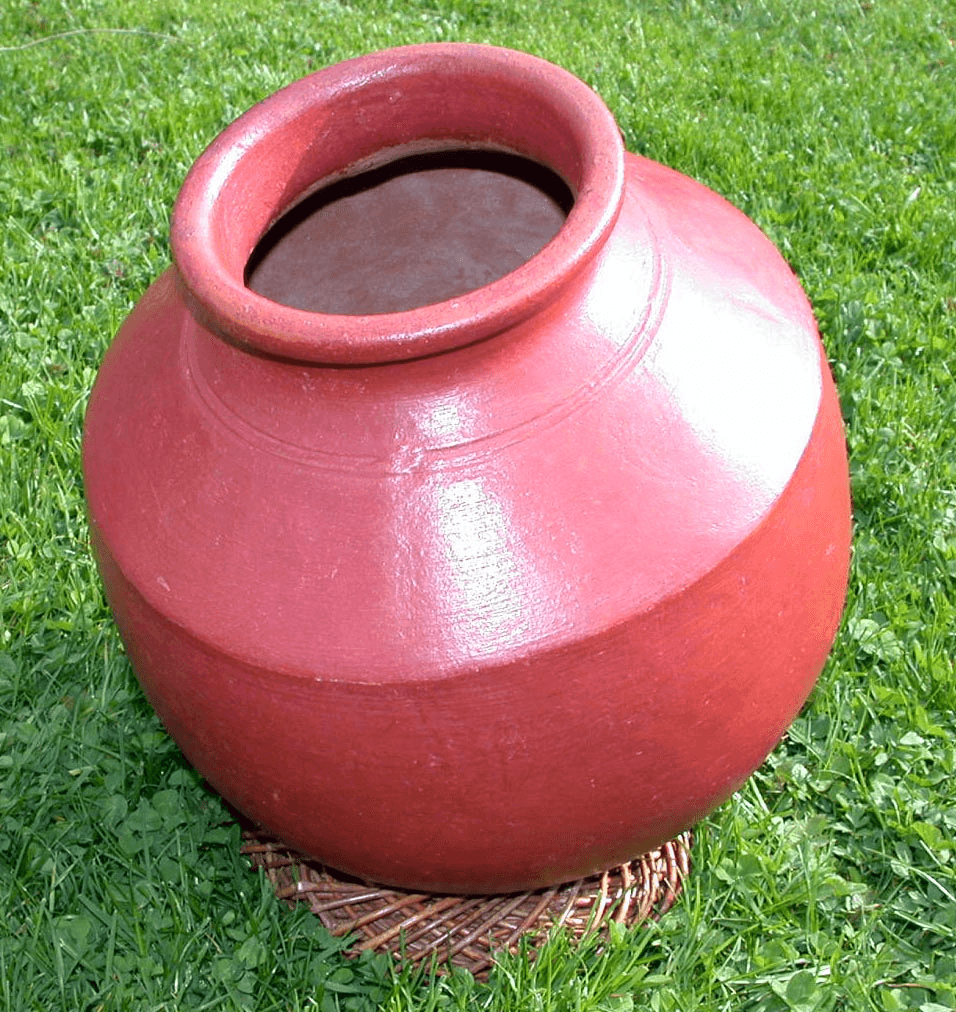
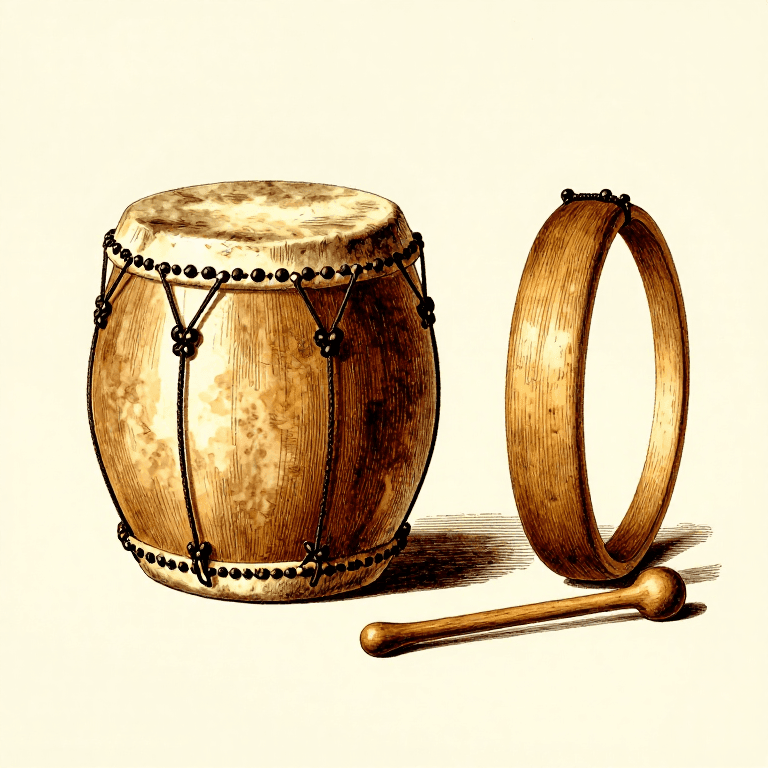
The darbuka is a membranophone: its sound is born on a stretched skin, not in the clay itself. When you strike the head, the membrane springs up and down, and its pitch rises with tension and falls with size — which is why a tightly-lashed head sounds high and crisp and a slack one sounds low and loose, and why players tighten the skin (traditionally by warming it) to tune the drum. But the goblet BODY shapes that sound. Hit near the centre and the whole head moves as one, driving a big slow pulse of air down the hollow goblet and out of the open foot, which acts like a short horn to boom out the deep, round 'doum'. Flick the rim and only the edge of the skin snaps, giving a high, dry, ringing 'tek' with almost no body resonance. So one drum and two strokes give two completely different voices — the alternating doum-and-tek that drives the dance rhythms of the Middle East, North Africa and the Balkans. Its Youblob cousins are the clay ghatam, another played clay pot, and the frame and hourglass drums; the difference is that the ghatam is a struck pot with no skin at all, while the darbuka, like the janggu, sings through a membrane.
此蓝图制作

相关蓝图
这些蓝图共享知识——技术、材料或原理

CC0 公共领域
此蓝图以 CC0 协议发布。你可以自由复制、修改、分发和使用此作品,无需征得许可。
通过购买蓝图中的产品支持创客,他们将获得 创客佣金 (由供应商设定),或创建此蓝图的新版本并将其作为连接包含在你自己的蓝图中以分享收入。