艺术
美容与健康
工艺
文化与历史
娱乐
环境
食品与饮料
逆向工程
科学
体育
技术
可穿戴设备
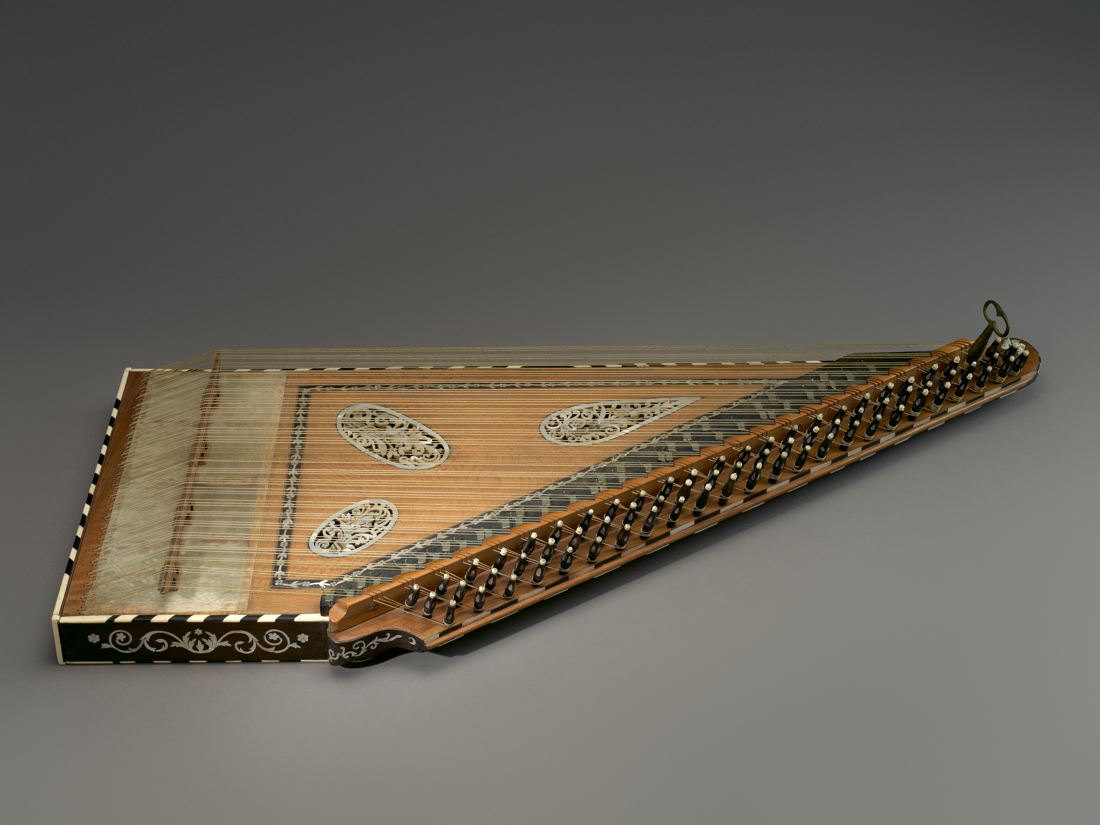


Building a Qanun — The Plucked Zither with Microtone Levers
Build a qanun: a flat trapezoidal zither of many string courses, plucked with finger picks — the plucked cousin of the hammered santur. Its secret is a bank of little levers (mandal) that raise or lower each course by a microtone, flipped mid-performance to change the mode. A serious maker build in the plucked zither and how a lever re-tunes a string in an instant.
中级
Several hours over several sessions
说明
1
1
A zither you pluck, with levers
A zither you pluck, with levers
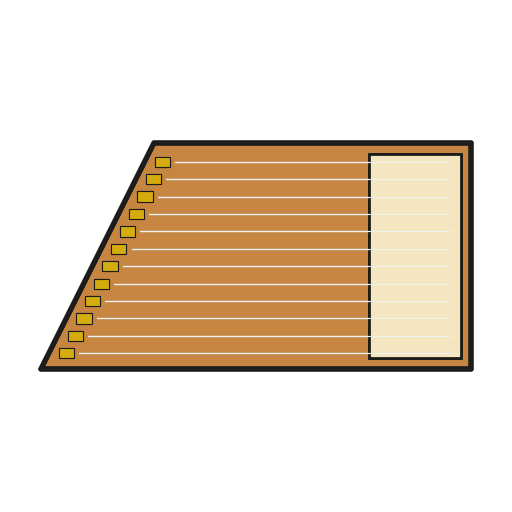
The qanun is a flat trapezoidal zither with dozens of string courses, plucked with picks on your fingers. Rows of little levers let you re-tune any course by a microtone in an instant to change the mode.
2
2
Build the trapezoidal box
Build the trapezoidal box
Build a shallow trapezoidal box with a thin wooden soundboard. On a real qanun part of the board is covered with fish-skin, over which the bridge stands.
此步骤所需材料:
 波罗的海桦木胶合板1 个
 干燥软木板1 个
 PVA 木工胶1 个
所需工具:
 钢锯
钢锯3
3
Set the pins and string it
Set the pins and string it
Fit tuning pins along one slanted side and hitch pins on the other, and string the instrument in courses of three strings tuned together — a full qanun has around seventy strings.
此步骤所需材料:
 弦轴9 个
弦轴9 个 0.032 英寸钢制琴钢丝1 个
所需工具:
 锥子
锥子4
4
Stand the bridge
Stand the bridge
Stand a long wooden bridge across the skin-covered part of the soundboard so all the courses press down on it, feeding their vibration into the skin and box.
所需工具:
 斯洛伊德雕刻刀
5
5
Fit the mandal levers
Fit the mandal levers
At the tuning end, fit a bank of small metal levers (mandal) under each course. Flipping a lever shortens the vibrating length of that course by a tiny, fixed amount — raising it a microtone.
此步骤所需材料:
 青铜丝1 个
所需工具:
 金属锉
金属锉6
6
Tune the courses
Tune the courses
Tune every course to the scale with its pins, then set the mandal levers for the mode (maqam) you want to play.
7
7
Play with finger picks
Play with finger picks
Wear a pick on each index finger and pluck the courses, the two hands answering each other across the strings.
8
8
Flip a lever, change the note
Flip a lever, change the note
Mid-tune, flip a mandal lever to shift a course up or down a microtone. This is how a qanun player slides between maqamat without stopping to re-tune.
9
9
Compendium — the lever that re-tunes a string
Compendium — the lever that re-tunes a string
The qanun is a plucked box zither — the same idea as the langspil, but with many courses of strings across a wide trapezoidal soundboard, and plucked with finger picks rather than a hammer, which makes it the exact plucked twin of the hammered santur that shares its shape. A string's pitch depends on its length, tension and mass, and the qanun's mandal levers are a beautifully simple way to change one of these on the fly: each lever, when flipped up, presses down near one end of a course and shortens its vibrating length by a small fixed amount, raising that course's pitch by a microtone; flip it back and the full length returns. Because Arabic and Turkish music uses many microtonal notes and shifts between modes (maqamat) within a single piece, a qanun carries a whole bank of these levers, several per course, so the player can nudge individual notes up or down by tiny steps in an instant without ever re-tuning by ear. The bridge stands on a patch of stretched skin so the strings drive a membrane as well as the soundboard, giving the qanun its bright, ringing shimmer. Its cousins are the santur, the langspil and every box zither, and its lever trick is a mechanical relative of the harp's pedals and the guitar's capo — all quick ways to retune strings without turning a peg.
此蓝图制作
相关蓝图
这些蓝图共享知识——技术、材料或原理
CC0 公共领域
此蓝图以 CC0 协议发布。你可以自由复制、修改、分发和使用此作品,无需征得许可。
通过购买蓝图中的产品支持创客,他们将获得 创客佣金 (由供应商设定),或创建此蓝图的新版本并将其作为连接包含在你自己的蓝图中以分享收入。