艺术
美容与健康
工艺
文化与历史
娱乐
环境
食品与饮料
逆向工程
科学
体育
技术
可穿戴设备
已翻译

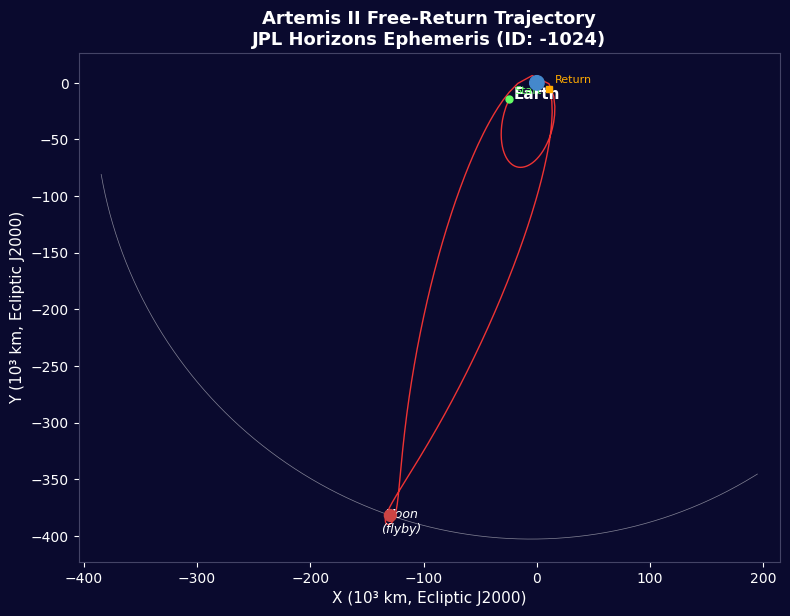
阿尔特弥斯 II - JPL 地平线飞行数据
NASA 阿尔特弥斯 II 任务的计算分析——自 1972 年以来首次载人飞行超越近地轨道。使用 Python、NumPy 和 Matplotlib,我们复制了从发射到月球掠过再到溅落的轨道力学计算:齐奥尔科夫斯基火箭方程、vis-viva 轨道能量、修补圆锥轨迹和双曲线月球掠过。每个单元在浏览器中实时运行。
高级
60-90 分钟
说明
1
1
任务概览
任务概览
2026 年 4 月 1 日 22:35 UTC,NASA 发射了阿尔特弥斯 II——自 1972 年阿波罗 17 号以来首次载人超越近地轨道的飞行。四名宇航员乘坐猎户座飞船,搭乘 SLS Block 1 火箭,沿着自由返回轨迹绕月球一周并返回地球。机组:Reid Wiseman(船长)、Victor Glover(飞行员)、Christina Koch(MS-1)、Jeremy Hansen——CSA(MS-2)。我们将计算:使用 Python、NumPy 和 Matplotlib——任何浏览器中免费可用的工具——我们将复制 Wolfram Research 用 Mathematica 演示的关键轨道力学计算。每个常数都来自 NASA 数据表。
此步骤所需材料:
 模型火箭套件(大功率)1 (SLS Block 1 reference) 个
 氢144,000 kg (core stage) 公斤
 氧840,000 kg (core stage) 公斤
 固体火箭推进剂1,000,000 kg (2 boosters) 公斤
 猎户座飞船1 (CM-003 Integrity) 个
 航天员乘组4 个
所需工具:
 火箭发射台
火箭发射台2
2
导入库
导入库
正在加载 Jupyter 笔记本…
3
3
地球和月球参数
地球和月球参数
正在加载 Jupyter 笔记本…
4
4
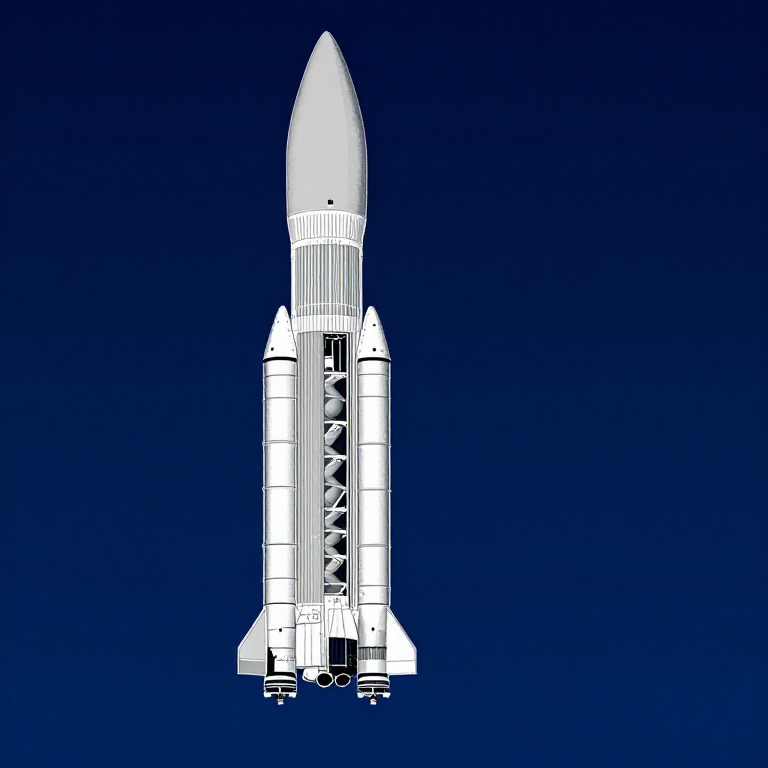
SLS Block 1 火箭数据
SLS Block 1 火箭数据
正在加载 Jupyter 笔记本…
5
5
圆形轨道速度
圆形轨道速度
正在加载 Jupyter 笔记本…
6
6
逃逸速度
逃逸速度
正在加载 Jupyter 笔记本…
7
7
齐奥尔科夫斯基火箭方程
齐奥尔科夫斯基火箭方程
正在加载 Jupyter 笔记本…
8
8
月球转移注入
月球转移注入
正在加载 Jupyter 笔记本…
9
9
自由返回轨迹
自由返回轨迹
正在加载 Jupyter 笔记本…
10
10
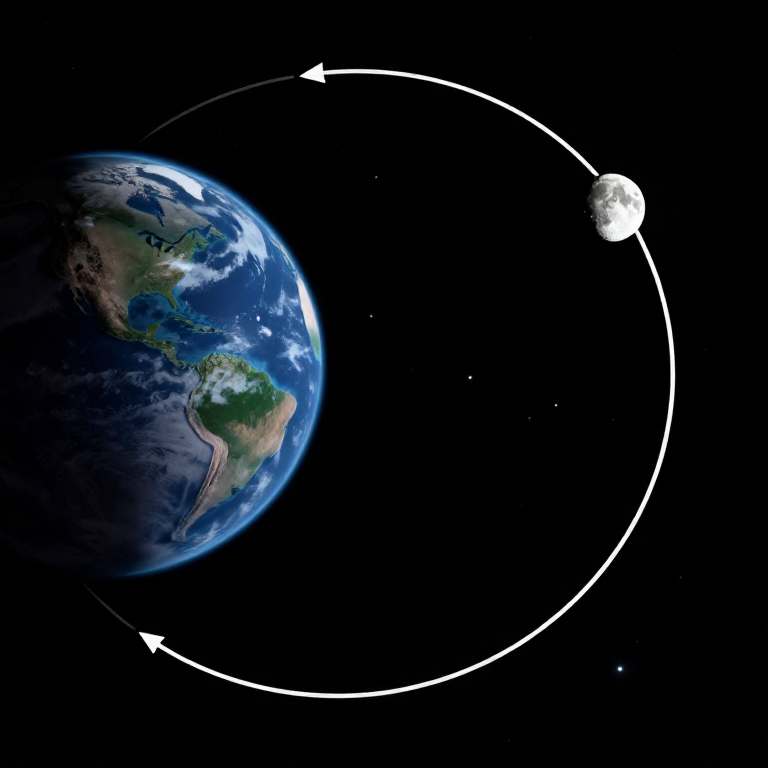
月球掠过双曲线
月球掠过双曲线
正在加载 Jupyter 笔记本…
11
11
关键点处的重力
关键点处的重力
正在加载 Jupyter 笔记本…
12
12
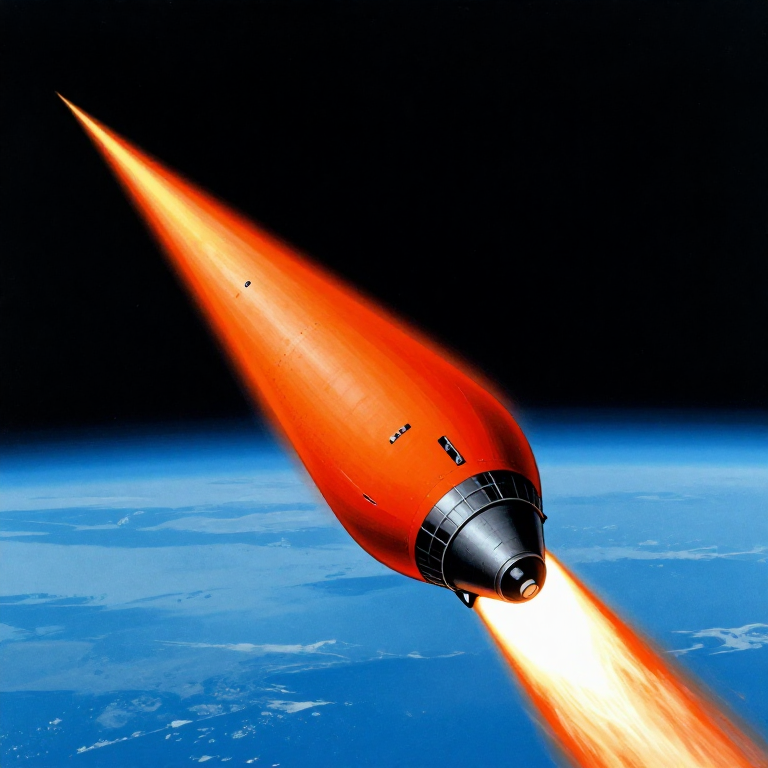
大气再入
大气再入
正在加载 Jupyter 笔记本…
13
13
任务时间线
任务时间线
正在加载 Jupyter 笔记本…
14
14
轨迹可视化
轨迹可视化
正在加载 Jupyter 笔记本…
15
15
能量预算摘要
能量预算摘要
正在加载 Jupyter 笔记本…
16
16
Python vs Wolfram
Python vs Wolfram
What free Python can do vs Wolfram Mathematica
| Capability | Python (free) | Mathematica ($$$) |
|---|---|---|
| Orbital mechanics equations | NumPy/SciPy — full coverage | Built-in symbolic + numeric |
| JPL Horizons ephemeris data | REST API + gzip/json (as shown above) | HorizonsEphemerisData[] function |
| Unit-aware calculations | Pint library | Built-in Quantity framework |
| 2D/3D trajectory plots | Matplotlib (4-panel dashboard above) | Built-in Graphics3D + Manipulate |
| Real-time ephemeris data | Astropy + JPL Horizons API | Built-in AstronomicalData[] |
| Interactive animation | ipywidgets / Plotly | Manipulate[] — seamless |
| Symbolic algebra | SymPy | Native — Mathematica's core strength |
| Deployment | Runs anywhere (browser via Pyodide) | Requires Wolfram licence or Cloud |
Verdict: Using the same JPL Horizons data source as Wolfram, Python reproduces the Artemis II trajectory with identical data points — 428 state vectors covering the full 10-day mission. The analytical model (Hohmann transfer + patched conics) predicts TLI speed within 3% and flyby distance within 0.4% of reality.
Mathematica's edge is in symbolic manipulation and the seamless Manipulate[] 3D animation. But for numerical computation, data analysis, and reproducibility, Python is fully capable — and this entire blueprint runs in the browser via Pyodide. No server, no licence, no installation.
材料
6- 1 (SLS Block 1 reference) 个占位符
- 144,000 kg (core stage) 公斤占位符
- 840,000 kg (core stage) 公斤占位符
- 1,000,000 kg (2 boosters) 公斤占位符
- 1 (CM-003 Integrity) 个占位符
- 4 个占位符
CC0 公共领域
此蓝图以 CC0 协议发布。你可以自由复制、修改、分发和使用此作品,无需征得许可。
通过购买蓝图中的产品支持创客,他们将获得 创客佣金 (由供应商设定),或创建此蓝图的新版本并将其作为连接包含在你自己的蓝图中以分享收入。