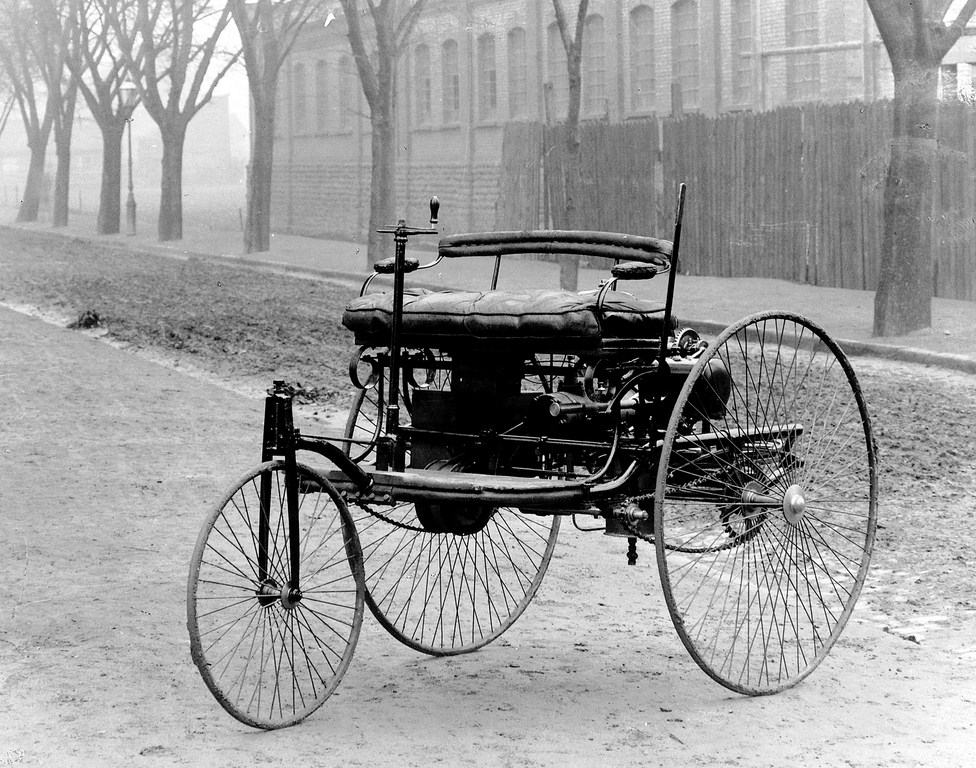

Benz Patent-Motorwagen
Eine Kutsche mit einem Motor darauf ist noch kein Automobil. Wer einen Motor auf ein vorhandenes Fuhrwerk schraubt, hat ein Fahrzeug, das von einem Pferd gezogen wurde und nun geschoben wird — mit Lenkung, Bremsen und Rahmen für Schrittgeschwindigkeit ausgelegt.
Das Patent beansprucht deshalb nicht den Motor, sondern das Zusammenspiel. Kraftübertragung über Kegelräder und Ketten, damit das Fahrzeug lenkbar bleibt. Eine Bremse, die mit einer Bewegung bremst und gleichzeitig auskuppelt. Eine Kühlung, bei der der Dampf in Rohren kondensiert und zurückläuft. Und eine Standanzeige für den Brennstoff, damit die Gasbildung gleichmäßig bleibt.
Deutsches Reichspatent DE 37435, "Fahrzeug mit Gasmotorenbetrieb", angemeldet am 29. Januar 1886, veröffentlicht am 2. November 1886. Als Anmelder steht dort "Benz & Co. in Mannheim" — die Firma, nicht Carl Benz als Person.
Gebaut wird hier ein rollendes Modell, kein Motor und kein Brennstoff.
说明
Kein Brennstoff, kein Motor
Kein Brennstoff, kein Motor
Dieses Modell wird von Hand oder mit Gummiband angetrieben. Ligroin und ähnliche Leichtbenzine sind hochentzündlich — hier wird nichts verdampft und nichts gezündet.
Lies DE 37435 und zähle die vier Ansprüche
Lies DE 37435 und zähle die vier Ansprüche
Kraftübertragung, Bremse mit Auskuppeln in einer Bewegung, Kühlung durch Kondensation, Brennstoff-Standanzeige. Der Motor selbst ist nicht das Neue.
Baue ein Fahrgestell mit vier Rädern
Baue ein Fahrgestell mit vier Rädern
Schneide eine Bodenplatte und setze vier Räder darunter, die beiden vorderen starr. Schiebe den Wagen und versuche, eine Kurve zu fahren.
此步骤所需材料:
 波罗的海桦木胶合板1 张
Lenke beide Vorderräder um dieselbe Achse
Lenke beide Vorderräder um dieselbe Achse
Setze die beiden Vorderräder auf ein gemeinsames Drehschemel-Brett. In der Kurve schleifen die Räder — das kurveninnere müsste enger laufen als das äußere.
Nimm ein Vorderrad weg
Nimm ein Vorderrad weg
Baue auf ein einziges, mittig gelenktes Vorderrad um. Das Schleifen ist weg. Genau deshalb hat der Patent-Motorwagen drei Räder und nicht vier.
此步骤所需材料:
 木榫条1 个
Setze eine Kurbel als Kraftquelle
Setze eine Kurbel als Kraftquelle
Montiere eine Kurbelwelle quer im Rahmen. Sie steht für den liegenden Einzylinder — uns interessiert nur, was hinter ihr passiert.
所需工具:
 平口钳
平口钳Übertrage die Kraft mit einem Kegelradpaar
Übertrage die Kraft mit einem Kegelradpaar
Lenke die Drehung mit zwei Kegelrädern um 90° um. Damit kann der Motor quer liegen und die Räder trotzdem längs angetrieben werden.
Führe Ketten zu beiden Hinterrädern
Führe Ketten zu beiden Hinterrädern
Lege von der Vorgelegewelle je eine Kette auf jedes Hinterrad. Ketten erlauben Abstand zwischen Motor und Achse — genau das, was der Anspruch mit "lenkbar" meint.
此步骤所需材料:
 镀锌钢丝1 米
Fahre eine enge Kurve und beobachte die Hinterräder
Fahre eine enge Kurve und beobachte die Hinterräder
Beide Hinterräder laufen gleich schnell, obwohl sie unterschiedlich weite Wege haben. Es rupft. Ein Ausgleichsgetriebe fehlt noch, und das ist der nächste Schritt der Technikgeschichte.
Baue den Bremshebel mit Auskupplung
Baue den Bremshebel mit Auskupplung
Setze einen Hebel, der zugleich einen Klotz gegen ein Rad drückt und den Antriebsriemen von der Scheibe schiebt. Eine Bewegung, zwei Wirkungen — so steht es im Patent.
Bremse einmal ohne Auskuppeln
Bremse einmal ohne Auskuppeln
Trenne die Auskupplung ab und bremse nur. Der Antrieb arbeitet gegen die Bremse. Genau das wollte Benz mit einer einzigen Bewegung verhindern.
Zeige die Verdunstungskühlung
Zeige die Verdunstungskühlung
Stelle ein offenes Glas mit heißem Wasser hin und halte ein kaltes Blech darüber. Der Dampf schlägt sich nieder und tropft zurück — mehr ist die Kühlung des Motorwagens nicht.
此步骤所需材料:
 带盖玻璃罐1 个
Miss, wie viel Wasser verschwindet
Miss, wie viel Wasser verschwindet
Wiege das Wasser vor und nach zehn Minuten Kochen. Der Verlust ist erheblich — ein solcher Wagen muss unterwegs Wasser nachfüllen, nicht nur Brennstoff.
Baue die Standanzeige nach
Baue die Standanzeige nach
Setze ein senkrechtes Glasröhrchen an ein Gefäß. Der Pegel im Röhrchen zeigt den Pegel im Behälter — einfach, und im Patent ausdrücklich beansprucht.
Geschichte & Hintergrund — die Firma im Patent und die Frau im Wagen
Geschichte & Hintergrund — die Firma im Patent und die Frau im Wagen
Das Patent. DE 37435, "Fahrzeug mit Gasmotorenbetrieb", angemeldet am 29. Januar 1886, veröffentlicht am 2. November 1886. Zwei Dinge werden fast immer falsch wiedergegeben. Erstens ist der 29. Januar das Anmeldedatum, nicht der Tag der Erteilung. Zweitens steht als Anmelder "Benz & Co. in Mannheim" — die Firma. Carl Benz hat den Wagen gebaut, aber das Dokument nennt ein Unternehmen, und das ist bei Firmenpatenten dieser Zeit die Regel.
Warum drei Räder. Nicht aus Sparsamkeit, sondern weil das Lenkproblem ungelöst war. Bei einer Kurvenfahrt beschreiben die beiden Vorderräder Kreise mit verschiedenen Radien und müssen daher unterschiedlich eingeschlagen werden. Ein gemeinsamer Drehschemel kann das nicht — Schritt 4 zeigt das Schleifen sofort. Die Lösung, die Achsschenkellenkung, war zwar seit Lankensperger und Ackermann bekannt, aber Benz setzte sie erst 1893 beim Victoria ein. Bis dahin war ein gelenktes Einzelrad schlicht der sauberere Weg.
Das fehlende Differential. Schritt 9 zeigt das zweite ungelöste Problem: zwei starr gleich schnell angetriebene Hinterräder rupfen in der Kurve. Benz hat das Ausgleichsgetriebe später selbst patentiert. Der Motorwagen ist also kein fertiges Automobil, sondern die erste Maschine, bei der Motor, Antrieb, Bremse und Lenkung zusammen für den Zweck entworfen wurden — und genau darauf zielen die Ansprüche.
🔴 Bertha Benz gehört in diese Geschichte hinein, nicht als Anekdote. Im August 1888 fuhr sie ohne Wissen ihres Mannes mit den beiden Söhnen von Mannheim nach Pforzheim, etwa 106 Kilometer — die erste Langstreckenfahrt eines Automobils. Sie kaufte Ligroin in einer Apotheke in Wiesloch, weil es keine Tankstellen gab; sie ließ am Weg einen Schuster Bremsklötze belegen und erfand damit den Bremsbelag; sie reinigte eine verstopfte Leitung mit einer Hutnadel und isolierte ein Kabel mit ihrem Strumpfband. Ihre Rückmeldung führte zu besseren Bremsen und einem zusätzlichen niedrigen Gang für Steigungen. Sie hatte zudem eigenes Vermögen in die Firma gesteckt. Ohne diese Fahrt wäre der Wagen ein technisch interessantes Einzelstück geblieben — sie lieferte den Beweis, dass er im Alltag taugt.
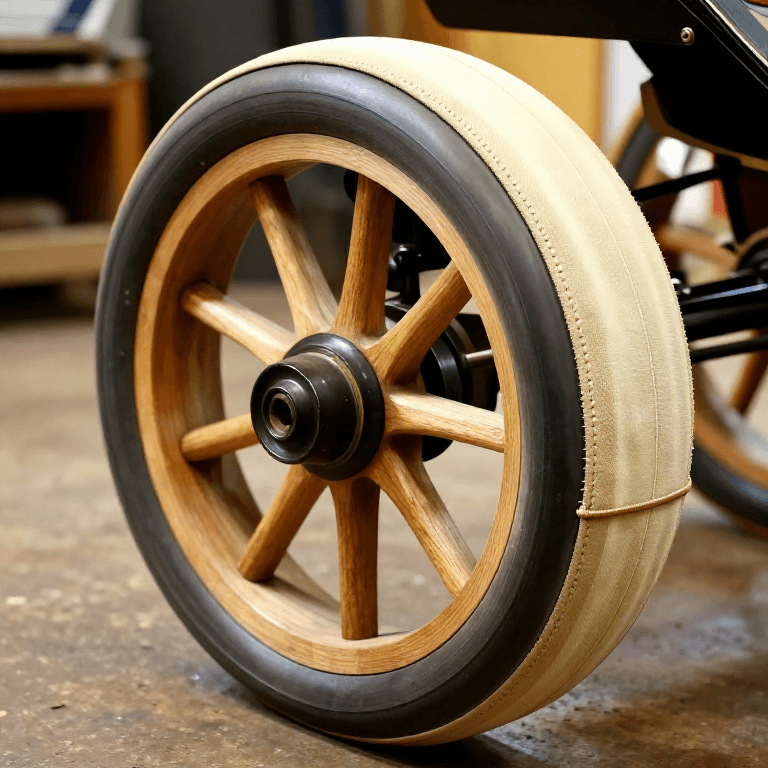
Was fehlte, war die Infrastruktur. Kein Tankstellennetz, keine befestigten Landstraßen, kein Reifen, der das aushielt — die Vollgummiräder des Motorwagens sind der Grund, warum Dunlops Luftreifen von 1888 so schnell wichtig wurde. Wie so oft in diesem Programm war die Maschine vor ihrer Umgebung fertig; anders als bei Nipkow oder Poulsen holte die Umgebung hier allerdings innerhalb weniger Jahre auf.

CC0 公共领域
此蓝图以 CC0 协议发布。你可以自由复制、修改、分发和使用此作品,无需征得许可。
通过购买蓝图中的产品支持创客,他们将获得 创客佣金 (由供应商设定),或创建此蓝图的新版本并将其作为连接包含在你自己的蓝图中以分享收入。