艺术
美容与健康
工艺
文化与历史
娱乐
环境
食品与饮料
逆向工程
科学
体育
技术
可穿戴设备
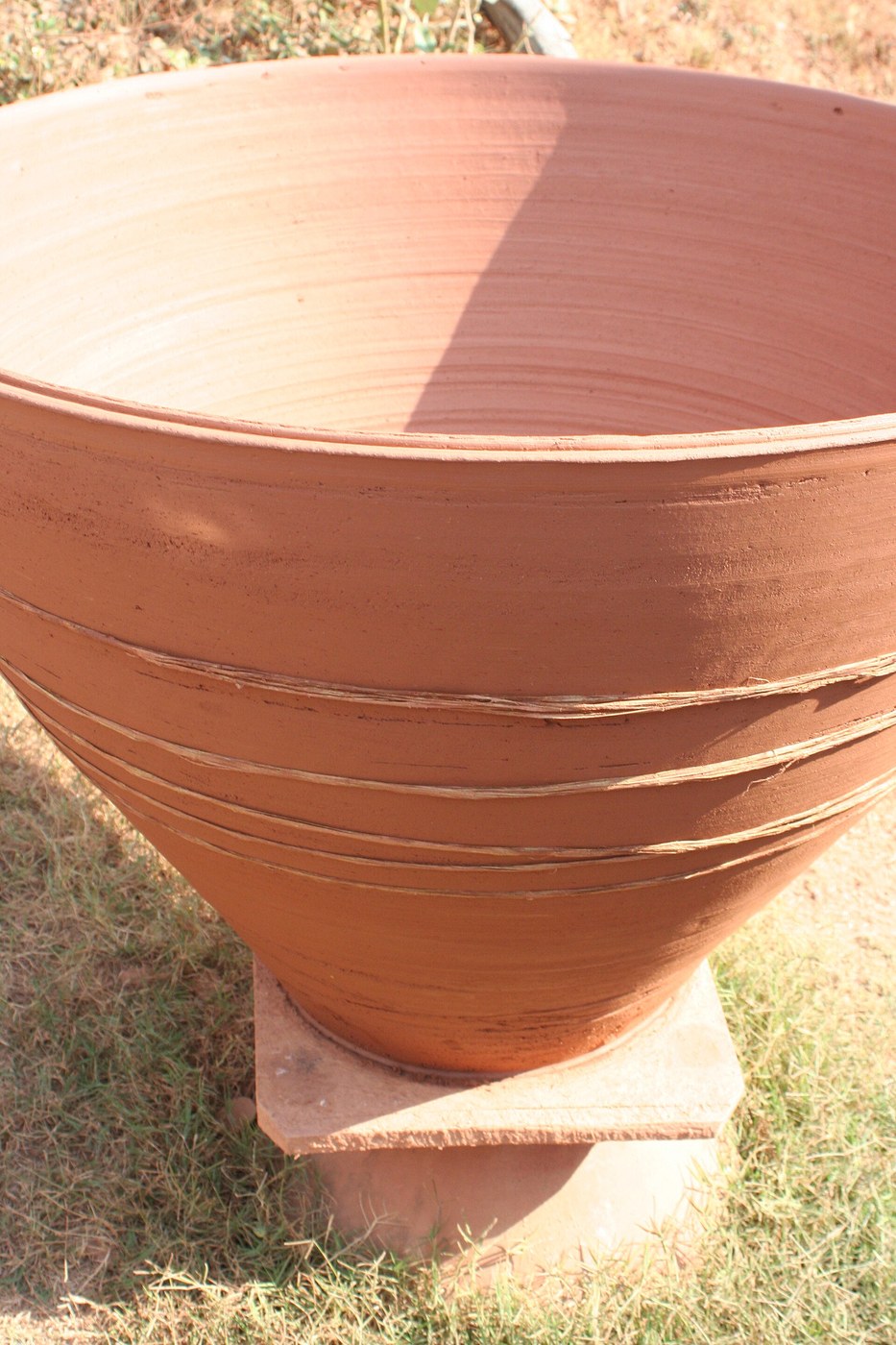


Bone-Dry Clay Vessels: Formed, Dried Slowly, Ready to Fire
A pot must be bone dry before it is fired: dried until it is porous, no longer plastic and very fragile. On the way it passes leather-hard, when shrinking stops. Dry it slowly and evenly so it does not crack, and finish the last water off gently in the kiln.
The picture: a large unfired pot, bound round with fibre while it dries, at Nwenyein, Myanmar.
初学者
One to two weeks
说明
1
1
Form the vessels
Form the vessels
Build the pots as in the coil pot blueprint, up to the end of shaping; do not fire them.
2
2
Dry slowly under cover
Dry slowly under cover
Stand the pots on a cloth-covered board out of sun and draught, loosely covered, so rims and bases dry at the same pace.
所需工具:
 湿布覆盖
湿布覆盖 塑料布
塑料布 陶艺帆布工作面
3
3
Leather-hard
Leather-hard
When the clay is firm enough to handle and has stopped shrinking, it is leather-hard: trim and burnish now, and join handles with slip.
此步骤所需材料:
 泥浆(液态黏土)50 毫升
所需工具:
 陶艺工具套装
4
4
Uncover and dry to bone-dry
Uncover and dry to bone-dry
Uncover the pots and let them dry in a warm room until they turn pale and light. A pot that still feels cool against the cheek is still damp (our test). Handle bone-dry pots gently: they break easily.
所需工具:
 等臂天平
等臂天平5
5
Is it dry yet?
Is it dry yet?
正在加载 Jupyter 笔记本…
6
6
Limits
Limits
Leather-hard and bone-dry are as the Wikipedia ceramics glossary defines them; the cover, the cheek test and the weighing are ours. Kilns finish the last water with a slow, low first stage (candling).
此蓝图制作
相关蓝图
这些蓝图共享知识——技术、材料或原理

CC0 公共领域
此蓝图以 CC0 协议发布。你可以自由复制、修改、分发和使用此作品,无需征得许可。
通过购买蓝图中的产品支持创客,他们将获得 创客佣金 (由供应商设定),或创建此蓝图的新版本并将其作为连接包含在你自己的蓝图中以分享收入。