合作
艺术
美容与健康
工艺
文化与历史
娱乐
环境
食品与饮料
逆向工程
科学
体育
技术
可穿戴设备
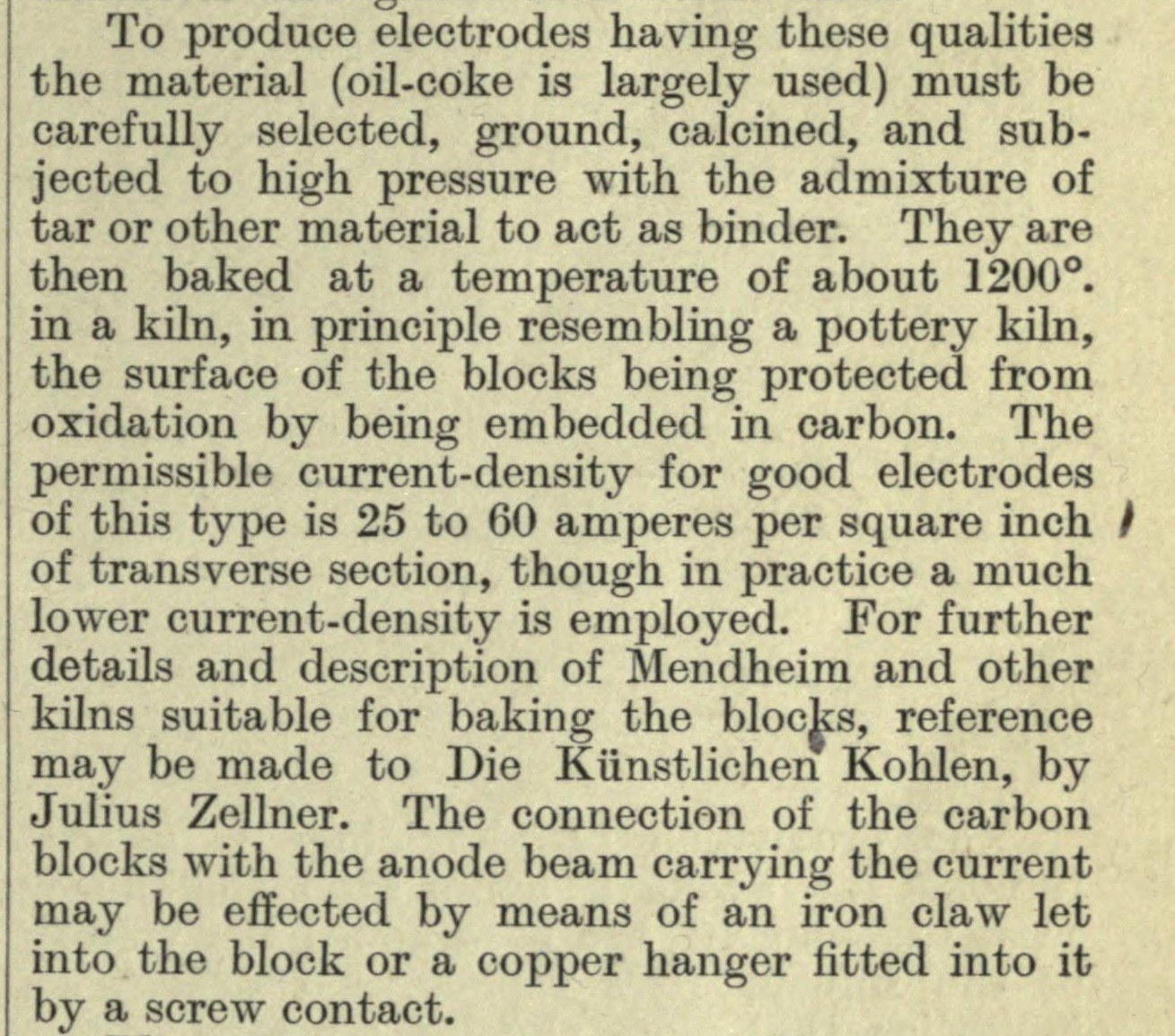


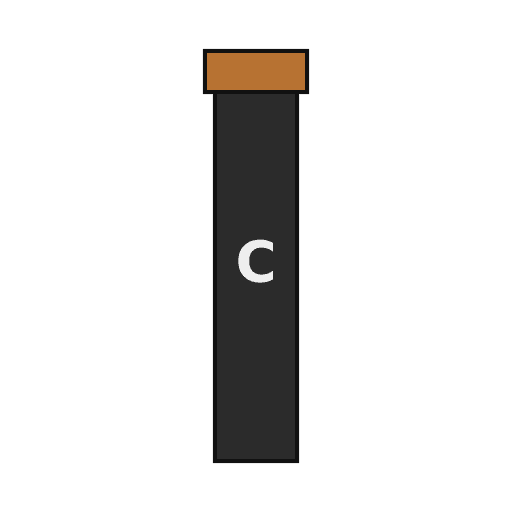
Carbon Electrode: Oil-Coke Pressed with Tar and Baked at 1200° (Thorpe, 1912)
Amorphous carbon electrodes as made for aluminium reduction: oil-coke is selected, ground and calcined, pressed hard with tar as a binder, and baked at about 1200° in a kiln like a pottery kiln, packed in carbon so the surface does not burn.
A good electrode conducts electricity well but heat poorly, is hard, resists surface oxidation, has low porosity and is even throughout. Thorpe gives 25 to 60 amperes per square inch as the permissible current density, though much less is used in practice.
Not given: the tar proportion, the pressure and the sizes.
Source: T. E. Thorpe, Dictionary of Applied Chemistry vol. I (1912), p. 107. Picture: the book's text.
高级
Unknown
说明
1
1
Grind and calcine the coke
Grind and calcine the coke
Select the oil-coke carefully for low ash, volatile matter and sulphur. Grind it and calcine it. Ours: the ball mill and the kiln for calcining.
此步骤所需材料:
 石油焦1 carefully selected
所需工具:
 铁球磨机
 高温窑
2
2
Press with tar
Press with tar
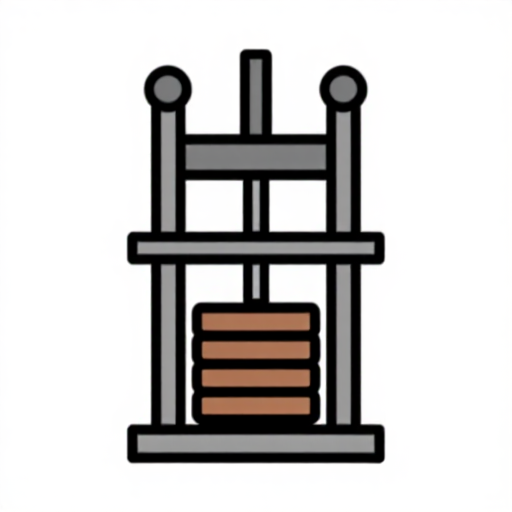
Mix the ground coke with tar as a binder and press it into blocks under high pressure. Ours: a hydraulic press.
此步骤所需材料:
 煤焦油1 binder
 未知尺寸1 个
所需工具:
 液压机
3
3
Bake in carbon
Bake in carbon
Embed the blocks in carbon, which protects their surface from oxidation, and bake them at about 1200° in a kiln built on the lines of a pottery kiln. Ours: petroleum coke as the packing.
所需工具:
高温窑石油焦此蓝图制作
CC0 公共领域
此蓝图以 CC0 协议发布。你可以自由复制、修改、分发和使用此作品,无需征得许可。
通过购买蓝图中的产品支持创客,他们将获得 创客佣金 (由供应商设定),或创建此蓝图的新版本并将其作为连接包含在你自己的蓝图中以分享收入。