艺术
美容与健康
工艺
文化与历史
娱乐
环境
食品与饮料
逆向工程
科学
体育
技术
可穿戴设备
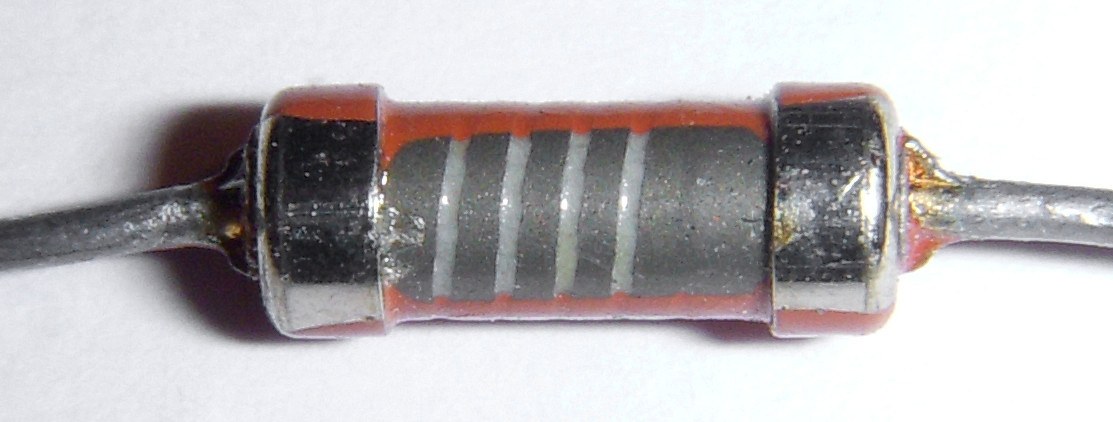


Carbon Film Resistors: Methane Cracked on Ceramic Rods, Helixed and Varnished (Bell Labs 1951)
Ceramic rods tumble in a hot, gas-tight rotating furnace while methane cracks on them and leaves a thin, hard film of carbon. The coated rods get conducting ends, a helix ground through the film to bring them near their value, a light rub to the exact value, and a coat of baking varnish.
Result: carbon film resistors adjusted to as close as ±0.5 %. The helix alone can raise a rod's resistance by any factor from about 10 to about 8000.
Source: Grisdale, Pfister and van Roosbroeck, Pyrolytic Film Resistors, Bell System Technical Journal 30 (1951). Unknown: the ceramic of the rods, the end caps and leads, and which baking varnish; the paper does not give them. Picture: Wikimedia Commons.
高级
2 days
说明
1
1
Load the furnace
Load the furnace
Load cylindrical ceramic rods into the gas-tight refractory core of a rotating (or rocking) batch furnace, with silica sand to support the rods and keep them from damage as they tumble. Unknown: which ceramic.
此步骤所需材料:
 电阻器绝缘基体1 batch
所需工具:
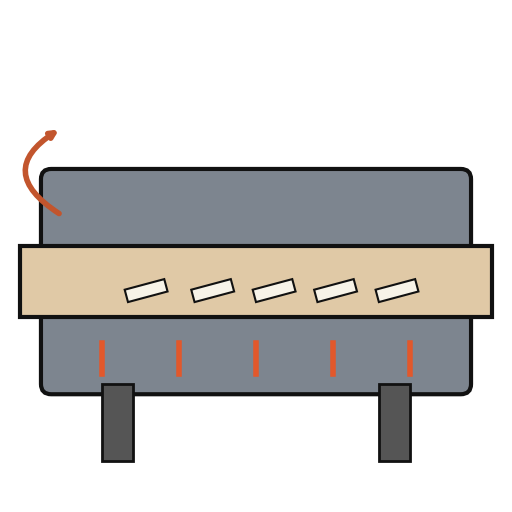 回转式间歇炉
 石英砂
2
2
Heat under nitrogen
Heat under nitrogen
Turn the core and bring it to temperature, usually about 975 to 1300 °C, flushing it with nitrogen before any hydrocarbon goes in.
所需工具:
回转式间歇炉 氮
3
3
Crack the methane
Crack the methane
When the temperature is steady, let in the coating gas and keep it flowing for the time needed. The film grows at a steady rate: at 1000 °C and 30 % methane the paper runs from 0.2 to 10 hours. Longer gives a thicker film of lower resistance; temperature sets the rate more than anything else, and more methane deposits faster.
此步骤所需材料:
 甲烷1 flow
所需工具:
回转式间歇炉4
4
Cool under nitrogen
Cool under nitrogen
Shut off the methane and let the core cool while oxygen-free nitrogen keeps flowing. The films come out clean, even and firmly stuck.
所需工具:
回转式间歇炉氮5
5
Terminate the ends
Terminate the ends
Paint the ends of each coated rod with a water suspension of colloidal graphite (Aquadag), then burnish and bake it; this suits all but low-value resistors. Fit the end caps with their leads. Unknown: the caps and leads, which the paper does not describe. Ours: an agate burnisher and an oven.
此步骤所需材料:
 胶体石墨1 as required
 带引线的电阻器端帽2 per resistor
所需工具:
 玛瑙压光刀
 烤箱
6
6
Grind the helix
Grind the helix
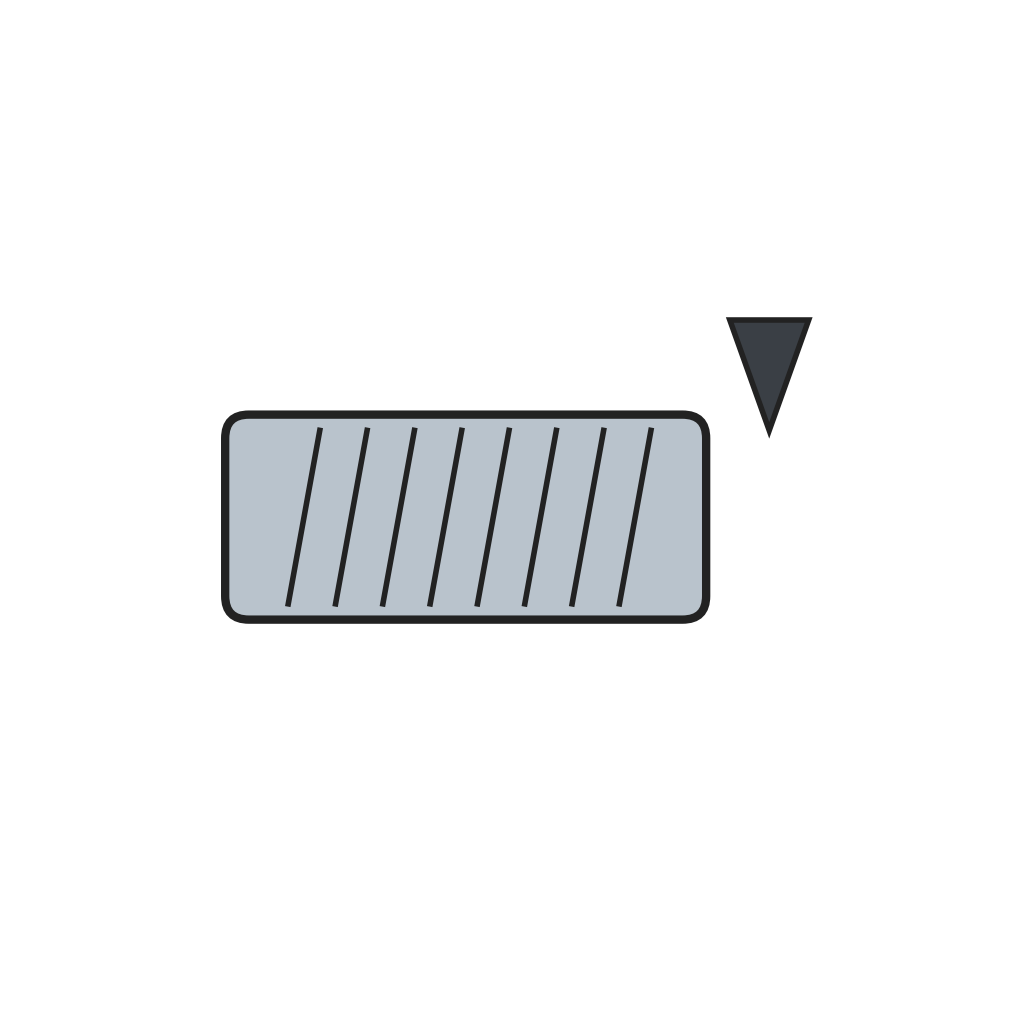
Grind a helical groove through the film with a water-cooled, metal-bonded diamond wheel, the blank floating against the wheel so the groove stays even. Pick the pitch to land slightly below the wanted value (330 Ω, 10 kΩ or any other). The groove must be smooth: cracks into the carbon ribbon bring noise and drift.
所需工具:
 电阻器刻螺旋槽机
7
7
Rub to value and varnish
Rub to value and varnish
Turn the resistor while measuring it continuously, and rub its whole surface lightly with a cotton pad wet with an organic solvent until it reaches its value. Leave it just below tolerance, then give it one or more coats of baking varnish, which raises the resistance by generally less than 1 %. Unknown: which varnish and its baking. Ours: acetone as the solvent, a Wheatstone bridge to measure.
此步骤所需材料:
 烘烤清漆1 as required
所需工具:
 惠斯通电桥
 脱脂棉
 丙酮烤箱
材料
5- 1 batch占位符
- 1 flow占位符
- 1 as required占位符
- 2 per resistor占位符
- 1 as required占位符

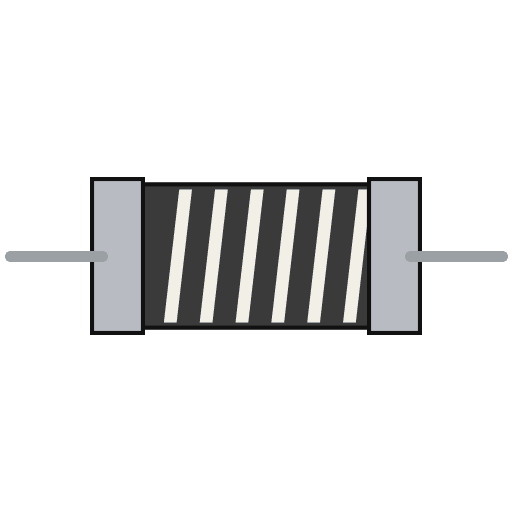
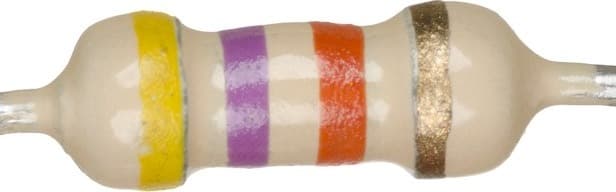
CC0 公共领域
此蓝图以 CC0 协议发布。你可以自由复制、修改、分发和使用此作品,无需征得许可。
通过购买蓝图中的产品支持创客,他们将获得 创客佣金 (由供应商设定),或创建此蓝图的新版本并将其作为连接包含在你自己的蓝图中以分享收入。