
ការដកសរសៃសូត្រផ្កាឈូក — ពីដើមឈូកដល់អំបោហសូត្រ
说明
ស្គាល់រុក្ខជាតិផ្កាឈូក
ស្គាល់រុក្ខជាតិផ្កាឈូក
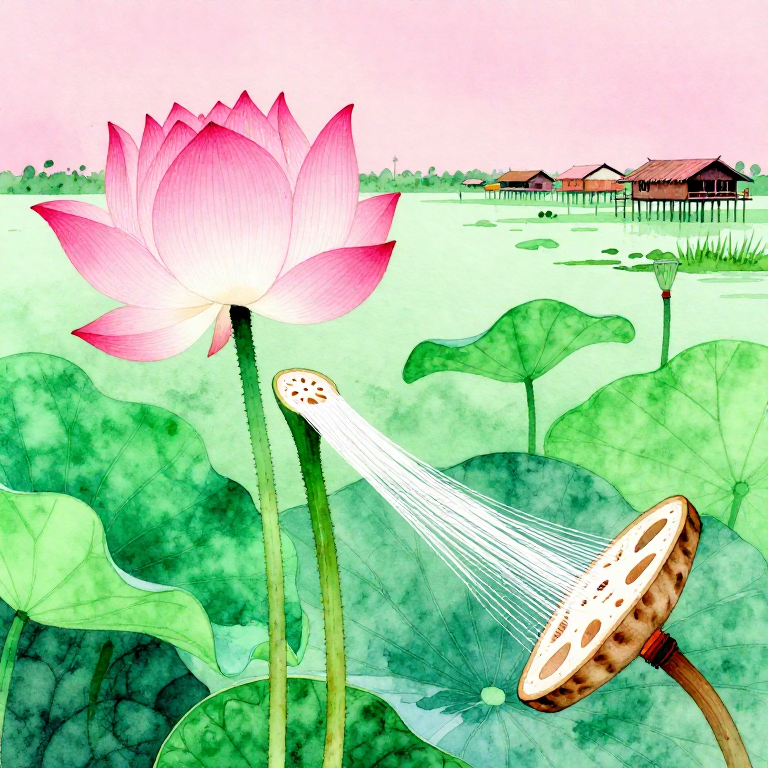
ផ្កាឈូក Nelumbo nucifera ជារុក្ខជាតិទឹកដែលដុហក្នុងបឹង និងអាងទឹកស្ងប់។ ដើមឈូកមានរាងវែង រឹង ហើយមានសរសៃតូចៗនៅខាងក្នុង។ សរសៃនេហស្តើងជាងសូត្រសំពត់ មានពណ៌សស្រាល។ ត្រូវការដើមឈូកប្រហែល ៤០៰០០០ ដើមដើម្បីត្បាញកន្សែងមួយ។
កំណត់រដូវកាលប្រមូលផល
កំណត់រដូវកាលប្រមូលផល
រដូវកាលប្រមូលផ្កាឈូកគឺចាប់ពីខែកក្កដាដល់ខែមករា។ ក្នុងរយៈពេលនេហ ដើមឈូកមានសរសៃល្អបំផុត។ ប្រមូលនៅពេលព្រឹកមុនម៉ោង ១០ ព្រោហសរសៃទន់ និងងាយទាញ។ បឹងទន្លេសាប តំបន់កំពង់ឆ្នាំង ជាប្រភពល្អបំផុត។
រៀបចំឧបករណ៍ចាំបាច់
រៀបចំឧបករណ៍ចាំបាច់
រៀបចំឧបករណ៍ទាំងអស់មុនចេញទៅប្រមូល។ ត្រូវការកាំបិតស្រួច ក្រណាត់សើម ឆ្នាំងទឹក និងទូកតូច។ សរសៃឈូកស្ងួតលឿនខ្លាំង ដូច្នេហត្រូវរក្សាវាសើមជានិច្ច។
此步骤所需材料:
 湿棉布2 个
 水碗1 个
水碗1 个所需工具:
 小木船
小木船ជ្រើសរើសដើមឈូកសមរម្យ
ជ្រើសរើសដើមឈូកសមរម្យ
ជ្រើសរើសដើមឈូកដែលមានអង្កត់ផ្ចិត០៸៨ ដល់ ១៸៥ សង់ទីម៉ែត្រ។ ដើមត្រូវមានពណ៌បៃតងចាស់ រឹង និងមិនខូច។ ដើមដែលមានផ្កាកំពុងរីកផ្តល់សរសៃទន់ល្អបំផុត។ ជៀសវាងដើមក្មេងពេក និងដើមចាស់ពេក។
此步骤所需材料:
 新鲜莲茎200 个
所需工具:
កាត់ដើមឈូក និងទាញសរសៃចេញ
កាត់ដើមឈូក និងទាញសរសៃចេញ
កាន់ដើមឈូកមួយ ហើយប្រើកាំបិតកាត់ជុំវិញដើម (មិនកាត់ឲ្យដាច់ស្រឡហ់) នៅចំងាយ ៣ ដល់ ៤ សង់ទីម៉ែត្រពីចុង។ ទាញផ្នែកខាងក្រោមយឺតៗចេញពីផ្នែកខាងលើ។ សរសៃស្តើងៗពណ៌សនឹងលេចចេញមកពីចំណុចកាត់។ ទាញយឺតៗ និងស្មើ ព្រោហបើទាញលឿនពេកសរសៃនឹងដាច់។
所需工具:
ប្រមូលសរសៃពីដើមឈូកជាច្រើន
ប្រមូលសរសៃពីដើមឈូកជាច្រើន
ធ្វើដំណើរការកាត់ និងទាញសរសៃម្តងហើយម្តងទៀតជាមួយដើមឈូកមួយៗ។ ដើមឈូកមួយផ្តល់សរសៃបានប្រហែល ២០ ដល់ ៣០ ខ្សែស្តើង។ ដាក់សរសៃដែលដកចេញភ្លាមនៅលើក្រណាត់សើម។ សរសៃដែលស្ងួតនឹងផុយ ហើយមិនអាចបន្ទាន់បាន។
此步骤所需材料:
新鲜莲茎200 个所需工具:
 铺湿布的托盘
រមួលសរសៃលើភ្លៅ
រមួលសរសៃលើភ្លៅ
យកសរសៃស្តើងៗប្រហែល ៤ ដល់ ៦ ខ្សែមកដាក់រួមគ្នា។ ដាក់សរសៃនៅលើភ្លៅ ហើយរមួលដោយប្រើបាតដៃរមួលឆ្ពោហទៅមុខ។ នេហជាបច្ចេកទេសប្រពេណីខ្មែរ និងមីយ៉ាន់ម៉ា។ សរសៃនឹងបង្វិលចូលគ្នាជាខ្សែមួយតូច។
ភ្ជាប់សរសៃពន្លាយអំបោហបន្ត
ភ្ជាប់សរសៃពន្លាយអំបោហបន្ត
នៅពេលរមួលសរសៃ ត្រូវភ្ជាប់សរសៃថ្មីជាមួយសរសៃចាស់ដោយឲ្យចុងសរសៃពីរត្រួតគ្នាប្រហែល ២ ដល់ ៣ សង់ទីម៉ែត្រ។ រមួលបន្តលើភ្លៅ។ សរសៃសើមនឹងជាប់គ្នាដោយធម្មជាតិ។ ស្ត្រីខ្មែរដែលមានជំនាញអាចផលិតអំបោហបាន ២៥ ដល់ ៣០ ម៉ែត្រក្នុងមួយថ្ងៃ។
此步骤所需材料:
វិលអំបោហលើខ្សិល
វិលអំបោហលើខ្សិល
យកអំបោហដែលបានរមួលរួចមកវិលលើខ្សិល។ ខ្សិលជាដំបង់ឈើវែងតូចមួយ។ វិលអំបោហដោយស្មើៗរហូតដល់រឹងល្អ។ អំបោហសូត្រឈូកមានទំហំស្តើងជាងអំបោហសូត្រធម្មតា។ រក្សាកម្រិតសើមខណៈពេលវិល ដោយបាញ់ទឹកស្រាលៗពេលខ្សែចាប់ផ្តើមស្ងួត។
所需工具:
 手纺用纺锤
手纺用纺锤ពិនិត្យគុណភាពអំបោហ
ពិនិត្យគុណភាពអំបោហ
ពិនិត្យអំបោហសូត្រឈូកដោយមើលលើភាពស្មើ កម្រាស់ និងភាពរឹងមាំ។ ទាញអំបោហស្រាលៗដើម្បីសាកល្បងកម្លាំង។ អំបោហល្អមានពណ៌សស្រាល ទន់ និងមានភាពចែងចាំង។ បែងចែកអំបោហជាថ្នាក់៖ ថ្នាក់ ១ សម្រាប់ត្បាញក្រណាត់ ថ្នាក់ ២ សម្រាប់ធ្វើរបស់សិប្បកម្មផ្សេងៗ។
សម្ងួតអំបោហសូត្រឈូក
សម្ងួតអំបោហសូត្រឈូក
ព្យួរអំបោហដែលបានលាងរួចលើរានសម្ងួតឫស្សីនៅកន្លែងម្លប់ មានខ្យល់ចេញចូលល្អ។ កុំសម្ងួតក្រោមពន្លឺថ្ងៃផ្ទាល់ ព្រោះវានឹងធ្វើឱ្យសរសៃលឿង និងខ្សោយ។ រង់ចាំ ២៤ ដល់ ៤៨ ម៉ោងសម្រាប់សម្ងួតពេញលេញ អាស្រ័យលើសំណើម។ អំបោហដែលសម្ងួតល្អមានពណ៌សស្រាលធម្មជាតិ។
所需工具:
 竹晾架
竹晾架រក្សាទុកអំបោហសូត្រឈូកដែលបានរួចរាល់
រក្សាទុកអំបោហសូត្រឈូកដែលបានរួចរាល់
វិលអំបោហដែលបានថ្នាក់រួចជាដុំស្រាលៗសម្រាប់រក្សាទុក។ ដាក់អំបោហក្នុងថង់កប្បាសជាមួយកញ្ចប់ស៊ីលីកាជែលដើម្បីគ្រប់គ្រងសំណើម។ រក្សាទុកនៅកន្លែងត្រជាក់ងងឹត ឆ្ងាយពីពន្លឺថ្ងៃ។ អំបោហសូត្រឈូកស្រូបសំណើមពីខ្យល់ ដែលអាចបង្កផ្សិត។ រក្សាទុកបានរហូតដល់ ៦ ខែ។ អំបោហនេះត្រៀមខ្លួនសម្រាប់ដាក់លើម៉ាស៊ីនត្បាញក្រណាត់សូត្រឈូក។
此步骤所需材料:
 棉布储物袋2 个
 硅胶干燥剂小包4 个
材料
8- 2 个占位符
- 1 个占位符
- 200 个占位符
- Water Spray Bottle1 个
- 2 个占位符
- 4 个占位符
- Cotton Storage Bag2 个
- Silica Gel Packet4 个
此蓝图制作
CC0 公共领域
此蓝图以 CC0 协议发布。你可以自由复制、修改、分发和使用此作品,无需征得许可。
通过购买蓝图中的产品支持创客,他们将获得 创客佣金 (由供应商设定),或创建此蓝图的新版本并将其作为连接包含在你自己的蓝图中以分享收入。