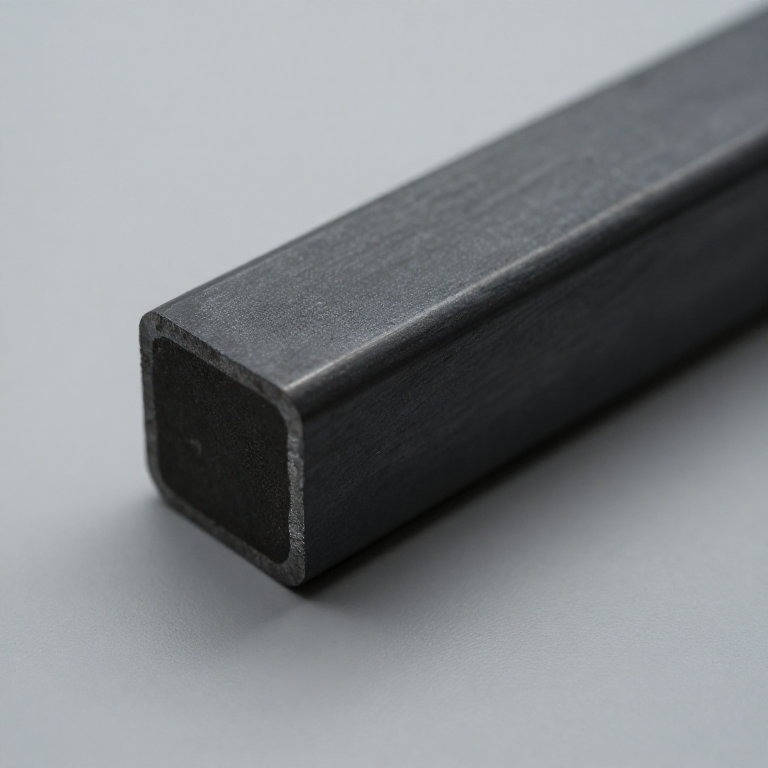


Phosphate Rust-Proofing
Zinc coatings protect steel by being eaten instead of it — the zinc corrodes, the iron survives. That works, but it means carrying a second metal, and it fills threads and changes dimensions.
Coslett's process protects steel using the steel itself. Boil the part in dilute phosphoric acid that already has iron dissolved in it, and the acid attacks the surface just long enough to build a layer of insoluble iron phosphate crystals keyed into the metal. The reaction then stops, because the layer it made blocks the acid from reaching fresh iron. The coating is a converted skin of the part, not a plating on top of it.
On its own that grey crystalline layer is only mildly protective. Its real value is that it is porous and it grips: it holds oil, and it holds paint. Phosphate under paint is why car bodies stopped rusting from the inside out, and phosphate plus oil is the finish on most military small arms of the twentieth century.
The patent is US 870,937, "Treatment of iron or steel for preventing oxidation or rusting", filed 9 April 1907 and granted 12 November 1907 to Thomas Watts Coslett of 17 Jamaica Row, Birmingham.
说明
Make the bath
Make the bath
Add 25 ml phosphoric acid (85%) to 500 ml water in a borosilicate beaker.
Acid into water, never water into acid. Wear goggles and nitrile gloves.
此步骤所需材料:
 磷酸(85 %)25 毫升
 蒸馏水500 毫升
所需工具:
 玻璃烧杯
玻璃烧杯 防雾安全护目镜
 一次性丁腈手套
Charge the bath with iron
Charge the bath with iron
Add 5 g iron filings. Leave until fizzing stops — 20 to 30 minutes.
This is the step people skip and it is the whole patent. Fresh phosphoric acid just dissolves steel. Dissolving iron in it first makes iron phosphate, and it is that near-saturated solution which deposits a coating instead of eating the part.
此步骤所需材料:
 铁屑5 克
铁屑5 克Clean the part to bare steel
Clean the part to bare steel
Scrub the mild steel bar with abrasive paper until bright, degrease it, and handle it by the edges only.
Phosphate grows on steel. It will not grow through rust, scale or a fingerprint.
此步骤所需材料:
 低碳钢扁钢1 个
Boil the part in the bath
Boil the part in the bath
Bring the bath to a boil on the hot plate — 96–100 °C — and lower the part in.
Hydrogen bubbles come off the steel immediately. Hold at the boil for 20 to 40 minutes.
The bubbling stopping is the finish line. It means the phosphate layer has sealed the surface and the acid can no longer reach iron. The reaction ends itself — that is what makes it a conversion coating rather than etching.
所需工具:
 电热板
电热板 烹饪温度计
烹饪温度计Rinse, dry, then oil
Rinse, dry, then oil
Lift the part out, rinse in hot water, and dry it at once — a hot part dries itself.
The surface is now matt mid-grey and slightly rough. Oil it while warm. The layer is porous and drinks oil into itself; that oil is most of the corrosion protection.
Unoiled phosphate will still rust. This is a primer and an oil reservoir, not a barrier.
Test that it actually works
Test that it actually works
Take a second bare steel bar as a control. Leave both outdoors or in a damp place for a week.
Expect: the bare control shows orange rust within days; the phosphated-and-oiled bar stays grey.
For the real lesson, phosphate a third bar and leave it unoiled. It will rust too, just more slowly — which is the honest result, and it tells you the coating is doing its job as a key for oil rather than as armour.
History & Context
History & Context
The patent. US 870,937, "Treatment of iron or steel for preventing oxidation or rusting", filed 9 April 1907, granted 12 November 1907, to Thomas Watts Coslett, 17 Jamaica Row, Birmingham. Two corrections to the record: some sources give the inventor as "J. W. Coslett" — the patent prints Thomas Watts Coslett. And it is usually said he "patented it in Britain in 1906"; this US document claims no British priority at all. Treat the 1906 British filing as unconfirmed unless someone produces the number.
What the specification says. The article goes into hot dilute phosphoric acid carrying dissolved iron, the liquor being "evaporated to any desired extent, as for example, to about one seventh of its original volume", leaving a deposit that renders the metal "immune from the deleterious influence of oxidation or rusting". Coslett's iron came from iron filings dissolved in the acid — the trick this blueprint reproduces in step 2.
Coslett did not become Parkerizing. Clark W. Parker bought the rights to the Coslett and Richards processes and founded the Parker Rust-Proof Company in Detroit in 1915. "Parkerizing" is the later manganese-phosphate development sold under Parker's name — Parker was the commercialiser, not the inventor. Crediting him with the invention is the same error as crediting Elkington with electroplating.
Where it went. Zinc phosphate under automotive paint is the reason modern car bodies resist rust perforation; manganese phosphate plus oil is the classic military small-arms finish. Both descend from this bath. It is a rare case where the expired patent is not a museum piece — the chemistry is still running on production lines today.
已连接蓝图材料



CC0 公共领域
此蓝图以 CC0 协议发布。你可以自由复制、修改、分发和使用此作品,无需征得许可。
通过购买蓝图中的产品支持创客,他们将获得 创客佣金 (由供应商设定),或创建此蓝图的新版本并将其作为连接包含在你自己的蓝图中以分享收入。