艺术
美容与健康
工艺
文化与历史
娱乐
环境
食品与饮料
逆向工程
科学
体育
技术
可穿戴设备
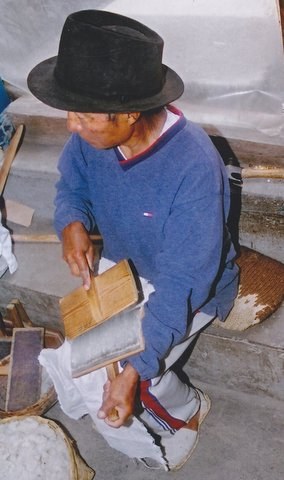


Cotton Roving by Hand: Carded, Drawn and Lightly Twisted
Roving is cotton made ready to spin: the fibres combed parallel, drawn into a long strand and given just enough twist to hold together. Mills did it with carding engines, drawing frames and roving frames; Andrew Ure (1839) explains them by the hand cards they copied. This is the hand version, from ginned lint.
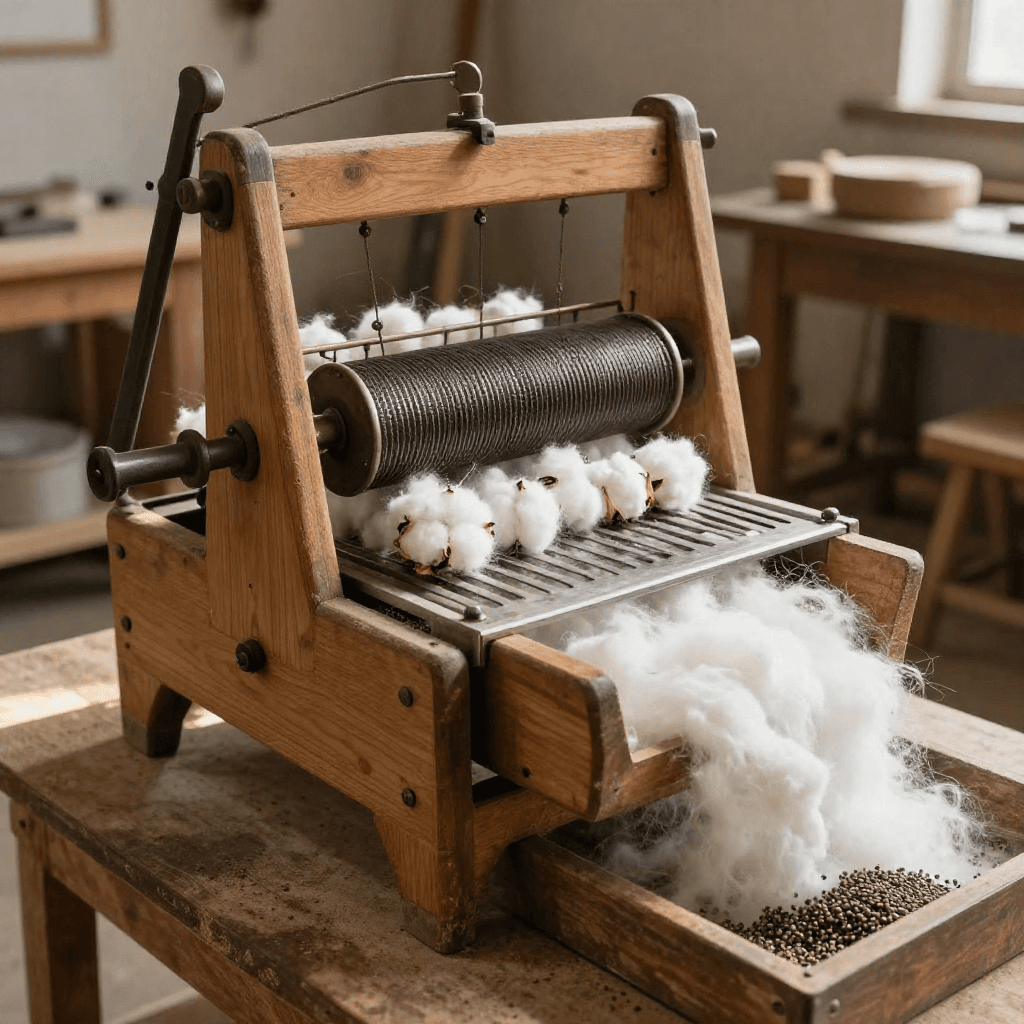
The picture: carding with a pair of hand cards in Ecuador.
初学者
An afternoon
说明
1
1
Load and card
Load and card
Spread a thin layer of lint on one hand card. Brush the other card across it, teeth against teeth, again and again until the fibres lie parallel.
此步骤所需材料:
 皮棉100 克
所需工具:
 手梳
手梳2
2
Strip the card
Strip the card
Turn one card round so its teeth face the other way and draw it across: it lifts the whole layer off in one web (Ure's stripping position).
所需工具:
手梳3
3
Roll off a sliver
Roll off a sliver
Roll the stripped web off the card into a loose, untwisted rope: a sliver. Card the rest of the lint the same way.
所需工具:
手梳4
4
Double, draw and add a little twist
Double, draw and add a little twist
Lay two or three slivers together and draw them out to the length of one; repeat a few times to even out thick and thin places, as the mills' drawing frames did. Draw the strand to about pencil thickness. It now pulls apart easily, so give it a little twist with a slowly turning spindle and wind it on loosely. That twist is what makes it roving.
所需工具:
 手纺锤
手纺锤此蓝图制作

相关蓝图
这些蓝图共享知识——技术、材料或原理
CC0 公共领域
此蓝图以 CC0 协议发布。你可以自由复制、修改、分发和使用此作品,无需征得许可。
通过购买蓝图中的产品支持创客,他们将获得 创客佣金 (由供应商设定),或创建此蓝图的新版本并将其作为连接包含在你自己的蓝图中以分享收入。