艺术
美容与健康
工艺
文化与历史
娱乐
环境
食品与饮料
逆向工程
科学
体育
技术
可穿戴设备
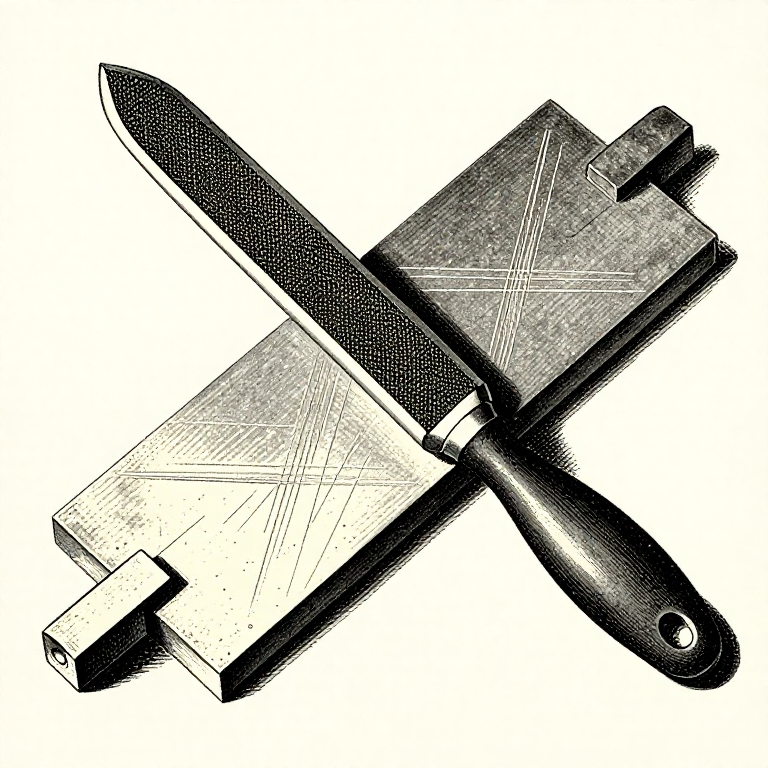


Cross-Filing: Taking Metal Down Fast and Keeping It Flat
Cross-filing is the stroke that removes stock: the file pushed across the work at an angle, then the angle reversed, then reversed again. It is how a rough sawn edge becomes a flat one.
The reason for changing direction is not decoration. Each pass leaves scratches running one way; the next pass crossing them makes the high spots obvious the moment they stop being touched. The file itself tells you where the surface is high — you do not have to measure to find out.
The enemy is ROCKING. A file 250 mm long pivoting a degree through the stroke takes more off the ends than the middle, and produces a convex surface that will never sit flat on anything.
中级
3 hours
说明
1
1
The stroke: weight forward, level, and lift on the return
The stroke: weight forward, level, and lift on the return
Hold the handle in your dominant hand with the thumb along the top, and the tip of the file between the thumb and fingers of the other. Push the file forward with the weight of your upper body, not by pressing down with your arms.
The pressure balance shifts through the stroke. At the start most of the file hangs off the far side of the work, so the leading hand carries the weight; at the end the handle hangs off the near side, so the pressure shifts back. Getting that transfer right is the whole skill, and it is what keeps the stroke level.
Lift on the return. The teeth cut only forward, so dragging back wears them and drags chips across the surface. The one exception is soft metal like lead where a light return helps clear the teeth.
所需工具:
 锉刀(手用锉)
 重型台钳
重型台钳 低碳钢板
低碳钢板2
2
Cross the strokes, and let the file find the high spots
Cross the strokes, and let the file find the high spots
File at roughly 30 degrees across the work for a dozen strokes, then swing to 30 degrees the other way and file until the first set of scratches has gone.
The moment they have all gone, the surface is level to the depth of those scratches. If a patch of the old scratches survives, that patch is LOW and everything around it is high — so work the high ground, not the hollow. This is the single most useful thing about cross-filing and it costs nothing.
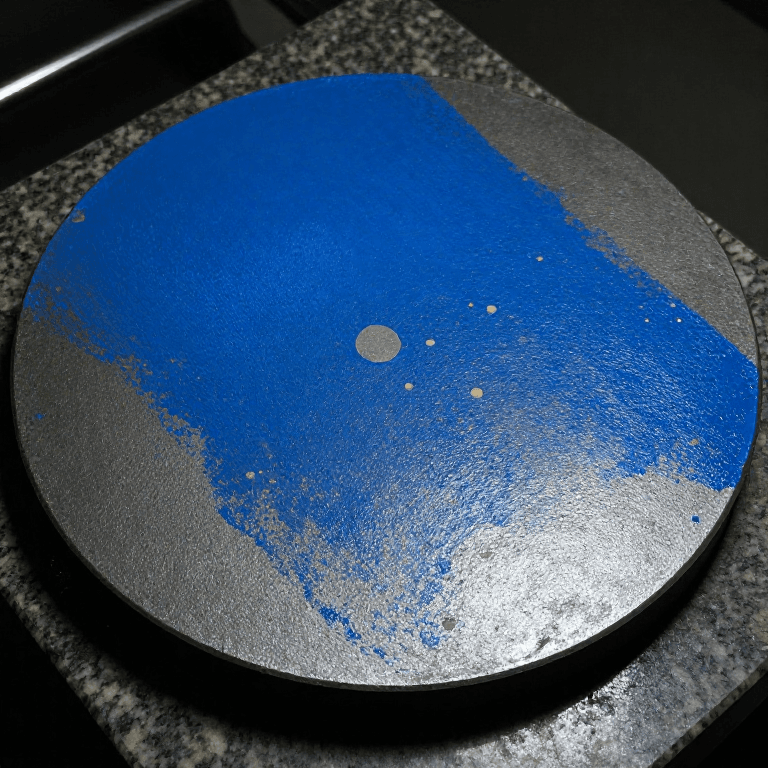
Chalk rubbed on the file face makes the pattern easier to read and slows clogging on soft metal. Marking blue on the work does the same job more clearly on steel.
此步骤所需材料:
 划线粉笔1 个
所需工具:
锉刀(手用锉) 蓝色显示剂
蓝色显示剂 放大目镜
放大目镜3
3
Why rocking makes a convex surface
Why rocking makes a convex surface
正在加载 Jupyter 笔记本…
所需工具:
 计算器
计算器 游标卡尺
游标卡尺4
4
Check flat, check square, and check often
Check flat, check square, and check often
Lay a straightedge across the work and hold it up to a light. A gap anywhere shows as a line of light, and the eye can see a gap of a few micrometres this way — far finer than any rule you can read.
Check in three directions: along, across, and diagonally. A face can be straight along its length and still be twisted, and the diagonal is what finds that. For square, stand a try square on the reference face and look for light under the blade the same way.
Check every dozen strokes near the end, not every hundred. Metal comes off far faster than it goes back on, and the published surface-plate-and-marking-blue blueprint is the next step up in precision when light-gap checking is no longer good enough.
所需工具:
 直尺规
直尺规 机工角尺
机工角尺 固定角尺蓝色显示剂
相关蓝图
这些蓝图共享知识——技术、材料或原理
CC0 公共领域
此蓝图以 CC0 协议发布。你可以自由复制、修改、分发和使用此作品,无需征得许可。
通过购买蓝图中的产品支持创客,他们将获得 创客佣金 (由供应商设定),或创建此蓝图的新版本并将其作为连接包含在你自己的蓝图中以分享收入。