艺术
美容与健康
工艺
文化与历史
娱乐
环境
食品与饮料
逆向工程
科学
体育
技术
可穿戴设备
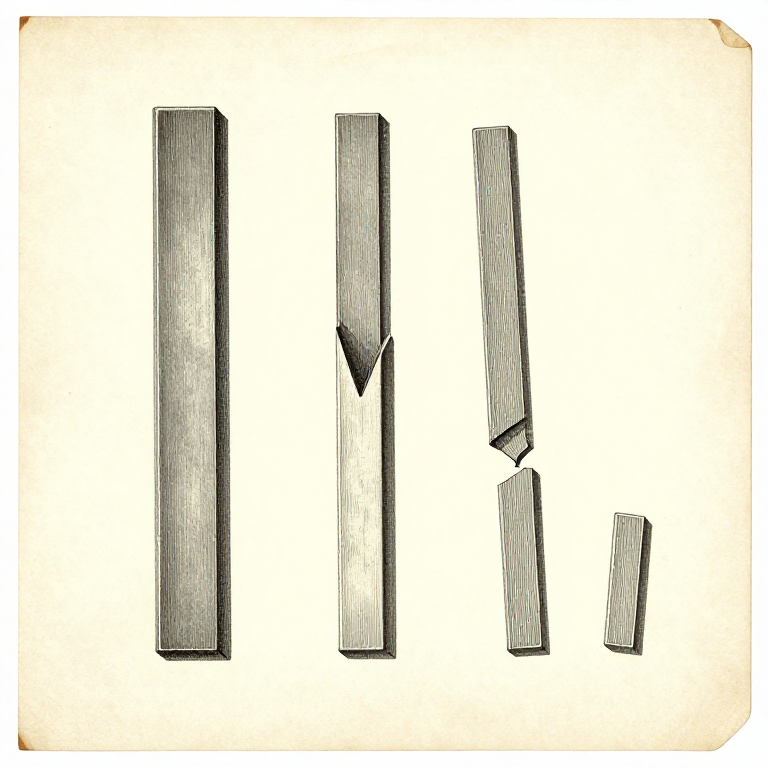


Cutting Hot Metal: The Hardy, the Chisel, and Never Through to the Face
Hot steel cuts like hard cheese. A chisel that would barely mark a cold bar sinks through a bright orange one in a few blows, which makes cutting to length a forge operation rather than a saw one.
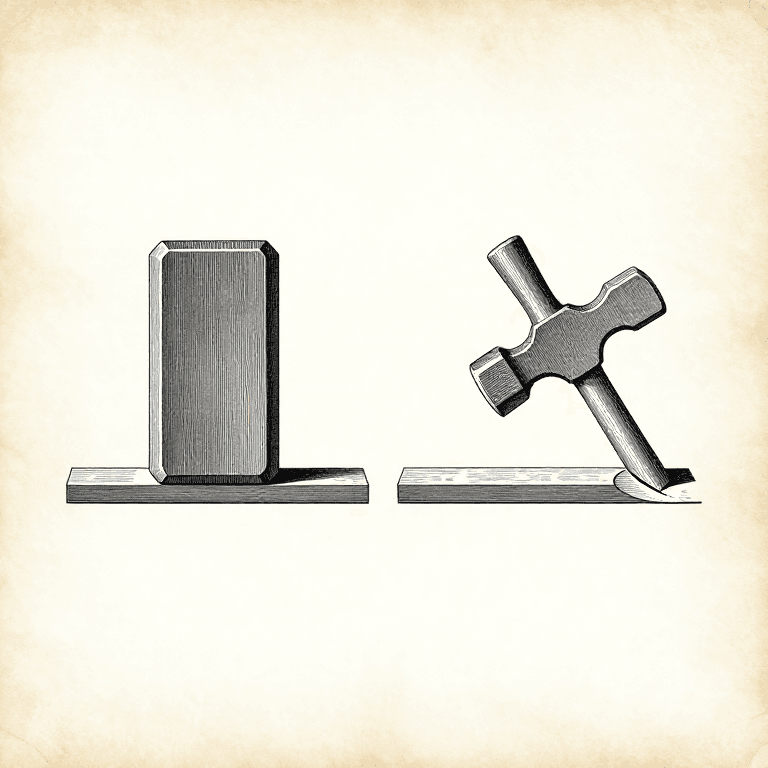
The rule that governs all of it: never cut all the way through onto the anvil FACE. The face is hardened and a chisel driven into it leaves a permanent notch that prints into everything you forge afterwards.
So you cut nearly through, then break — or you cut over the soft step, or over the hardy hole, where going through costs nothing.
中级
2 hours
说明
1
1
The hot cut hardy: the chisel that points up
The hot cut hardy: the chisel that points up
Drop a hot cut hardy into the hardy hole and it becomes an upward-facing chisel. Lay the hot bar on it and hammer from above, and the bar is cut between the hammer and the hardy edge.
Rotate the bar as you go, cutting a groove all the way round rather than driving straight through one side. A bar cut from one side only ends up with a long drawn-out tail rather than a square end.
Stop before you go right through — leave a thin web — and break the piece off by bending it. Driving the last of the cut through drives the bar down onto the hardy's edge, and a hardy is much easier to damage than to replace.
此步骤所需材料:
 低碳钢条1 个
 块状木炭1 个
所需工具:
 铁砧剁刀
铁砧剁刀 铁砧
铁砧 铁匠锤
铁匠锤 铁匠钳
铁匠钳2
2
A hot chisel from above, over the step
A hot chisel from above, over the step
A hand-held hot chisel does the same job from the top, which suits cutting part way in — a shoulder, a slit for a joint, a decorative line.
Work over the soft STEP of the anvil, not the face, wherever the chisel might go through. That is what the step is for, and it is why it is deliberately left unhardened.
Keep the hot chisel cool: dip it every few blows exactly as with a punch. A hot chisel is not hardened as far as a cold chisel — it relies on the work being softer than it is — so letting it get hot ruins the edge quickly.
此步骤所需材料:
低碳钢条1 个 水1 个
水1 个所需工具:
铁砧铁匠锤铁匠钳 长袖皮手套
长袖皮手套3
3
Hot chisel and cold chisel are different tools
Hot chisel and cold chisel are different tools
A COLD chisel is ground to a stout angle — around 60 degrees — because it has to survive cutting metal that is not giving way. A HOT chisel is ground much thinner, around 30 degrees, because hot steel offers little resistance and a thin edge cuts far better.
Use them the wrong way round and both fail: a cold chisel in hot steel is slow and leaves a rough cut, and a hot chisel in cold steel chips its edge off immediately.
Mark them so you cannot confuse them — a band of paint, a different handle, separate racks. The angle rung in the sharpening batch is where those numbers come from, and it is the same logic: the angle follows the job.
所需工具:
 放大目镜铁砧剁刀
 钢丝刷套装
钢丝刷套装4
4
Mind where the offcut goes
Mind where the offcut goes
A short hot offcut breaks free suddenly and flies. It is at forging heat, it is sharp, and it lands somewhere you were not looking.
Cut so the offcut falls away from you and downward, keep the floor clear of anything that will burn, and know where it went before you take the next heat. A hot offcut on the floor looks exactly like a cold one after a minute.
The same habit as the cooling rung: anything that has been in the fire is hot until proved otherwise, and it goes in one designated place. None of this makes the work risky — it is the small set of habits that makes it ordinary.
此步骤所需材料:
低碳钢条1 个所需工具:
铁匠钳 透明安全眼镜长袖皮手套
相关蓝图
这些蓝图共享知识——技术、材料或原理
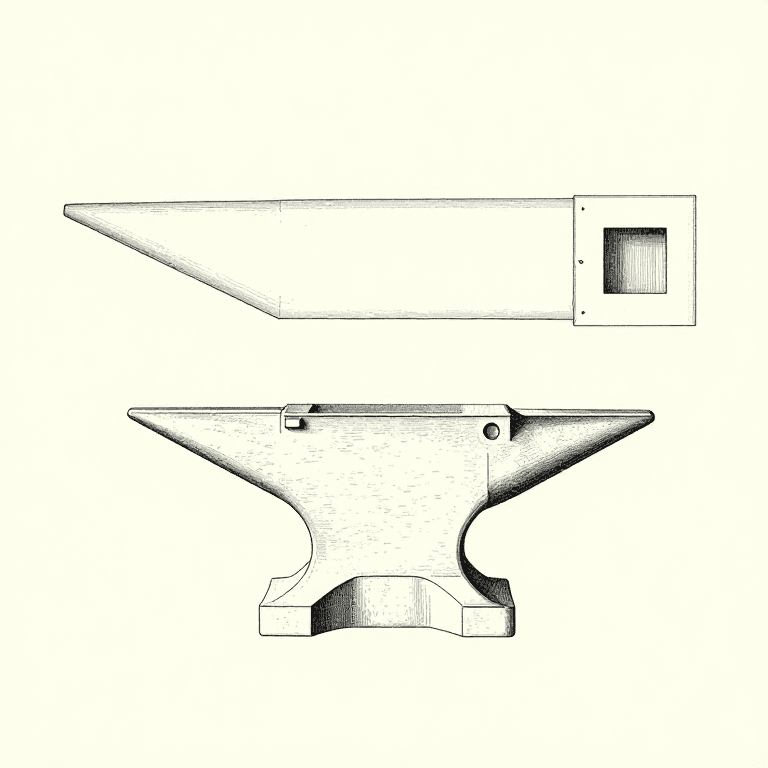
CC0 公共领域
此蓝图以 CC0 协议发布。你可以自由复制、修改、分发和使用此作品,无需征得许可。
通过购买蓝图中的产品支持创客,他们将获得 创客佣金 (由供应商设定),或创建此蓝图的新版本并将其作为连接包含在你自己的蓝图中以分享收入。