

艺术
美容与健康
工艺
文化与历史
娱乐
环境
食品与饮料
逆向工程
科学
体育
技术
可穿戴设备

English
Barking Mulberry — Raw Material Harvesting for Hanji
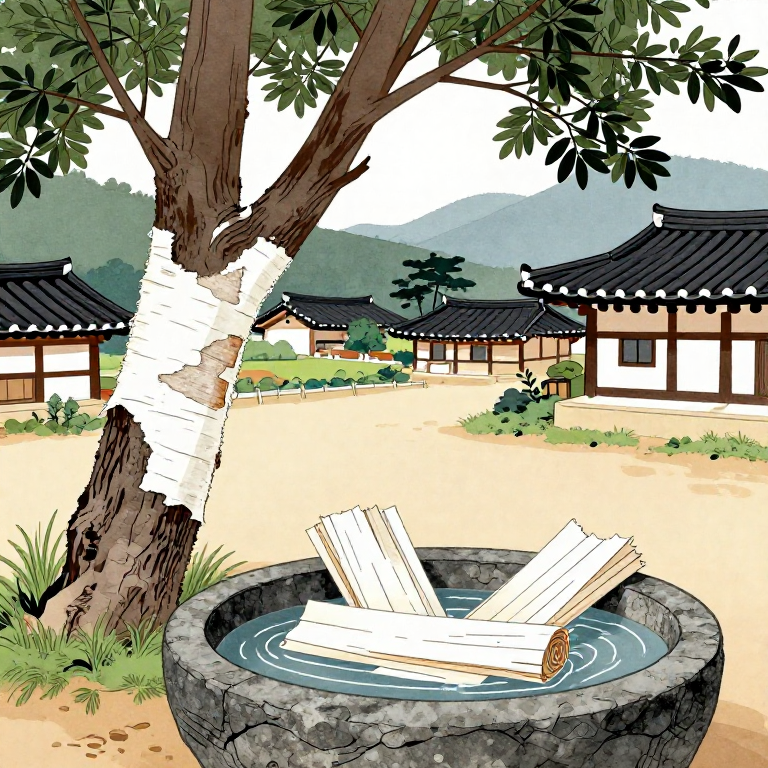
This blueprint explains the method of harvesting bark from mulberry trees (Broussonetia papyrifera), the first step in hanji (韓紙) production. It covers the entire process from appropriate felling timing, bark removal, separation of outer bark and inner bark, drying, and storage. This is the raw material acquisition technique that serves as the starting point for traditional Korean hanji papermaking craft.
初学者
4-6 hours
说明
1
1
Understanding the Paper Mulberry Tree
The paper mulberry (Broussonetia papyrifera) is a deciduous tree in the mulberry family that grows 3-10 meters tall. Its leaves are large and rough, with fine hairs on young branches. It grows throughout Korea and is cultivated specifically for hanji (traditional Korean paper) in Jeolla-do and Gyeongsang-do provinces.
2
2
Determining the Harvesting Period
Paper mulberry harvesting is done between November and January, after all leaves have fallen. During this period, sap flow has stopped so the bark peels off cleanly, and fiber quality is at its best. Branches cut in spring or summer have weak fibers.
3
3
Selecting 1-3 Year Old Branches
Fibers for hanji are obtained from 1-3 year old branches. Select straight branches with few side shoots, 1.5-3 cm in diameter. Branches older than 3 years have coarse fibers, and branches younger than 1 year yield too little material.
此步骤所需材料:
Paper Mulberry Branches (1-3 year)20 个4
4
Cutting the Branches
Cut at 5-10 cm above ground level using pruning shears or a sickle. Cutting at an angle prevents rainwater from pooling and rotting the stump. New branches will grow from the same stump the following year.
所需工具:
Pruning Shears
Sickle5
5
Cutting Branches to Uniform Length
Cut the harvested branches to 1-1.2 meter lengths. This is the standard length used in hanji production. Remove all side branches.
所需工具:
Saw6
6
Bundling the Branches
Bundle 20-30 cut branches together. Tie them at both ends and in the middle with straw or twine. Bundles that are too large will not fit in the steaming pot.
此步骤所需材料:
Binding Twine3 米7
7
Steaming the Branches
Place water in a large pot or drum and stand the paper mulberry bundles upright on top. Cover with a lid and steam for 2-3 hours. Steaming softens the bark so it peels off cleanly.
此步骤所需材料:
Water for Steaming30 升
所需工具:
Large Steaming Pot or Drum
Firewood8
8
Stripping the Bark
Stripping the Bark
While the steamed branches are still warm, make a knife cut at the top and pull downward — the bark will strip off in one piece. Hold the branch with one hand and pull the bark with the other. Work quickly as the bark becomes difficult to peel once it cools.
所需工具:
Small KnifeWork Gloves (Cotton)
9
9
Separating the Black Bark (Heukpi)
The stripped bark consists of an outer black layer (heukpi) and an inner white layer (baekpi). Scrape off the black bark with a knife. If black bark remains, it will cause dark spots in the hanji, so it must be thoroughly removed.
所需工具:
Scraping Knife10
10
Inspecting the White Bark (Baekpi)
The white bark with the black bark removed is cream to light brown in color. When torn by hand, long tough fibers are visible. This is the bast fiber that is the raw material for hanji. Longer fibers produce stronger hanji.
11
11
Washing the White Bark
Wash the white bark in cold running water to remove residual debris and sap. Rub gently while washing, taking care not to damage the fibers.
此步骤所需材料:
Clean Water20 升所需工具:
Washing Basin12
12
Drying the White Bark
Spread the washed white bark and dry in sunlight. Hang on a clothesline or spread on a bamboo rack. Dry for 2-3 days until completely dry. Bring in immediately if it rains.
所需工具:
Drying Rack
Clothesline13
13
Checking the Drying State
Fully dried white bark is stiff and lightweight, making a snapping sound when bent. If any moist areas remain, mold can grow, so it must be completely dried.
14
14
Bundling and Storing the Dried White Bark
Neatly gather the dried white bark and tie with twine. Store in a cool, well-ventilated location. If protected from moisture and direct sunlight, it can be stored for over a year. Soak in water before use.
此步骤所需材料:
Binding Twine2 米15
15
Managing the Paper Mulberry Stumps
After harvesting, remove weeds around the stump. A healthy stump will produce 5-8 new branches in spring. It can be harvested again after 3 years, and a single stump can be harvested repeatedly for over 30 years.
材料
4- 占位符
- 20 升占位符
Related blueprints
Other builds that share materials, tools, or techniques with this one.

हल्दी की खुदाई और प्रसंस्करण — कच्ची हल्दी से सूखी हल्दी बनानाagriculture

竹の伐採と選別 — 真竹の収穫から油抜きまでagriculture

گلابگیری — تقطیر گل محمدی برای گلاب خالصagriculture

કપાસની ચૂંટણી અને પ્રક્રિયા — ગુજરાતની કપાસ ખેતીagriculture

পাট সংগ্রহ ও জাগ দেওয়া — বাংলাদেশের পাট আঁশ বের করাagriculture

جمع صمغ اللبان من اشجار البوسويليا — من الشجرة الى الراتنجagriculture
CC0 公共领域
此蓝图以 CC0 协议发布。你可以自由复制、修改、分发和使用此作品,无需征得许可。
通过购买蓝图中的产品支持创客,他们将获得 创客佣金 (由供应商设定),或创建此蓝图的新版本并将其作为连接包含在你自己的蓝图中以分享收入。