艺术
美容与健康
工艺
文化与历史
娱乐
环境
食品与饮料
逆向工程
科学
体育
技术
可穿戴设备
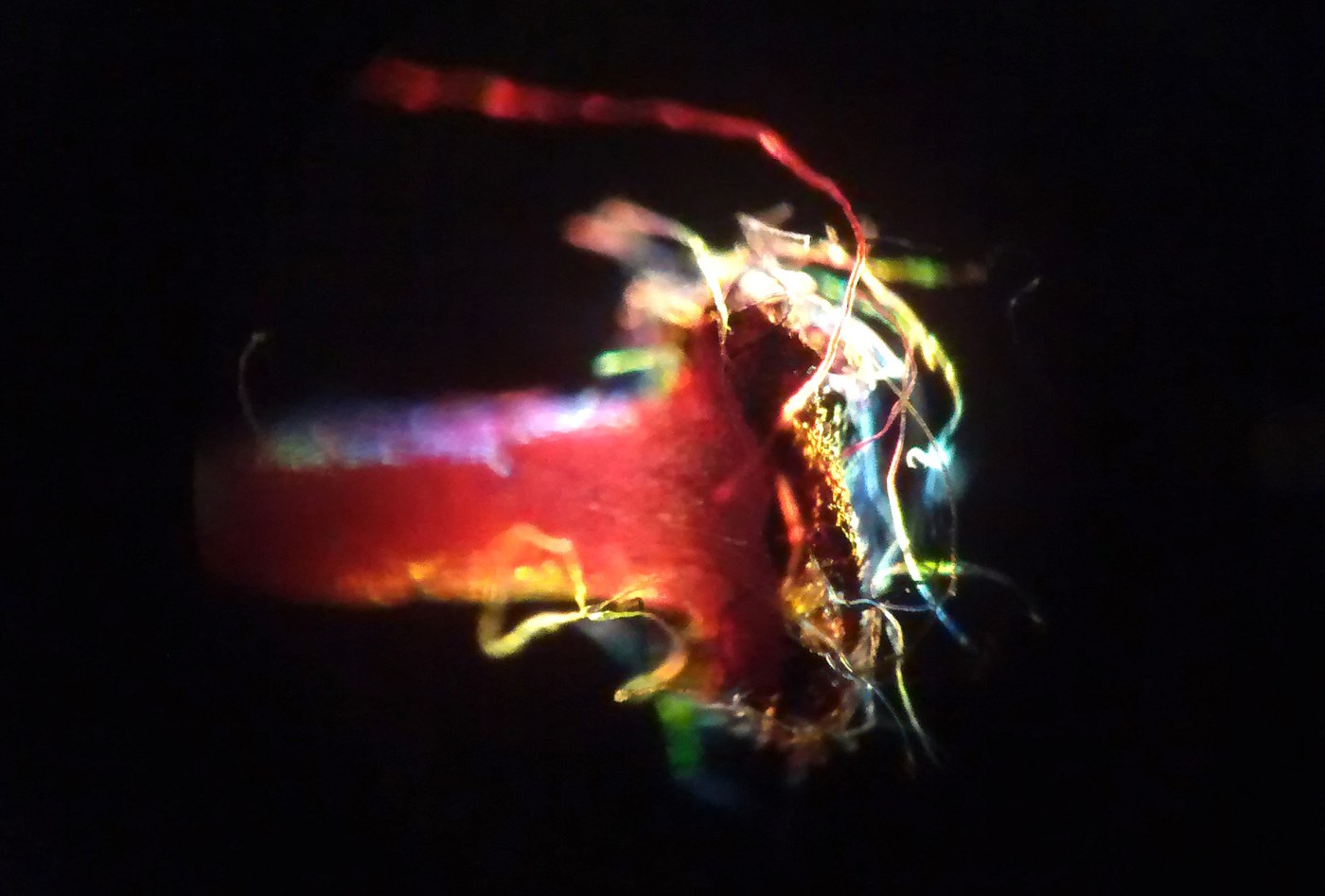


Dark-Field Illumination
Staining puts contrast into a specimen chemically, and it has a price: almost every stain requires the specimen to be dead, fixed and usually sectioned. If you want to watch something alive and moving, the chemistry is no use to you.
Dark-field puts the contrast in optically instead, and it is astonishingly simple. Block the centre of the illuminating cone so that no direct light can enter the objective at all. The field goes black. Anything in the specimen that SCATTERS light then throws some of it sideways into the objective, and appears brilliantly bright against that blackness.
The effect is out of all proportion to the effort — a coin of black card in the right place — and it reveals things far below the resolution limit. You cannot resolve a bacterial flagellum, but you can see that one is there, because it scatters.
初学者
2 hours
说明
1
1
Cut a stop, and get the size right
Cut a stop, and get the size right
Cut a disc of black card and centre it on a clear disc that fits under the condenser — a coverslip or a cut-down transparency works.
The size is the whole design. The stop must block every ray that would enter the objective directly, and no more, so its diameter depends on your objective's numerical aperture and on the condenser's focal length. Too small and direct light leaks in and the field greys out; too large and there is not enough oblique light left to illuminate anything. The notebook works out the size for your own optics.
此步骤所需材料:
 黑卡纸4 个
 载玻片及盖玻片10 个
所需工具:
 手术刀
手术刀 直尺
直尺2
2
Centre it, and open the condenser fully
Centre it, and open the condenser fully
Drop the stop into the filter holder below the condenser, open the condenser diaphragm all the way, and centre the stop by eye until the field goes evenly black.
Open all the way is deliberate and it feels wrong after the Köhler rung. Here you need the widest possible cone, because only the OUTER rays survive the stop and those outer rays are the whole illumination. Any stopping-down removes exactly the light you are relying on.
所需工具:
 显微镜
显微镜3
3
Use a low-aperture objective, or stop it down
Use a low-aperture objective, or stop it down
Dark-field works when the objective's aperture is smaller than the illuminating cone's inner edge. A 10× or 20× objective is ideal; a high-aperture 40× or 100× will collect the direct light and defeat the stop.
This is the method's real constraint, and it is worth stating plainly: dark-field and high magnification fight each other. Proper high-power dark-field needs a special condenser with an internal mirror, which is exactly the piece you cannot easily make at home.
所需工具:
显微镜4
4
Look at living things
Look at living things
Put a drop of pond water, or a smear of yeast in water, on a slide and look.
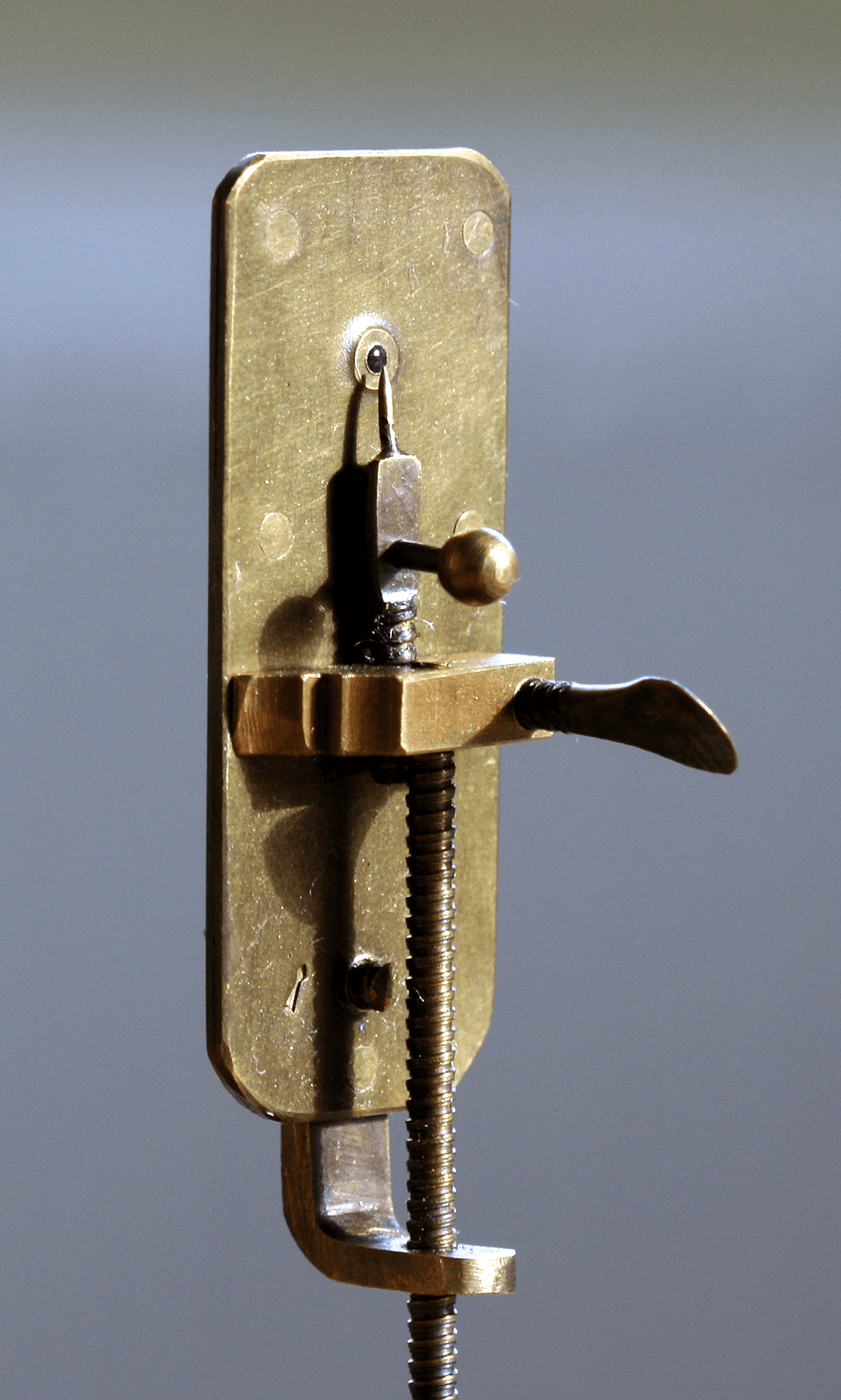
Nothing is stained, nothing is dead, and organisms that were nearly invisible in bright-field now blaze white against black. Watch a ciliate swim. This is the view Leeuwenhoek was chasing with his beads of glass, and it is why dark-field is still used for living samples where a stain would end the experiment.
此步骤所需材料:
 面包酵母10 克载玻片及盖玻片10 个
所需工具:
显微镜 带刻度移液管(莫尔式)
5
5
Keep everything scrupulously clean
Keep everything scrupulously clean
Dust on the slide, grease on the coverslip and scratches in the glass all scatter light, and dark-field shows scattering — so they all blaze as brightly as your specimen.
In bright-field a dust speck is a grey dot you learn to ignore. Here it is a brilliant star sitting beside an organism, indistinguishable at a glance. Clean slides matter more in this technique than in any other in this batch, and a filtered drop of water is worth the extra minute.
此步骤所需材料:
 滤纸10 个
所需工具:
 丁腈手套
丁腈手套6
6
Sizing the stop, and what dark-field can and cannot tell you
Sizing the stop, and what dark-field can and cannot tell you
正在加载 Jupyter 笔记本…
所需工具:
直尺7
7
Try oblique illumination as the cheaper cousin
Try oblique illumination as the cheaper cousin
Instead of a central stop, slide a piece of card across HALF the condenser aperture so the specimen is lit from one side only.
The result looks three-dimensional, as though lit by a low sun, and it brings out edges and steps that vanish in even illumination. It is not quantitative and the apparent relief can reverse if you move the card to the other side — so it is a way of SEEING structure, never of proving it. It costs a piece of card and five seconds, and it is the most under-used trick in microscopy.
此步骤所需材料:
黑卡纸2 个所需工具:
显微镜相关蓝图
这些蓝图共享知识——技术、材料或原理



CC0 公共领域
此蓝图以 CC0 协议发布。你可以自由复制、修改、分发和使用此作品,无需征得许可。
通过购买蓝图中的产品支持创客,他们将获得 创客佣金 (由供应商设定),或创建此蓝图的新版本并将其作为连接包含在你自己的蓝图中以分享收入。