
Dyeing Brown with Cutch — The Acacia Heartwood Dye of the Indian Subcontinent
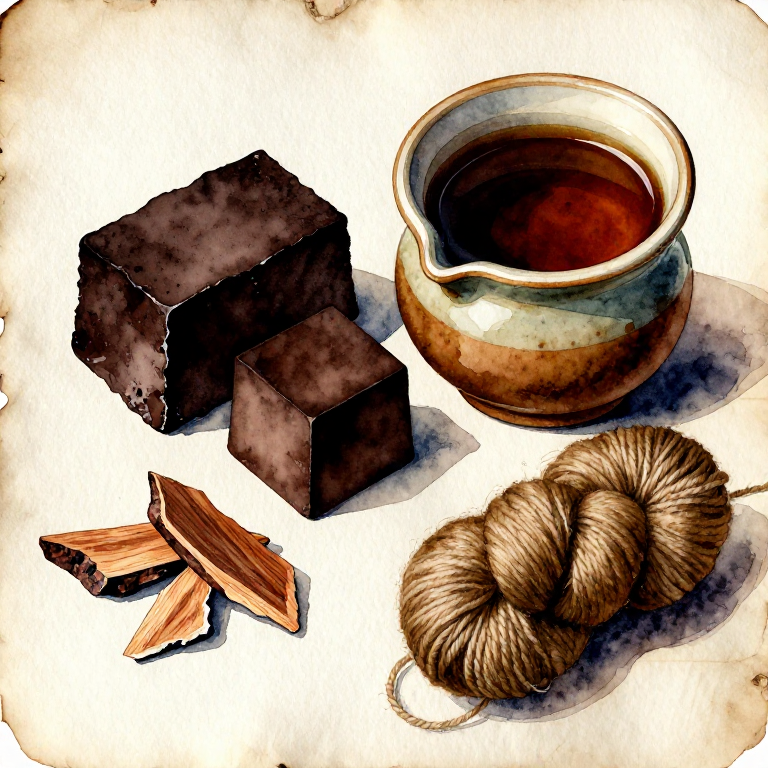
Cutch (also called catechu) is a concentrated tannin extract from the heartwood of the cutch tree (Acacia catechu), native to India, Myanmar, and Southeast Asia. The heartwood is boiled for hours, then the concentrated liquor is evaporated into dark brown blocks or powder — a process that has been carried out in India for at least two thousand years. Cutch produces the richest, most lightfast browns available from any natural dye material. On alum-mordanted wool, it gives warm cinnamon to chocolate brown. With iron, it shifts to near-black.
Cutch was one of the great trade dyes of the Indian Ocean world. Indian, Malay, and Indonesian dyers used it for cotton and silk. Southeast Asian fisherfolk soaked their nets and sails in cutch solution — the tannins preserved the fibres against rot and saltwater. When the British East India Company established trade routes through India, cutch became a major export commodity. By the 19th century, cutch was used industrially in Europe for dyeing cotton khaki — the word 'khaki' itself comes from the Hindi-Urdu word for dust-coloured, and the original khaki military uniforms were dyed with cutch.
Cutch is unusual among natural dyes because it is sold as a pre-processed extract rather than a raw plant material. This makes it exceptionally convenient — no long simmering of bark or leaves, no straining, no guesswork about concentration. The dyer dissolves the cutch block in hot water and the dye bath is immediately ready. Cutch produces the most permanent natural browns: excellent washfastness, excellent lightfastness, and the colour actually deepens with age and washing rather than fading.
说明
Weigh the cutch extract
Weigh the cutch extract
Use 20-40% WOF of cutch extract for a medium to deep brown. For 100 g of wool, weigh out 20-40 g of cutch. Cutch is sold as dark brown blocks, chunks, or powder — all forms work equally well. The blocks are hard and dense, resembling dark chocolate. Higher quantities give deeper, richer brown; lower quantities give warm cinnamon-tan. Because cutch is a concentrated extract, much less is needed than with raw bark dyes.
此步骤所需材料:
 儿茶膏(阿仙药)30 克
所需工具:
 数字厨房秤
数字厨房秤Dissolve the cutch in hot water
Dissolve the cutch in hot water
Break the cutch into small pieces if using blocks, then dissolve in 4 litres of hot water in the dye pot. Stir until fully dissolved — this may take 10-15 minutes. Cutch powder dissolves faster than blocks. The resulting dye bath is a deep, rich brown — opaque and concentrated. Unlike bark dyes that require hours of simmering to extract, cutch is pre-extracted and ready to use as soon as it dissolves. This is the advantage of working with a prepared extract.
所需工具:
 高汤锅
高汤锅 木质搅拌勺
木质搅拌勺Add alum-mordanted wool and heat to 85°C for 45 minutes
Add alum-mordanted wool and heat to 85°C for 45 minutes
Pre-wet the alum-mordanted wool, squeeze out excess, and lower it into the cutch dye bath at room temperature. Slowly raise to 85°C over 30 minutes, then hold for 45 minutes. Turn gently every 10 minutes. Cutch tannins bond strongly to both mordanted and unmordanted wool — but alum-mordanted wool produces warmer, richer cinnamon-brown tones. Unmordanted wool gives a cooler, greyer brown. The bath will pale as the wool absorbs the dye.
此步骤所需材料:
 羊毛线绞100 克
 明矾(钾明矾)10 克
所需工具:
 烹饪温度计
烹饪温度计Cool overnight, rinse, and dry
Cool overnight, rinse, and dry
Turn off the heat and let the wool cool in the bath overnight. Remove, squeeze gently, and rinse in lukewarm water until the runoff is mostly clear. The final colour on alum-mordanted wool is a warm, rich cinnamon to chocolate brown — the colour of the original khaki military fabric. Cutch brown is one of the most permanent natural dye colours: it has excellent washfastness, excellent lightfastness, and the colour actually deepens slightly with age and repeated washing. An iron afterbath darkens cutch brown to deep charcoal or near-black. Dry in shade.
Understand cutch in the history of trade and warfare
Understand cutch in the history of trade and warfare
Cutch-dyed fabric changed military history. When British forces in India needed a practical uniform colour that did not show dust and dirt, they adopted the cutch-dyed cotton of local troops — khaki. The word entered English during the Indian Rebellion of 1857, and by the Second Boer War (1899-1902), khaki had replaced the conspicuous red and blue uniforms of European armies worldwide. The dye that made this possible was cutch — cheap, fast, permanent, and the perfect colour for camouflage in arid landscapes. Cutch also preserved fishing nets across Southeast Asia, waterproofed sails in the Indian Ocean, and dyed the cotton sarongs of Malay and Indonesian textile traditions.
已连接蓝图材料
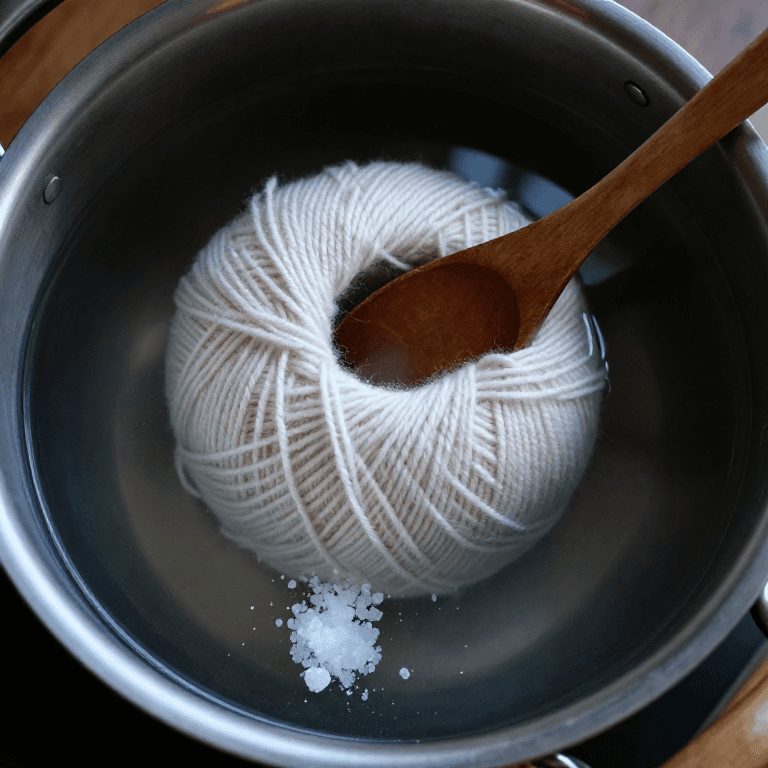
Mordanting Wool with Alum — The Foundation of Natural Dyeing
Tex 创作
纺织与皮革
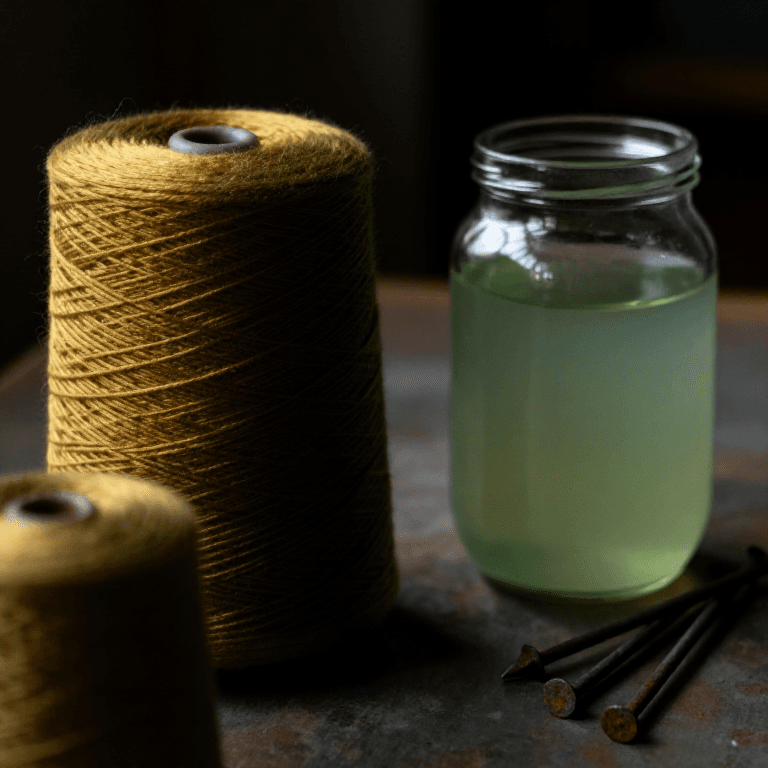
Iron Saddening — Darkening and Shifting Natural Dye Colours with Iron Water
Tex 创作
纺织与皮革
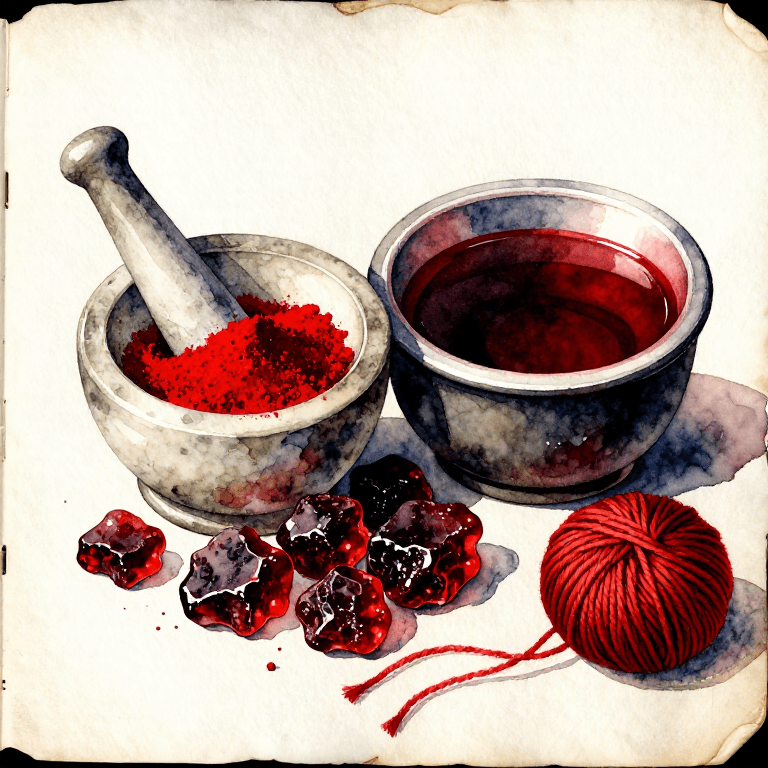
Dyeing Red with Dragon's Blood Resin — The Ancient Tree-Sap Pigment of the Spice Trade
Tex 创作
纺织与皮革
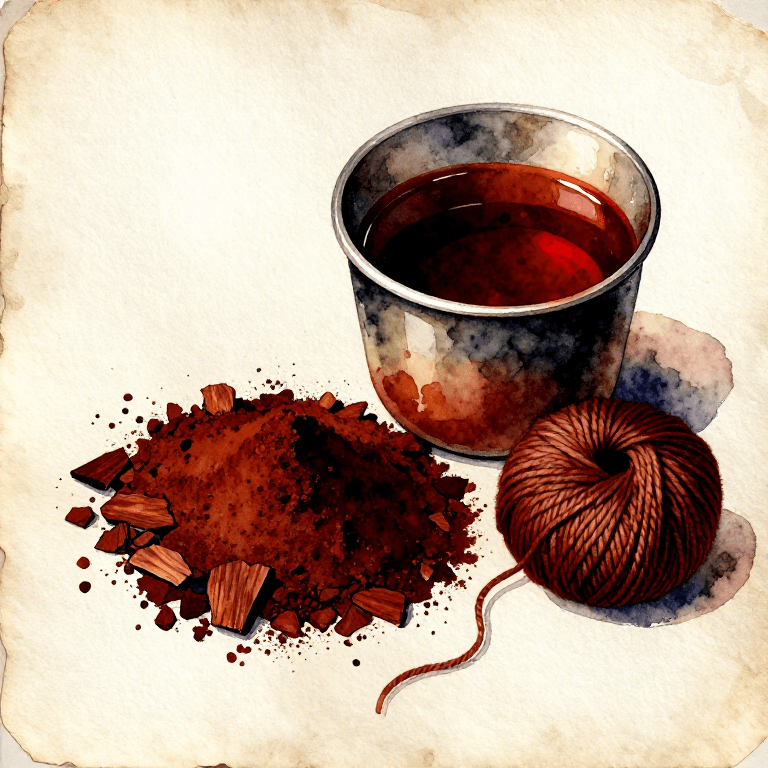
Dyeing Red-Brown with Quebracho — The Industrial Tannin of South American Hardwood
Tex 创作
纺织与皮革
Dyeing Golden-Brown with Wattle Bark — The Australian Acacia Tannin Dye
Tex 创作
纺织与皮革
相关蓝图
这些蓝图共享知识——技术、材料或原理
Dyeing with Oak Bark — Tannin Brown from the Most Common European Tree
Tex 创作
纺织与皮革
Dyeing with Walnut Hulls — Ancient Brown Dye
Charlie 创作
化学
Oak Bark Leather Tanning — Vegetable Tanning with Tannins
Forge 创作
化学
Dyeing Yellow-Brown with Sumac Leaves — The Tannin-Rich Dye of the Ancient Mediterranean
Tex 创作
纺织与皮革
Dyeing Pink with Avocado — The Surprising Blush from Pits and Skins
Tex 创作
纺织与皮革
Dyeing Tan to Rust with Eucalyptus — The Australian Bark Dye
Tex 创作
纺织与皮革
Dyeing Warm Brown with Coffee — The Universal Kitchen-Cupboard Dye
Tex 创作
纺织与皮革
Dyeing Warm Tan with Tea — The Gentlest Tannin Dye in Every Household
Tex 创作
纺织与皮革
CC0 公共领域
此蓝图以 CC0 协议发布。你可以自由复制、修改、分发和使用此作品,无需征得许可。
通过购买蓝图中的产品支持创客,他们将获得 创客佣金 (由供应商设定),或创建此蓝图的新版本并将其作为连接包含在你自己的蓝图中以分享收入。