艺术
美容与健康
工艺
文化与历史
娱乐
环境
食品与饮料
逆向工程
科学
体育
技术
可穿戴设备
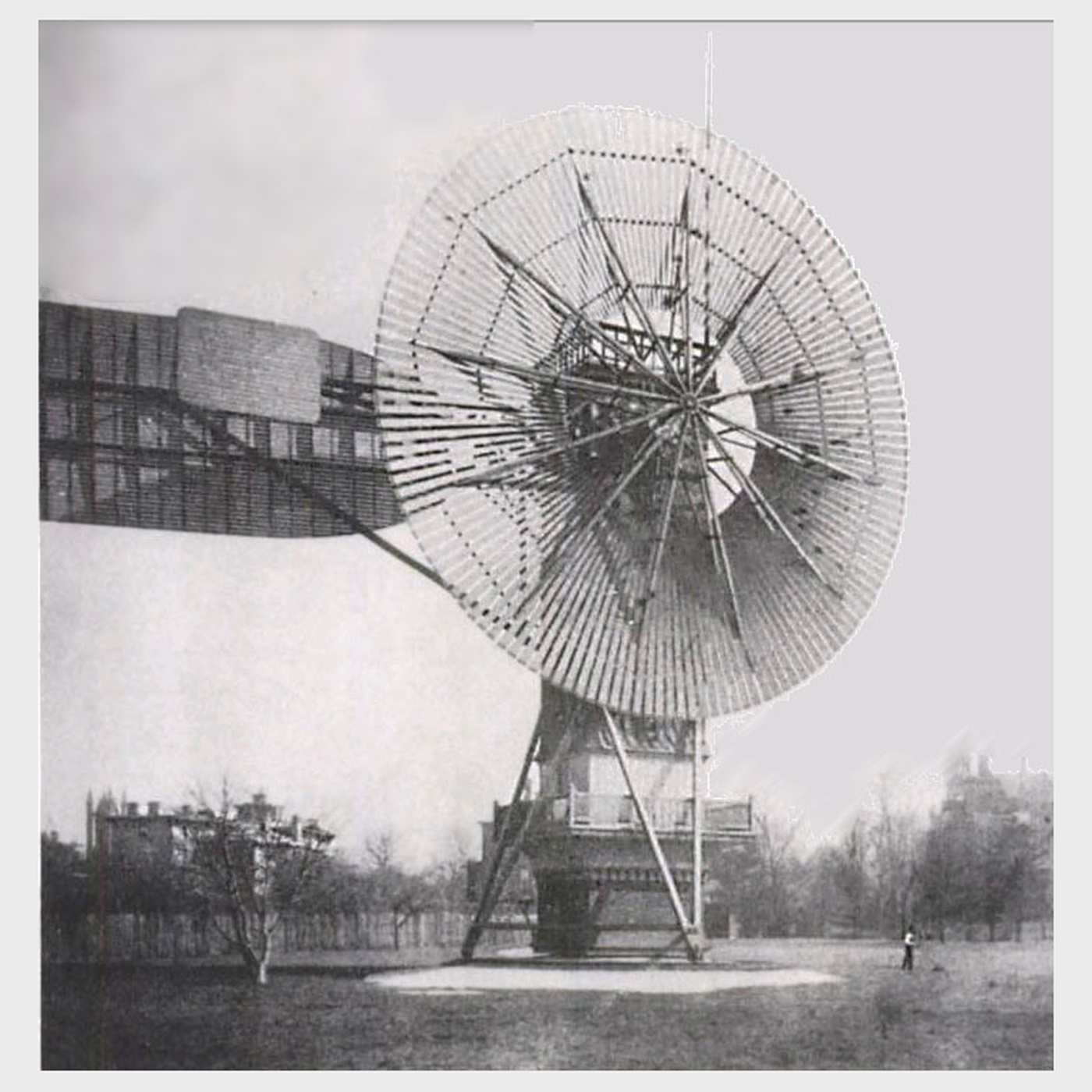


Electricity From the Wind: The Cube Law and a Rotor on a Dynamo
For a thousand years windmills ground grain and pumped water. In the winter of 1887–88 Charles F. Brush put one to a new job in the back garden of his house in Cleveland, Ohio: a 17-metre rotor of 144 cedar blades turning a dynamo that charged a cellar full of batteries — electricity from the wind.
Everything about a wind generator follows from one relation: the power in the wind goes with the cube of its speed and the square of the rotor's diameter. That is why turbines grew huge and why their sites are chosen with such care.
This rung builds a small wind generator from a hobby motor and a printed rotor, measures its power in front of a fan at several wind speeds, and checks the cube law.
初学者
About 4 hours
说明
1
1
The cube law
The cube law
正在加载 Jupyter 笔记本…
2
2
Build a small wind generator
Build a small wind generator
A small permanent-magnet DC motor is also a generator: turn its shaft and it makes a voltage proportional to speed.
Print a three-bladed rotor 300 mm across in PETG, with a hub that presses onto the motor shaft, each blade twisted — steep near the hub, flatter towards the tip — because the tip moves faster through the air than the root. Mount the motor on a dowel mast clamped to a plywood base, with the rotor facing the fan.
Wire the motor's terminals to a 330 Ω resistor as a load, with the multimeter across it. Add an LED in series if you want to see it light.
此步骤所需材料:
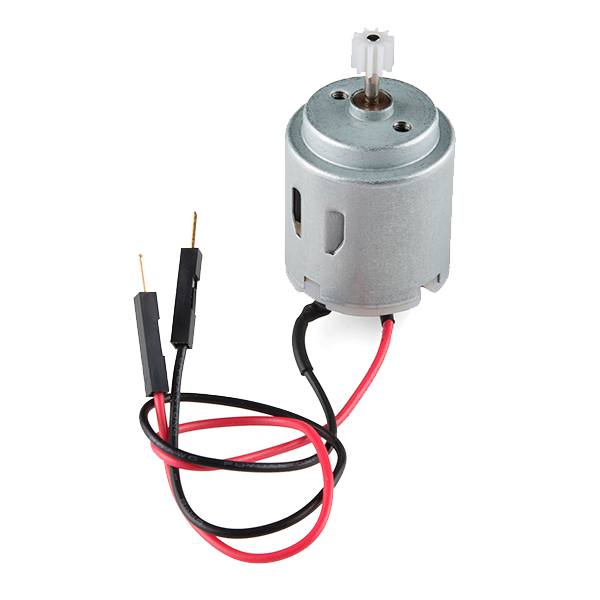 Hobby Motor - Gear1 个
 PETG线材60 克
 硬木销钉1 套
 胶合板1 张
 330 欧姆电阻1 个
 5 毫米 LED1 个
 跳线1 套
跳线1 套所需工具:
 FDM 3D 打印机
 充电式电钻
充电式电钻 钻头套装
钻头套装 内六角扳手组
3
3
Measure its power at three wind speeds
Measure its power at three wind speeds
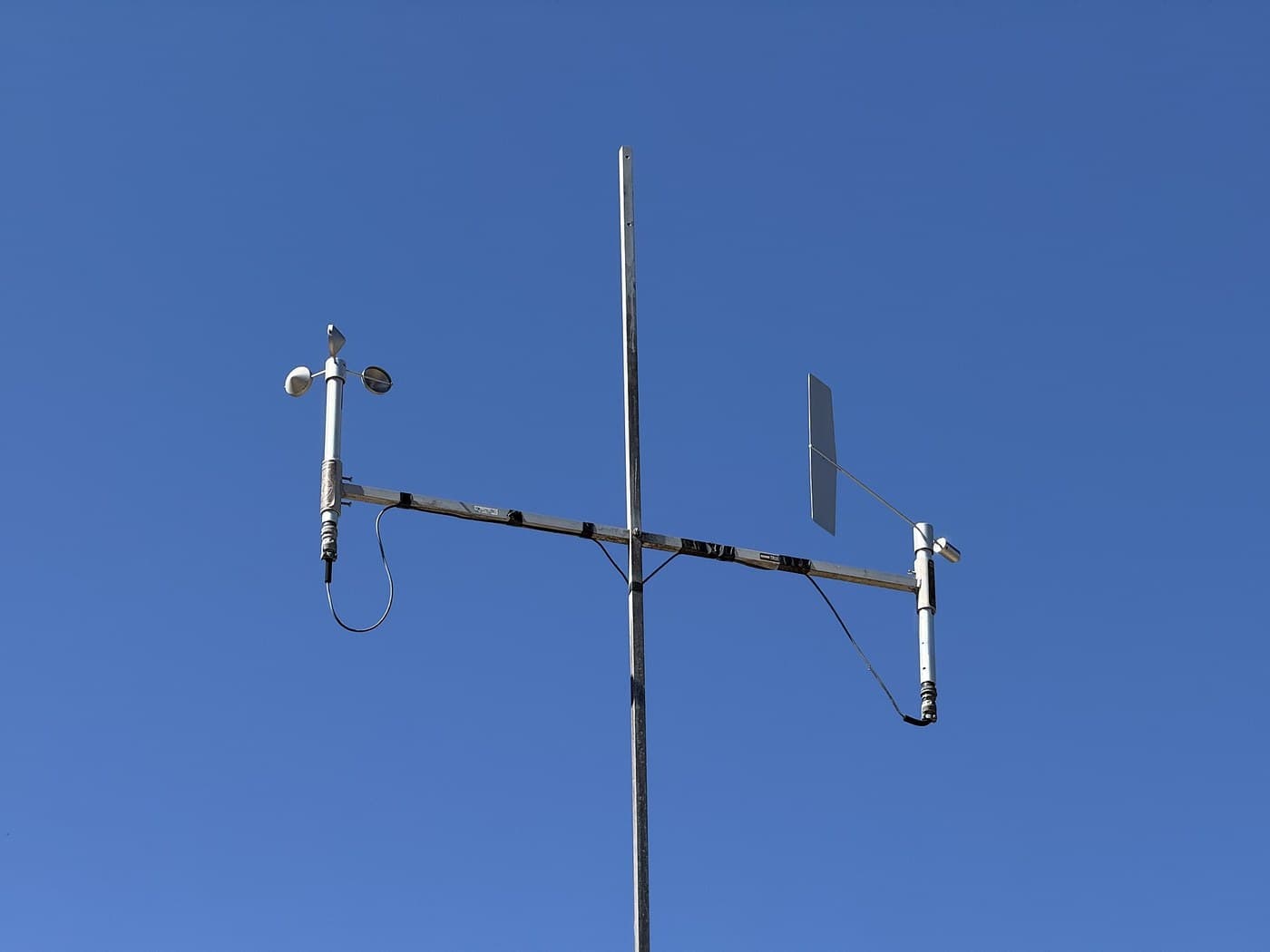
Stand the box fan 1.5 m away, facing the rotor. Measure the wind speed at the rotor with the anemometer before fitting the rotor, at each fan setting.
Fit the rotor, run the fan, and read the voltage across the resistor once it is steady. The electrical power is **V² ÷ R**. Record wind speed and power for each fan setting.
Plot power against wind speed cubed. It should be roughly a straight line — not exactly, because a small motor's own losses take a bigger share at low speed. Then divide your power by the notebook's power passing through a 0.3 m disc at the same wind speed. That ratio is your rotor's power coefficient, and the Betz rung shows the most it could ever be.
所需工具:
 箱式风扇(可调速)
 手持风速仪
手持风速仪 万用表
万用表 卷尺
卷尺 数字转速表
数字转速表4
4
History and context
History and context
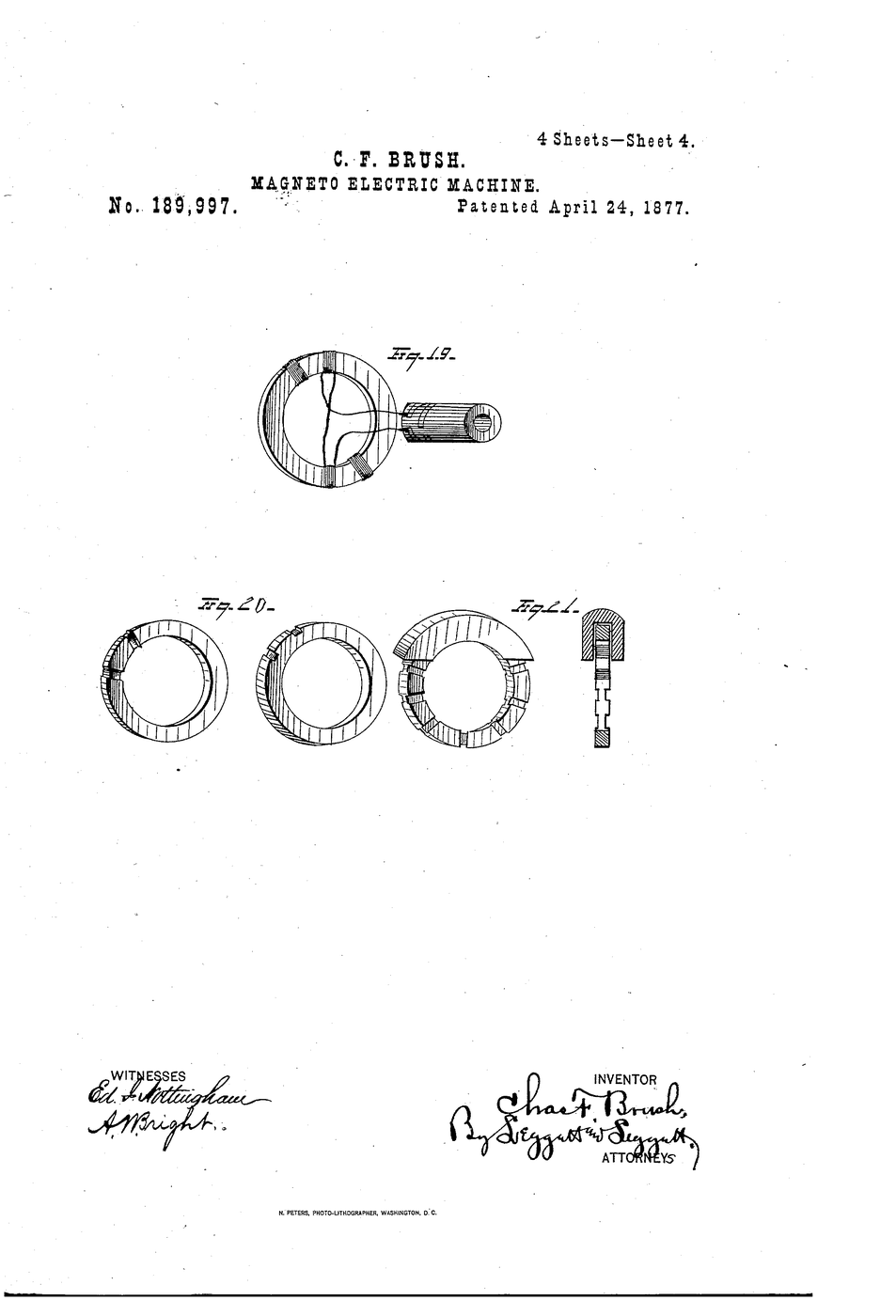
**Charles F. Brush, Cleveland, Ohio, 1887–88** — a 17 m, 144-bladed rotor on a tower about 18 m (60 ft) high driving a 12 kW dynamo through step-up gearing, charging batteries that lit his house; it ran for some twenty years. Brush had already built the arc-lighting dynamo in this catalogue. No patent number is asserted here.
In Denmark from 1891, **Poul la Cour** tested rotors in a wind tunnel of his own and found that fewer blades turning faster made better use of the wind than many slow ones — the direction every modern turbine took.
**Honest limits.** The wind stops; a wind generator needs storage or another source behind it. Its output swings with the cube of a quantity that changes by the minute. And a large rotor is a serious hazard: it must be able to stop itself in a storm, as the Halladay windmill's governor in this catalogue already could.
材料
7- Hobby Motor - Gear10% 佣金1 个$2.53
- 60 克占位符
- 1 套占位符
- 1 张占位符
- 1 个占位符
所需工具
9- 占位符
- 1 vendor sell this, none ship to you yet占位符
- 占位符
- 占位符
- 占位符
- 占位符
- 占位符
- 1 vendor sell this, none ship to you yet占位符
- 占位符
估计总额
制作者买了什么。未标价的材料,在你购买的地方获取。
相关蓝图
这些蓝图共享知识——技术、材料或原理


CC0 公共领域
此蓝图以 CC0 协议发布。你可以自由复制、修改、分发和使用此作品,无需征得许可。
通过购买蓝图中的产品支持创客,他们将获得 创客佣金 (由供应商设定),或创建此蓝图的新版本并将其作为连接包含在你自己的蓝图中以分享收入。