
Extracting Cobalt from Cobaltite — The Goblin Metal That Colors Glass Blue
Cobalt (Co, element 27) gets its name from the German Kobold ('goblin' or 'evil spirit'). Medieval Saxonian silver miners cursed the cobalt-bearing ores they encountered: these minerals looked like silver ore but yielded no silver, and when smelted they released poisonous arsenic fumes that sickened the miners. They blamed goblins living underground. The blue color that cobalt imparts to glass, however, has been exploited since at least 2600 BCE — Egyptian and Mesopotamian craftsmen used cobalt-colored glass without knowing the element responsible.
Swedish chemist Georg Brandt first isolated metallic cobalt around 1735, making it the first metal to be discovered that had no ancient or medieval precedent. He demonstrated that the blue coloring agent in smalt (cobalt-colored glass used as a pigment) was a distinct metal, not a compound of bismuth or copper as previously believed.
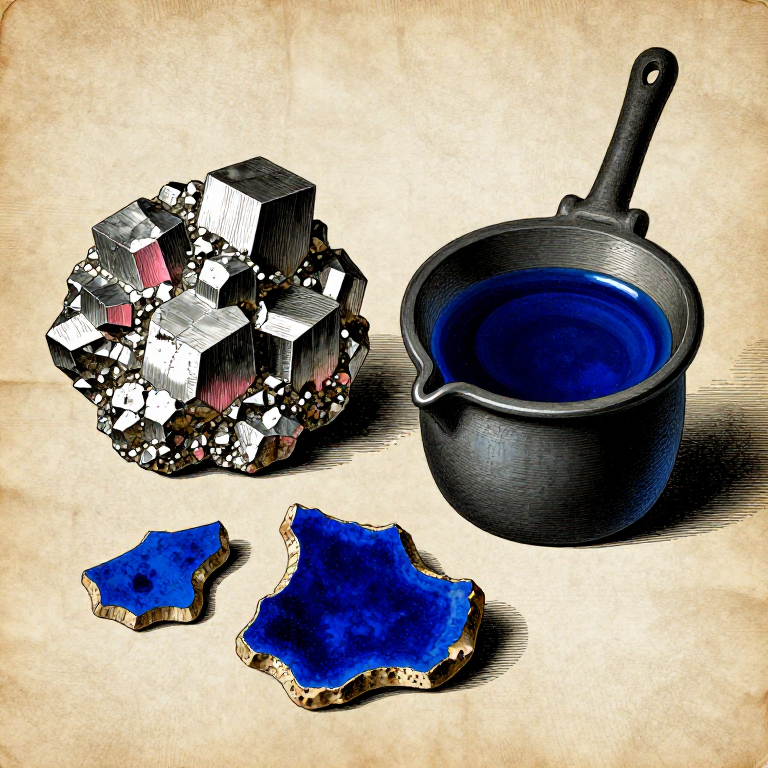
The primary cobalt ore is cobaltite (CoAsS, cobalt arsenic sulfide), containing approximately 35% cobalt by mass. The extraction involves roasting to remove arsenic and sulfur, then reducing the resulting cobalt oxide with carbon to produce metallic cobalt.
HAZARD: Cobaltite contains arsenic. Roasting releases toxic arsenic trioxide (As₂O₃) and sulfur dioxide (SO₂) fumes. This process must be performed outdoors with full respiratory protection (ABEK/P3 filters minimum). Cobalt dust and compounds are classified as possibly carcinogenic (IARC Group 2B). Handle all materials with gloves.
CC0 公共领域
此蓝图以 CC0 协议发布。你可以自由复制、修改、分发和使用此作品,无需征得许可。
通过购买蓝图中的产品支持创客,他们将获得 创客佣金 (由供应商设定),或创建此蓝图的新版本并将其作为连接包含在你自己的蓝图中以分享收入。