艺术
美容与健康
工艺
文化与历史
娱乐
环境
食品与饮料
逆向工程
科学
体育
技术
可穿戴设备
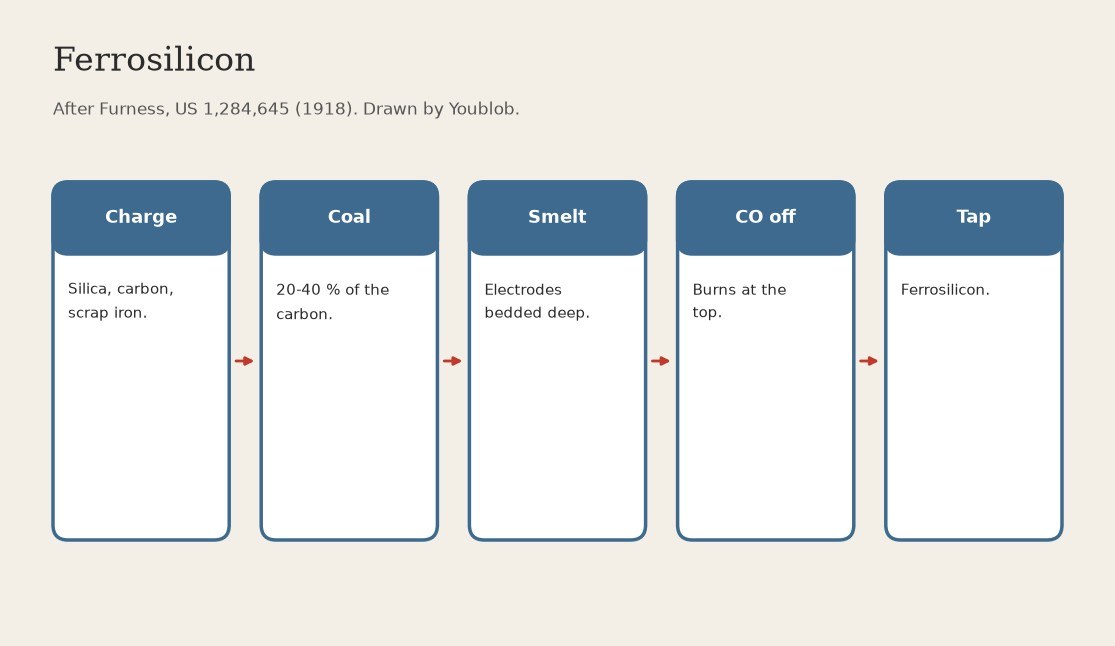


Ferrosilicon: Silica, Carbon and Scrap Iron Smelted with Bituminous Coal in an Electric Furnace (Furness, US 1,284,645)
Carbon pulls the oxygen out of silica in an electric furnace, and the silicon alloys with iron in the charge. Furness swapped part of the coke or charcoal for lumps of bituminous coal, which keep the charge open and poorly conducting, so the electrodes sit deep and the heat stays in.
Result: ferrosilicon, tapped from the bottom of the furnace.
Source: Furness, US 1,284,645 (1918). Not given: silicon content, iron proportion. Picture drawn by Youblob.
高级
Factory process
说明
1
1
Weigh the charge
Weigh the charge
Crushed quartzite (silica), charcoal or coke, and scrap steel or iron ore. Carbon: 24 parts per 60 parts of silica in theory, slightly more in practice; more if iron ore is used. Ours: quartz sand, iron filings, charcoal.
此步骤所需材料:
 石英砂60 parts
 铁屑1 as required
所需工具:
 木炭
 等臂天平
2
2
Add lumps of bituminous coal
Add lumps of bituminous coal
Supply 20-40 % of the total carbon as bituminous coal (10 % or more works). It can go in coarse, lumps up to fist size, keeping the charge open to the gas.
所需工具:
 烟煤
3
3
Smelt with deeply bedded electrodes
Smelt with deeply bedded electrodes
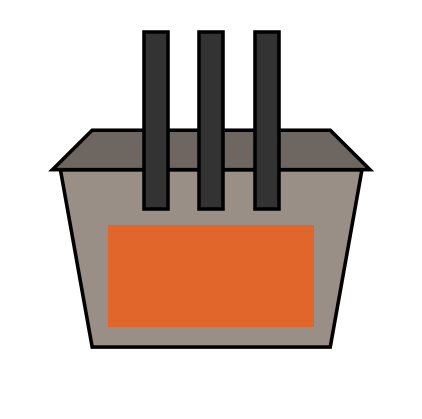
Feed the charge into an electric furnace so the electrodes stay buried deep in it. The silica is reduced, carbon monoxide burns off at the top, and the alloy collects at the bottom. Ours: electric arc furnace.
所需工具:
 电弧炉
4
4
Tap the ferrosilicon
Tap the ferrosilicon
Tap the molten ferrosilicon from the bottom of the furnace and let it set.
所需工具:
电弧炉此蓝图制作
CC0 公共领域
此蓝图以 CC0 协议发布。你可以自由复制、修改、分发和使用此作品,无需征得许可。
通过购买蓝图中的产品支持创客,他们将获得 创客佣金 (由供应商设定),或创建此蓝图的新版本并将其作为连接包含在你自己的蓝图中以分享收入。