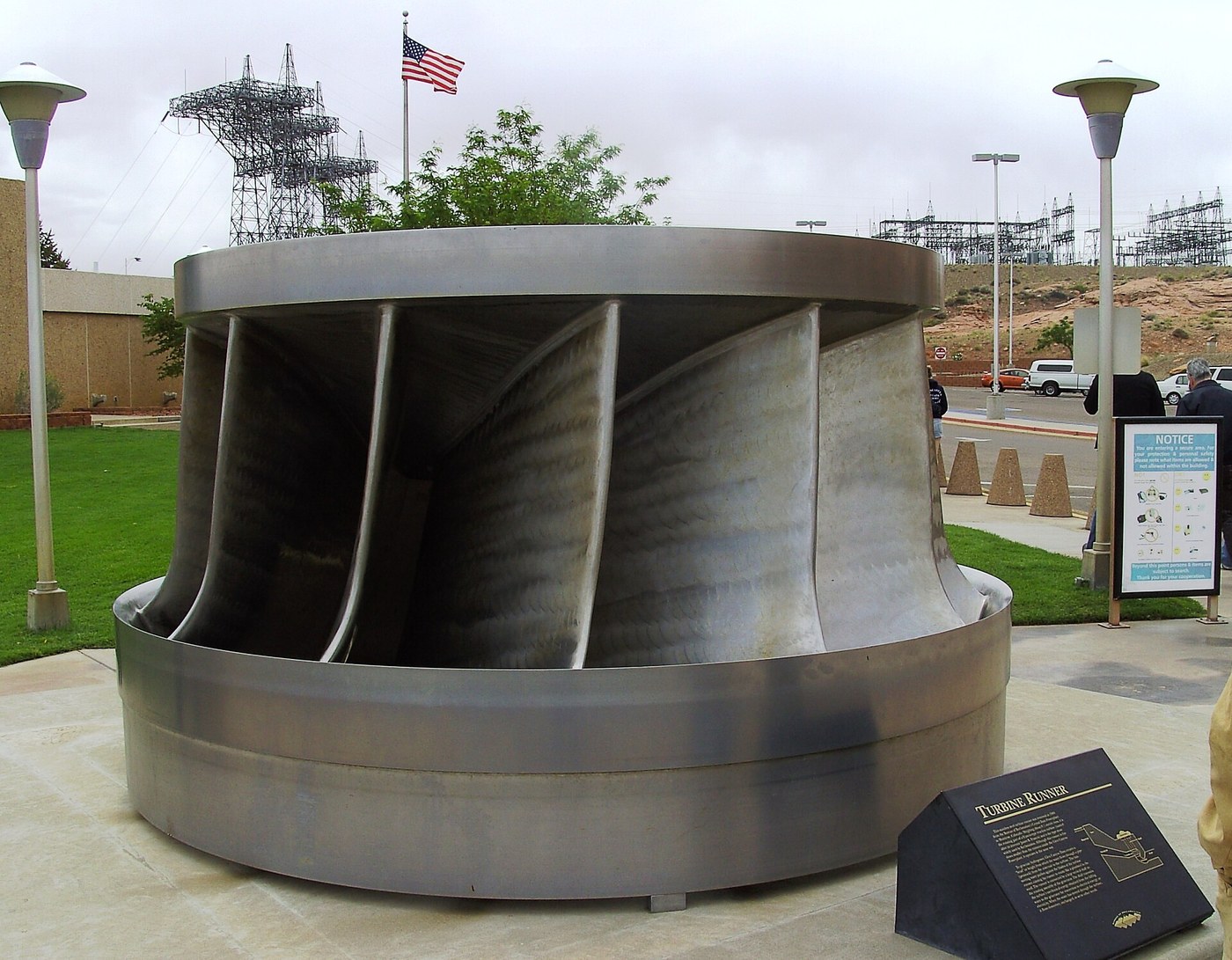


Francis Turbine
说明
Impulse first, for contrast
Impulse first, for contrast
Build the simpler kind so you can feel the difference.
- Fix flat vanes around a disc.
- Direct a jet of water at one vane from a nozzle.
- Watch it spin, and note the water leaves at atmospheric pressure.
此步骤所需材料:
 PVC 管1 length
Make a curved runner
Make a curved runner
The runner blades must turn the flow, not just be pushed by it.
- Cut identical curved blades and fix them between two discs.
- Curve them so water entering at the rim is turned toward the centre and downward.
- Keep the spacing even — an unbalanced runner will not spin freely.
此步骤所需材料:
 波罗的海桦木胶合板1 包
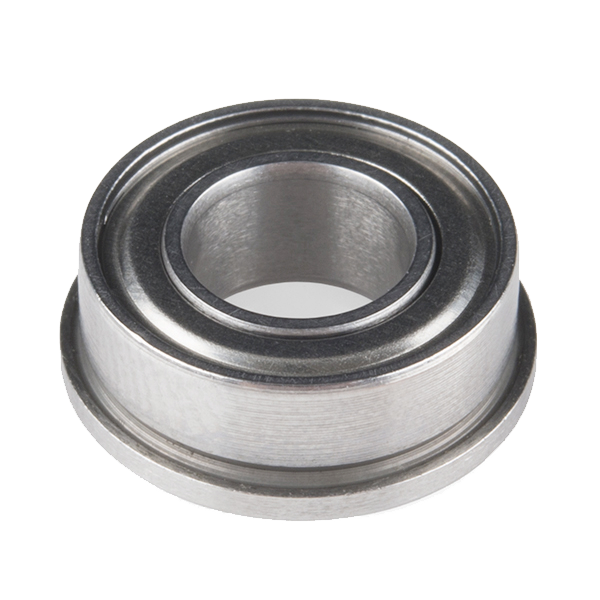 Ball Bearing - Flanged (6,35 mm Bore, 1,27 cm OD)2 个
Surround it with guide vanes
Surround it with guide vanes
Water must arrive at the runner already spinning, from every direction at once.
- Build a ring of fixed vanes around the runner.
- Angle them so water enters the runner tangentially rather than radially.
- Feed the ring from a spiral casing so the flow is even all the way round.
Fit the draft tube
Fit the draft tube
The outlet is part of the machine, not just a drain.
- Fit a tube below the runner that widens gradually as it descends.
- Keep its lower end submerged in the tailwater.
Measure the power
Measure the power
Turn the demonstration into a measurement.
- Measure flow rate: catch the outflow for a timed period.
- Measure head: the vertical drop from supply surface to tailwater.
- Water power in watts ≈ 1000 × 9.81 × Q(m³/s) × H(m).
- Measure shaft output by lifting a known mass over a measured time.
- Efficiency = output / water power
此步骤所需材料:
 秒表1 个
秒表1 个 数字厨房秤1 个
History and context
History and context
James Bicheno Francis was an English-born engineer who ran the water power system at Lowell, Massachusetts — a city built around textile mills driven by canals. His job was to sell water power fairly and reliably, which meant he needed to know exactly how much power a wheel delivered.
Samuel Howd had patented an inward-flow turbine in 1838. Francis took that arrangement, redesigned the runner and guide vanes properly, and — crucially — tested everything. Lowell Hydraulic Experiments (1855) is a book of careful measurements, and it did more for turbine engineering than the machine alone would have. He did not patent the design.
Choosing between turbine types is a matter of head and flow. A Pelton wheel suits very high head and small flow — a jet hitting buckets in open air. A Francis suits medium head and medium flow. A Kaplan, essentially a propeller with adjustable blades, suits low head and very large flow. Francis turbines cover the widest middle ground, which is why they run the majority of the world's installed hydroelectric capacity.
The failure mode to know about is cavitation. Where local pressure falls below the vapour pressure of water, bubbles form and then collapse violently against the blade, hammering pits into the metal. It is why draft tube design and submergence depth are taken so seriously, and why runners are inspected for pitting.
材料
5- 1 length占位符
- 1 包占位符
- $2.44
- 1 个占位符
- 1 个占位符

CC0 公共领域
此蓝图以 CC0 协议发布。你可以自由复制、修改、分发和使用此作品,无需征得许可。
通过购买蓝图中的产品支持创客,他们将获得 创客佣金 (由供应商设定),或创建此蓝图的新版本并将其作为连接包含在你自己的蓝图中以分享收入。