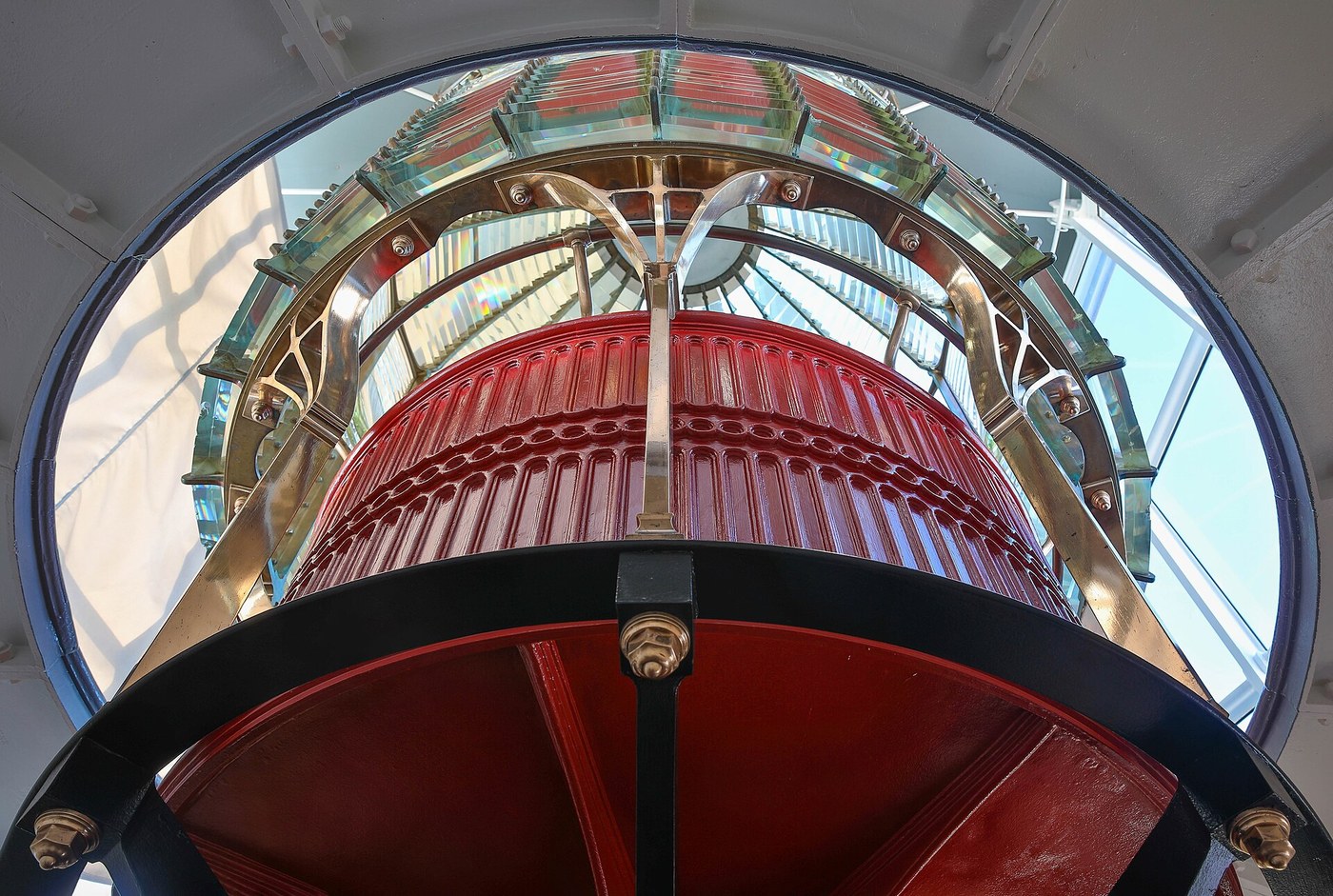

Fresnel Lens
说明
Prove only the surface matters
Prove only the surface matters
Test the assumption the whole design rests on.
- Focus sunlight or a lamp with a thick convex lens and note the focal length.
- Look at where the light actually changes direction — at the two surfaces, not inside.
- Inside the glass the rays travel in straight lines.
此步骤所需材料:
 凸透镜1 个
Slice a lens into rings on paper
Slice a lens into rings on paper
Draw the transformation before making it.
- Draw a convex lens in cross-section.
- Divide it into concentric annular zones.
- Slide each zone down onto a common flat plane, keeping its surface ANGLE unchanged.
此步骤所需材料:
 量角器1 个
 直尺1 个
直尺1 个Compare a real Fresnel against a solid lens
Compare a real Fresnel against a solid lens
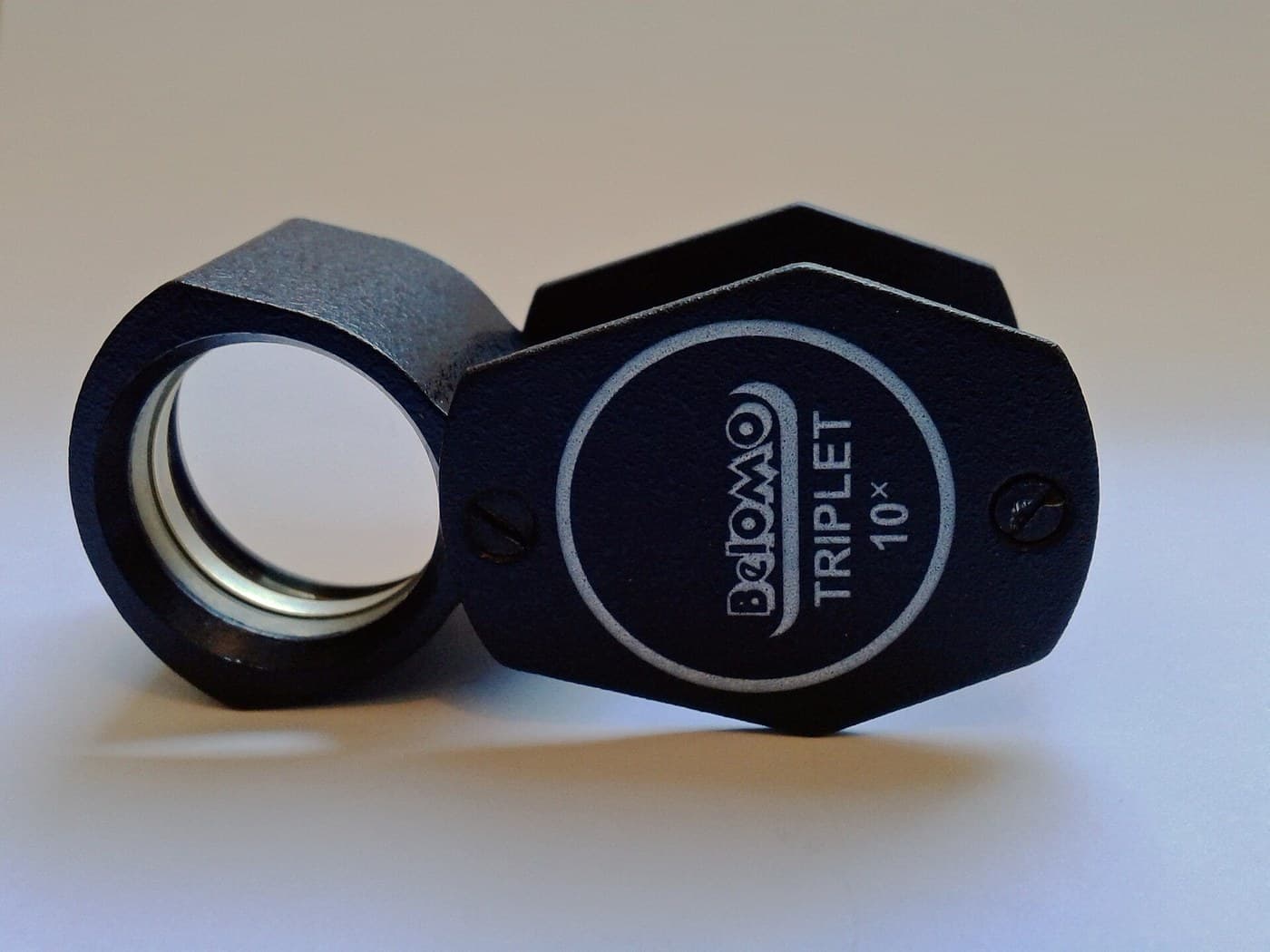
A credit-card magnifier is a Fresnel lens. Put it up against glass.
- Focus a lamp with each and compare focal length and brightness.
- Weigh them.
- Look closely at the image quality of each.
此步骤所需材料:
 数字厨房秤1 个
Aim the beam at the horizon
Aim the beam at the horizon
A lighthouse does not want light everywhere — it wants it in a flat sheet.
- Put a small bright source at the focus and observe the emerging beam.
- Move the source slightly toward and away from the lens.
- Watch the beam converge, go parallel, then spread.
History and context
History and context
Augustin-Jean Fresnel (1788-1827) was a French civil engineer and one of the people who established that light behaves as a wave. Appointed to the Commission des Phares, he applied himself to lighthouses and produced the stepped lens in 1822, first installed at Cordouan. The idea of stepping a lens had been floated before — Buffon and Condorcet had both suggested something like it — but Fresnel made it work, added the reflecting prisms that catch light escaping at high and low angles, and turned it into a practical system.
The improvement in efficiency was extraordinary. A polished metal reflector of the period returned a modest fraction of the lamp's light usefully; the full Fresnel apparatus with refracting centre and reflecting prisms captured the great majority of it. Lighthouses were graded into orders by lens size — a first-order lens stands over two metres high and its rings are the size of dinner plates.
He died at 39, of tuberculosis, five years after Cordouan. The wave theory of light he helped establish and the lens named after him both outlived him by two centuries.
Where they went: the same shape, moulded in plastic instead of ground in glass, is now in overhead projectors, car headlamps, traffic signals, theatre lanterns and solar concentrators. It is one of the few pieces of nineteenth-century precision optics that got cheaper and more common rather than rarer — and many surviving lighthouse lenses are now museum pieces, replaced by small LED arrays that need no lens at all.
CC0 公共领域
此蓝图以 CC0 协议发布。你可以自由复制、修改、分发和使用此作品,无需征得许可。
通过购买蓝图中的产品支持创客,他们将获得 创客佣金 (由供应商设定),或创建此蓝图的新版本并将其作为连接包含在你自己的蓝图中以分享收入。