
艺术
美容与健康
工艺
文化与历史
娱乐
环境
食品与饮料
绿色未来
逆向工程
科学
体育
技术
可穿戴设备
Greek Chiton Sewing — Sewing a Linen Chiton Garment
Tex

创建者

Tex

23. March 2026

Greek Chiton Sewing — Sewing a Linen Chiton Garment

Sew a Greek chiton, the basic tunic garment worn by men and women across the Greek world. The chiton is constructed from one or two rectangles of linen fabric, folded and pinned or sewn at the shoulders, creating a simple yet elegant draped garment that was the foundation of Greek dress from the Archaic through Hellenistic periods.

Beginner
60-90 minutes

说明

1

Measure and Cut the Fabric

Measure a rectangle of linen fabric with the width equal to your full arm span plus 20-30 cm (to create the characteristic draped sleeve effect), and the length equal to twice the distance from shoulder to desired hem (ankle for women, knee for men, plus 10-15 cm for the fold-over at the top called the apoptygma). For a standard Ionic chiton, you need a single wide rectangle; for a Doric chiton, a slightly narrower piece with a deeper fold-over at the top. Cut the fabric cleanly with sharp shears. Ancient Greek chitons were typically woven to size on the loom rather than cut from larger cloth, as cutting wasted expensive hand-woven fabric. The fabric edges (selvages) from the loom served as finished edges that needed no hemming.

2

Fold and Pin at the Shoulders

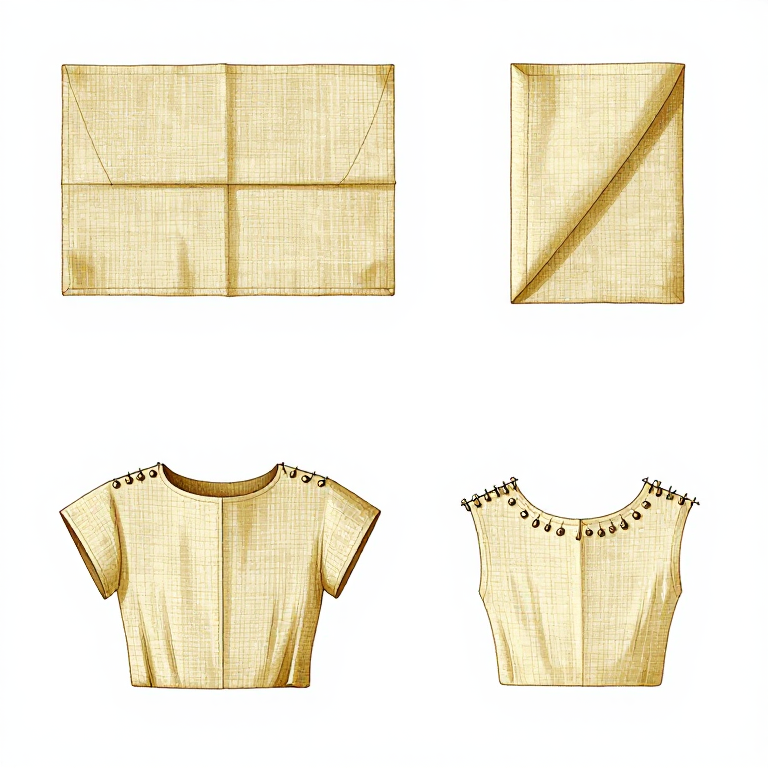
Fold the fabric in half widthwise so the top edges meet. If making a Doric chiton, fold the top 15-30 cm of fabric outward before the main fold to create the apoptygma (a decorative overfold that drapes over the chest). With the fabric folded, bring the two top edges together at the shoulder points and fasten with fibulae (bronze pins or brooches). For a Doric chiton, pin at two shoulder points only, leaving the arms bare. For an Ionic chiton, pin or sew at intervals along the entire top edge from shoulder to wrist, creating a series of small openings through which the arms emerge, giving the appearance of gathered sleeves. The excess fabric width creates the characteristic soft folds and draping of Greek dress.

Step 2 - Image 1
3

Sew the Side Seam

With the chiton pinned at the shoulders, sew the open side (the side opposite the fold) from the underarm down to the hem using a simple running stitch or backstitch with linen thread. Leave the top 20-25 cm open for the arm hole. The seam should be neat and strong, as it bears the weight of the draped fabric during movement. Some chitons were left open on one side (especially the Spartan woman's peplos, called the phainomerides or thigh-shower, which scandalized other Greeks). For a fully enclosed chiton, sew the entire side seam except for the arm opening.

4

Belt and Adjust the Draping

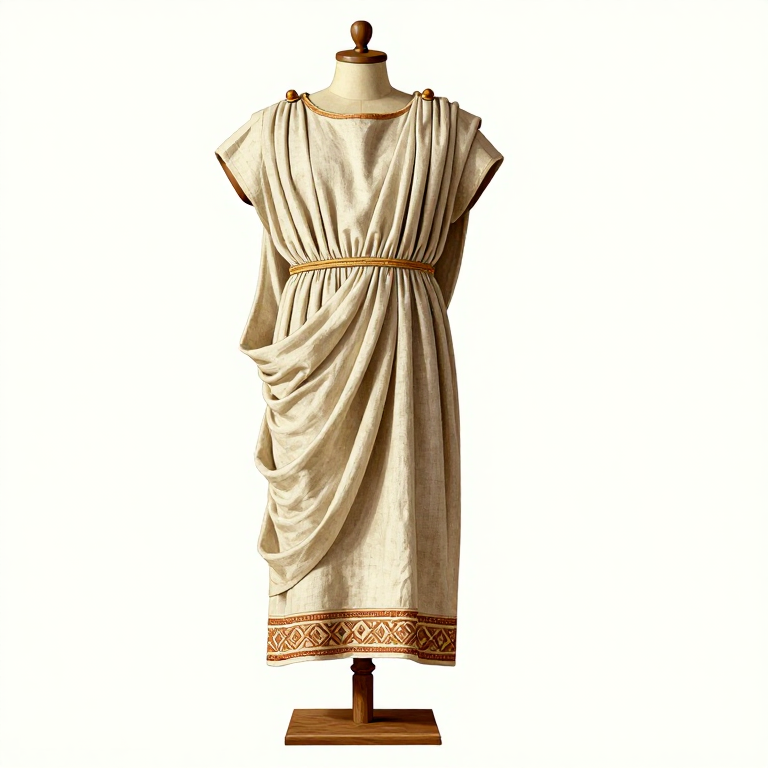
Put on the chiton and secure it with a belt (zone) tied around the waist. Pull the fabric up over the belt to create a bloused effect (kolpos) that adjusts the hemline to the desired length. Greek women typically wore floor-length chitons with a generous kolpos, while men wore knee-length versions, and workers or soldiers might hitch them even shorter for freedom of movement. The way the belt is positioned and the amount of blousing dramatically changes the garment's appearance. A second belt worn just below the bust (a high-waisted style) creates the characteristic columnar silhouette seen in Archaic and Classical Greek sculpture of women.

5

Finish with Hem and Decorative Border

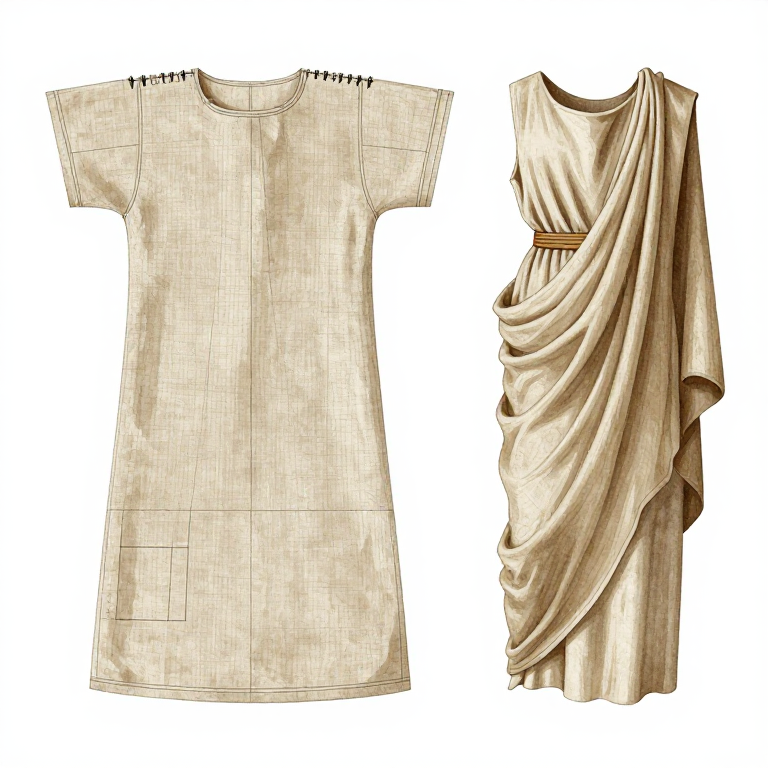
If the fabric edges are raw (not selvage), hem the bottom and arm openings with a narrow rolled hem sewn with small stitches. Greek garments often featured decorative borders woven into the fabric at the loom — geometric patterns, meander (Greek key) designs, or colored stripes along the edges. If your fabric lacks a woven border, you can stitch a decorative trim or ribbon along the hem and neckline. The finished chiton should drape in elegant vertical folds when standing, with the fabric weight creating the characteristic columnar silhouette of Greek dress. The chiton was the foundation garment over which other items like the himation (cloak) or chlamys (short military cloak) were draped for outdoor wear or formal occasions.

Step 5 - Image 1

材料

  • Linen or cotton fabric - 2-3 meters (width should be armspan plus 30 cm) piece占位符
    查看
  • Linen thread for sewing - small amount piece占位符
    查看
  • Fibulae or pins (2-6) - 2-6 pieces piece
  • Belt or cord - 1 piece, waist circumference plus 40 cm piece

所需工具

  • Sewing needle占位符
    查看
  • Scissors or shears
  • Measuring cord or tape占位符
    查看

CC0 公共领域

此蓝图以 CC0 协议发布。你可以自由复制、修改、分发和使用此作品,无需征得许可。

通过购买蓝图中的产品支持创客,他们将获得 创客佣金 (由供应商设定),或创建此蓝图的新版本并将其作为连接包含在你自己的蓝图中以分享收入。

讨论

(0)

登录 加入讨论

加载评论中...