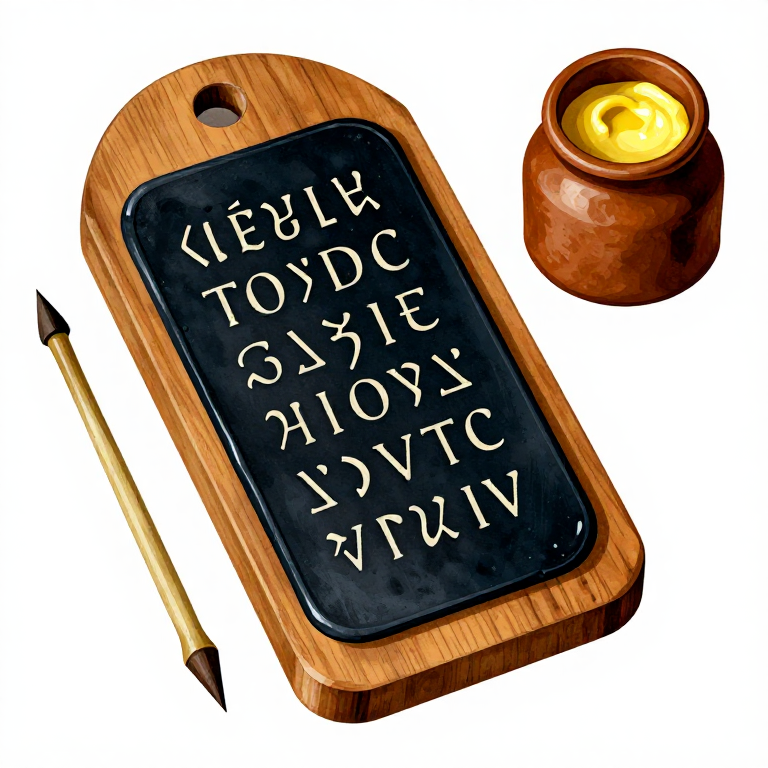


Greek Wax Tablet — Making a Wax Writing Tablet
说明
Prepare the Wooden Frames
Prepare the Wooden Frames
Cut two thin hardwood boards to approximately 15x20 cm (a standard size for ancient tablets, though they varied from 10 cm pocket tablets to 30 cm school tablets). Using a chisel, cut a shallow rabbet (recess) approximately 3-4 mm deep on the inner face of each board, leaving a raised border approximately 10-15 mm wide around all four edges. This raised border acts as a frame that protects the wax surface from accidental contact when the tablet is closed and provides the correct wax depth. Alternatively, glue thin wooden strips around the edges of each board to create the frame. Sand the recessed area smooth — any roughness in the wood will show through the thin wax layer.
此步骤所需材料:
 Hardwood Ash2 pieces, approximately 15x20 cm, 8-10 mm thick mm
 Beeswax Pellets100-150 g 克
 Lamp black or carbon black powdersmall amount 个
 Small wooden strips for frame edges4 strips per board 个
 Cord or leather thong for hinge30 cm 厘米
所需工具:
 Saw
Saw Iron Chisel
 Double Boiler
 Bone
BoneMelt and Color the Wax
Melt and Color the Wax
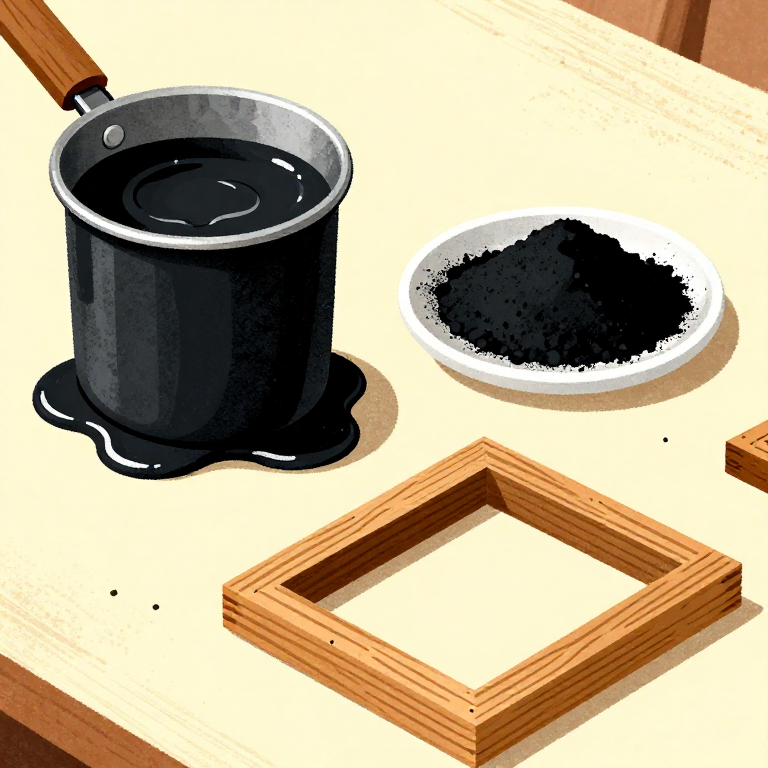
Melt beeswax in a double boiler (never over direct flame). Once liquid, stir in a small amount of lamp black or carbon black powder to darken the wax to a deep brown or black color. The dark coloring serves a practical purpose: when the stylus scratches through the dark wax, it exposes the lighter wood beneath, creating high-contrast visible text. Some ancient tablets used red wax (colored with red ochre) or plain yellow beeswax. You can also add a small amount of tallow or olive oil to the wax to keep it slightly softer and easier to inscribe, especially in cool climates. Mix thoroughly until the color is uniform.
Pour the Wax into the Frames
Pour the Wax into the Frames
Place the wooden frames on a level surface with the recessed side facing up. Carefully pour the melted, colored wax into each recess, filling it to approximately 2-3 mm depth — just below the level of the raised border. Tilt the frame gently to spread the wax evenly across the entire surface. Allow the wax to cool and solidify completely, which takes approximately 30-60 minutes at room temperature. If air bubbles form in the wax surface, you can warm the surface briefly with a heat source held above it (not touching) to smooth them out. The finished wax surface should be smooth, flat, and uniformly dark.
Hinge the Two Halves Together
Hinge the Two Halves Together
Drill two small holes along one long edge of each board and thread a leather thong or cord through them to create a simple hinge, allowing the tablet to fold closed like a book with the wax surfaces facing inward for protection. This hinged pair is called a diptych (two-leaf tablet). Some ancient writing tablets had three (triptych) or more leaves bound together. The protective raised borders prevent the wax surfaces from touching and smearing each other when the tablet is closed. The exterior faces can be left plain or decorated with carved designs. Many surviving ancient wax tablets were found in dry contexts in Egypt (where the climate preserved the wax) and in waterlogged conditions in Roman Britain.
Make a Stylus and Write
Make a Stylus and Write
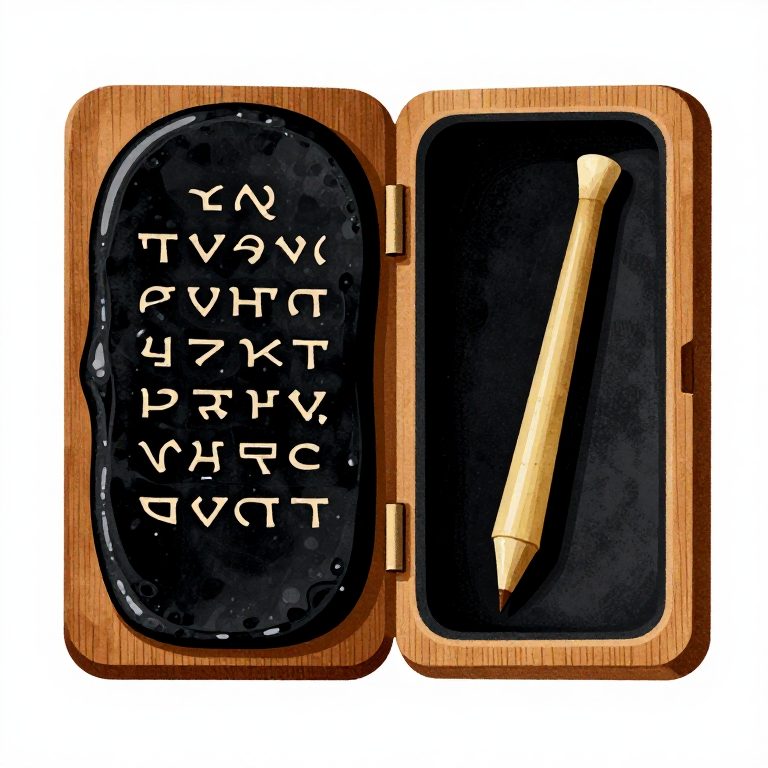
Create a writing stylus from bone, metal (bronze or iron), or hardwood, approximately 12-15 cm long. One end should be sharpened to a fine point for inscribing letters into the wax; the other end should be flattened into a small spatula shape for erasing text by smoothing the wax flat. To write, hold the stylus at approximately 45 degrees and press the point through the dark wax to expose the lighter wood beneath, forming letters. The writing should be crisp and legible. To erase, warm the flat end of the stylus slightly by rubbing it and press it over the inscribed text, smoothing the wax back to a flat surface. Wax tablets were used throughout the Greek and Roman world for school exercises, personal notes, letters, commercial records, and legal documents. The phrase tabula rasa (blank slate) derives from the practice of erasing wax tablets for reuse.
材料
10- 2 pieces, approximately 15x20 cm, 8-10 mm thick mm占位符
- 100-150 g 克占位符
- 4 strips per board 个占位符
- 30 cm 厘米占位符
- 100-150 g 个占位符
- small amount 个占位符
- 4 strips per board 个占位符
- 30 cm 个占位符
- 占位符
- 占位符
所需工具
6- 占位符
- 占位符
- 占位符
- 占位符
- 占位符
CC0 公共领域
此蓝图以 CC0 协议发布。你可以自由复制、修改、分发和使用此作品,无需征得许可。
通过购买蓝图中的产品支持创客,他们将获得 创客佣金 (由供应商设定),或创建此蓝图的新版本并将其作为连接包含在你自己的蓝图中以分享收入。