艺术
美容与健康
工艺
文化与历史
娱乐
环境
食品与饮料
逆向工程
科学
体育
技术
可穿戴设备
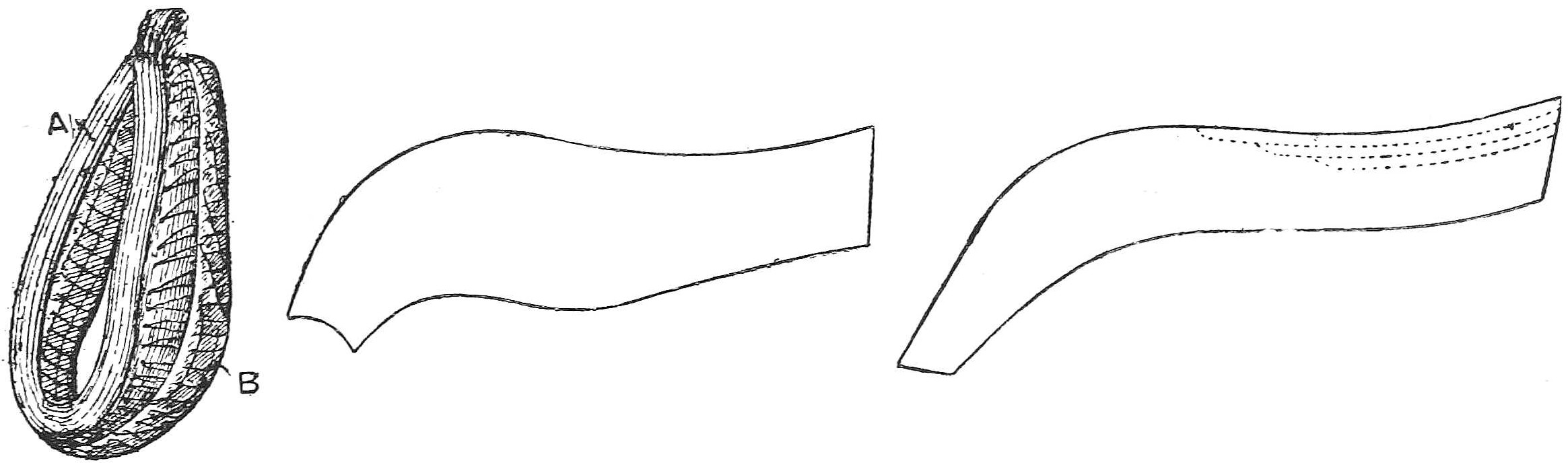


Cart Collar: a Straw-Stuffed Forewale and Body, Laced and Covered (Hasluck, Harness Making, 1904)
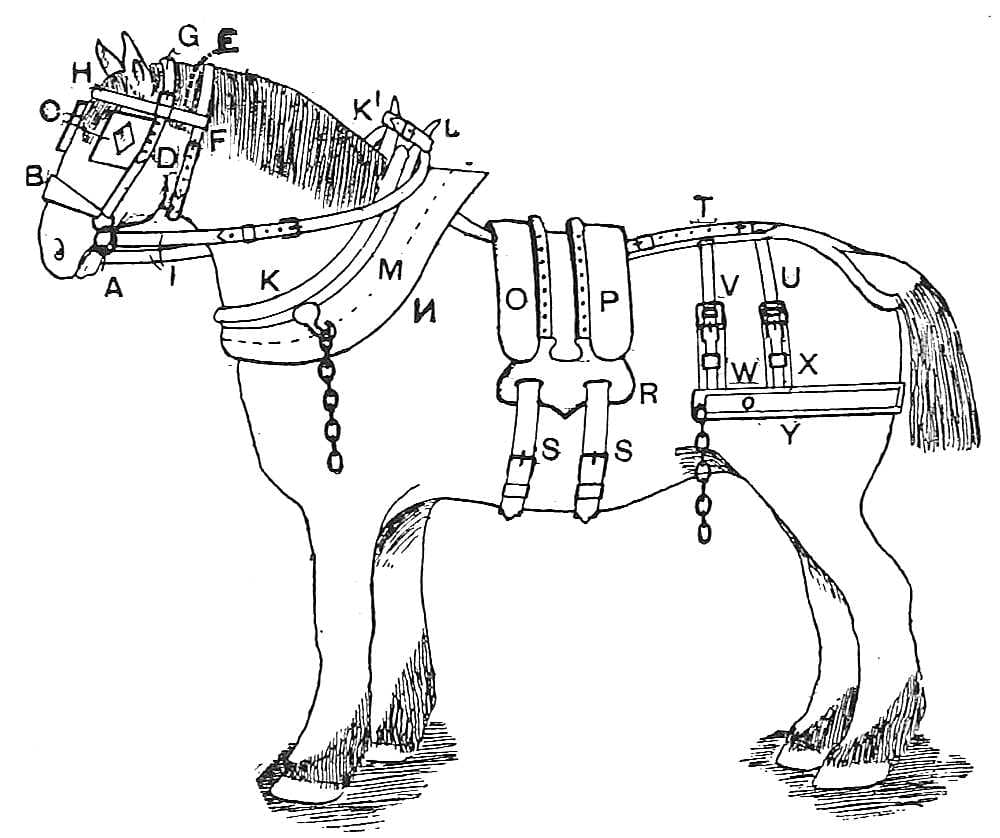
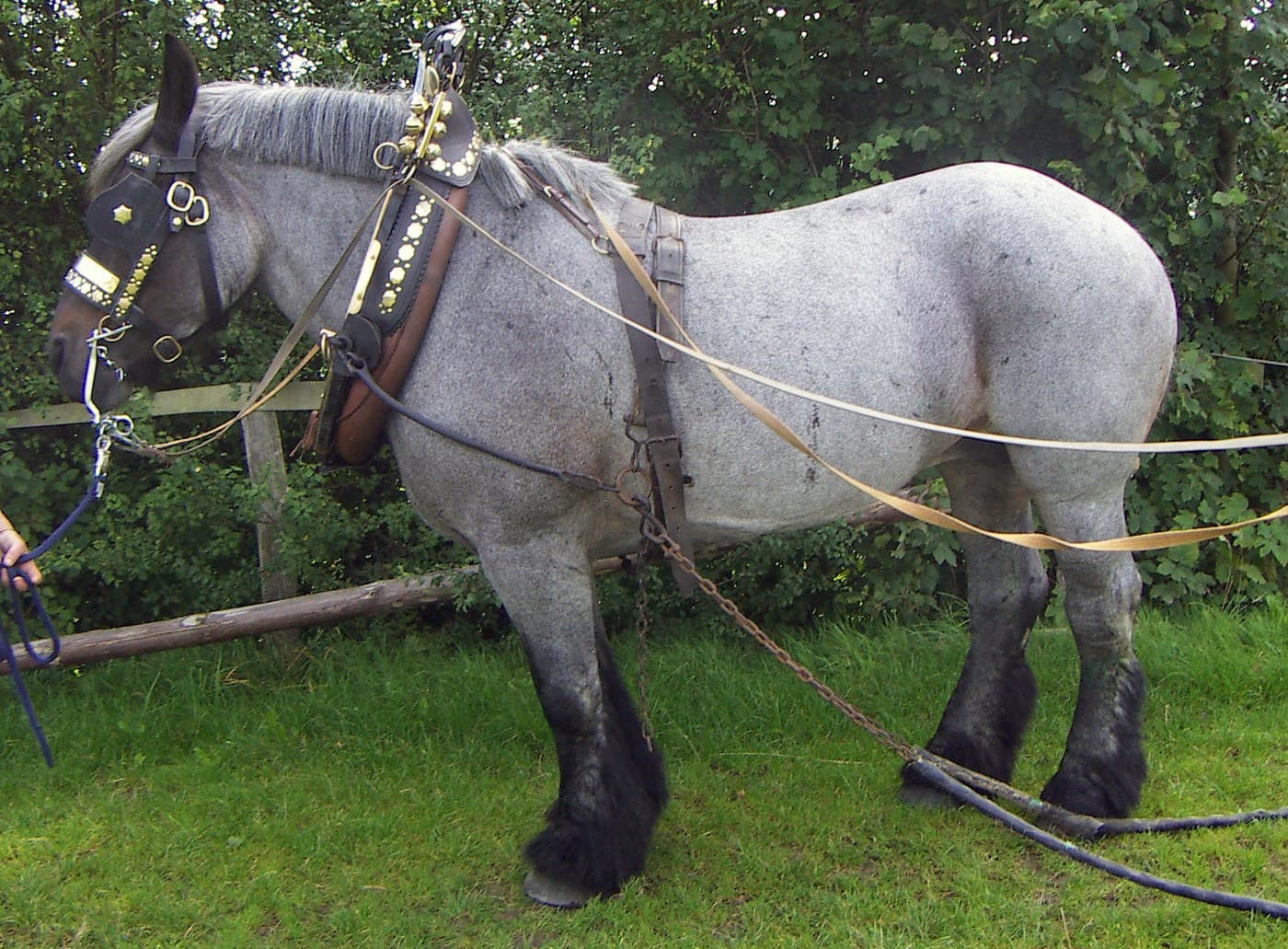
The collar of a working cart horse, from Paul N. Hasluck's Harness Making (1904). A leather tube, the forewale, is stitched slack and rammed with wisps of rye straw until "as hard as a piece of wood", bent round the knee into shape; then the body is built against it from a lined pocket of straw and flock, laced tight and beaten to shape, and covered with leather side-pieces. All sizes are his.
It follows the cart bridle; the cart saddle comes next.
高级
About 3 days
说明
1
1
How long to cut the forewale
How long to cut the forewale
正在加载 Jupyter 笔记本…
2
2
Read Harness Making, ch. VI
Read Harness Making, ch. VI
"Great attention must be given to shaping, for a well-shaped body is very important from the point of view of both utility and appearance; it should be graceful and rounded at the bottom and somewhat flat at the draught, gradually growing narrow towards the top."
3
3
Cut and fold the forewale
Cut and fold the forewale
Cut the forewale 7½ in wide and as long as the notebook gives; the bellies of gear hides will do. Damp it thoroughly and stretch it on a flat board, holding one edge and pulling the other with the pincers. Fold it over 2¾ in all along, set the compass to 2¼ in and mark from the turned side, leaving ¼ in outside the mark for the lining and about 2 in on the other side for the body and side-pieces. Tack along the mark here and there.
此步骤所需材料:
 马具革1 个
所需工具:
 皮革刀
 松木板
 木工钳
 两脚规
4
4
Stitch the forewale
Stitch the forewale
Make a ten-strand thread, waxing it before and after twisting, long enough to stitch the whole length. Stitch with strong needles about three stitches to the inch, leaving the stitches slack, especially for about a foot each side of the centre, so the forewale bends easier and the stitches tighten in stuffing. If the grain is uneven, put a slack piece of calico inside and catch both its sides in the stitching.
此步骤所需材料:
 皮线1 个
 棉布1 个
所需工具:
 两根马具缝针
 锥子
5
5
Stuff the forewale with straw
Stuff the forewale with straw
Pull rye straw straight across the knee, cut the ears off and cut it to about 9 in. Mark the centre of the forewale. With it on the block, your left foot on it 2½ in from the centre, put about half a dozen straws, given a half twist, in the nick of the collar rod and drive them in to the foot; beat wisp and leather with the mallet. Put the next wisp in from the other end, and go on alternately, beating after each wisp so it does not drive the others back. Keep turning the forewale round the knee, one side to the right and the other to the left, so both sides are shaped alike, until all is "as hard as a piece of wood".
此步骤所需材料:
 黑麦秸秆1 个
所需工具:
皮革刀 颈圈填草铁杆
 木槌
 硬木块
6
6
Close the top of the forewale
Close the top of the forewale
Near the top shape it inwards a little, fill it until quite firm, lay it flat on the block and beat it into shape with the round mallet, holding one end down with the knees. Damp it, turn it back a little at the top on both sides, and stitch both points firmly together with waxed twine, collar needle and hand iron, cutting a little off if needed to bring it to the right length.
此步骤所需材料:
皮线1 个所需工具:
木槌硬木块 颈圈针
 掌铁
7
7
Make the lining
Make the lining
Cut the lining of linen or woollen check to his Fig. 96 in the size required. Cut a leather throat-piece about 2 in wide at the base, widening in a sweep to 3½ in. Stitch the narrowest end of the lining, about 4½ in deep, to the sweep of the throat-piece, turning in a little of the cloth. Tack the throat-piece to the exact centre of the collar by the stitches, add a tack where the forewale begins to run straight up, leaving the lining slack, and another within 5 in of the top on both sides, pulling the lining tight to there and turning the edges in. Whip the lining in all round through the leather rim with half a four-cord black-wax thread.
此步骤所需材料:
 亚麻布1 个马具革1 个皮线1 个
所需工具:
皮革刀 剪刀锥子两根马具缝针
8
8
Stuff the throat
Stuff the throat
Make a beeswax thread of four or five strands 3½ yd long and another of six or seven strands 1½ yd long. Sit with your right leg through the lining, throat up. Put the middle of a big handful of straw in the centre of the throat-piece, between it and the forewale, and stitch from the centre of the throat over the straw to the wide margin of leather, twice at the centre, then about 1½ in apart for about 6 in up one side. Do the other side exactly alike. Drive wisps on the stuffing stick to the centre from both sides until the bottom is firm and hard. Lay it on the block, lining up, beat the throat outwards with the round mallet, and buckle the throat strap round it and the forewale as tight as possible.
此步骤所需材料:
 蜂蜡1 个皮线1 个黑麦秸秆1 个
所需工具:
颈圈针掌铁颈圈填草铁杆木槌硬木块 带舌铁扣
9
9
Build the body
Build the body
Cut a wisp big enough to fill the body and long enough to run its full length, square at one end, and wrap hemp five or six times round it for about 6 in. With both knees through the collar, lay a piece of drummed flock the size of the lining on it, to within an inch of the edge, level everywhere, and a handful of straw over the flock opposite the draught. Put the long wisp inside, ramming it toward the throat, pull the lining over the straw and pin the top with the seat-awl.
此步骤所需材料:
黑麦秸秆1 个 大麻绳1 个
 羊毛填充料1 个
所需工具:
皮革刀锥子10
10
Lace and beat it to shape
Lace and beat it to shape
Turn the collar and lace the lining to the leather from bottom to top, as tight as possible, "as in lacing a boot". Beat the straw down between the lacing with the mallet handle, then tighten the lacing again. If it is not firm enough, ram wisps toward the throat from between the stitches up to the draught, and harden it above the draught with wisps from the top, shaping by tightening or slackening the lacing. At the very top leave it rather full, with extra flock to ease the neck. Make the other side with the same flock and straw, the same shape and size; level any lumps in the flock with the seat-awl.
此步骤所需材料:
羊毛填充料1 个黑麦秸秆1 个所需工具:
颈圈针木槌锥子11
11
Close the top and cap the points
Close the top and cap the points
Cut the straw at the top slanting upward a little toward the back, pull the two linings together with long stitches, then stitch the two sides together and cut the spare lining. Trim the forewale points to a neat point, "neither long nor sharp". Make a cap of damped soft leather over the points, with a welt in the front, and stitch it with a lace drawn tight into the hollow between body and forewale. Leave the point of the forewale very prominent to hold the hame strap.
此步骤所需材料:
 皮革缝合绳1 个马具革1 个
所需工具:
皮革刀颈圈针12
12
Fit the side straps
Fit the side straps
Cut two straps 1½ in x 18 in; race and blacken the edges, point them for the buckle and punch four holes in each, a hole in each corner at the other end and one in the centre 2½ in from that end. Lace one on each side, down to the forewale, 5 in from the top, through the hollow between forewale and body.
此步骤所需材料:
马具革1 个 皮革染料1 个皮革缝合绳1 个
所需工具:
皮革刀 马具匠划槽圆规
 皮革打孔器颈圈针
13
13
Make the side-pieces
Make the side-pieces
Cut a brown-paper pattern to the made body, to his Fig. 97, a little wider and pointed at the top to shed rain; cut one side at a time, best part under the draught, and line the top for about 1 ft on each side with firm leather. Stitch three rows about 1 in apart, nine per inch; rub and blacken, and crease two rows round the outer side. Join the two sides at the top end to end and cover the joint with a creased, pricked 1¼ in strip stitched over its centre.
此步骤所需材料:
马具革1 个皮线1 个皮革染料1 个所需工具:
皮革刀 皮革菱斩锥子两根马具缝针
 压痕工具
14
14
Lace the side-pieces on
Lace the side-pieces on
Damp the side-pieces well, beat the water out, and fix them at the top centre with the seat-awl; pull them together top to bottom so they overlap about 3 in at the bottom, shaved thin there. Lace them in from the throat-piece with a damped, greased lace, stitches 2 to 2½ in apart and catching the lining each time; then run a second lace close along the forewale all round, stitches about 1½ in apart.
此步骤所需材料:
皮革缝合绳1 个所需工具:
锥子颈圈针15
15
Troubleshooting
Troubleshooting
Cart collar troubleshooting.
Flow
Loading...
16
16
History and honest limits
History and honest limits
From **Harness Making**, edited by Paul N. Hasluck, Cassell and Company, 1904, chapter VI, "Cart Collars" (Project Gutenberg #70169). All sizes are his. Not made here: his pipe collar (an iron inside the forewale), the basil top lining used "in some localities", and the under-draught pads and caned side-pieces he thinks unnecessary. The hames that fit round the collar are not made in this chapter.
材料
10- 5 个占位符
- 5 个占位符
- 1 个占位符
- 1 个占位符
- 1 个占位符
- 1 个占位符
- 1 个占位符
- 2 个占位符
- 3 个占位符
- 2 个占位符
此蓝图制作
相关蓝图
这些蓝图共享知识——技术、材料或原理

CC0 公共领域
此蓝图以 CC0 协议发布。你可以自由复制、修改、分发和使用此作品,无需征得许可。
通过购买蓝图中的产品支持创客,他们将获得 创客佣金 (由供应商设定),或创建此蓝图的新版本并将其作为连接包含在你自己的蓝图中以分享收入。