艺术
美容与健康
工艺
文化与历史
娱乐
环境
食品与饮料
逆向工程
科学
体育
技术
可穿戴设备
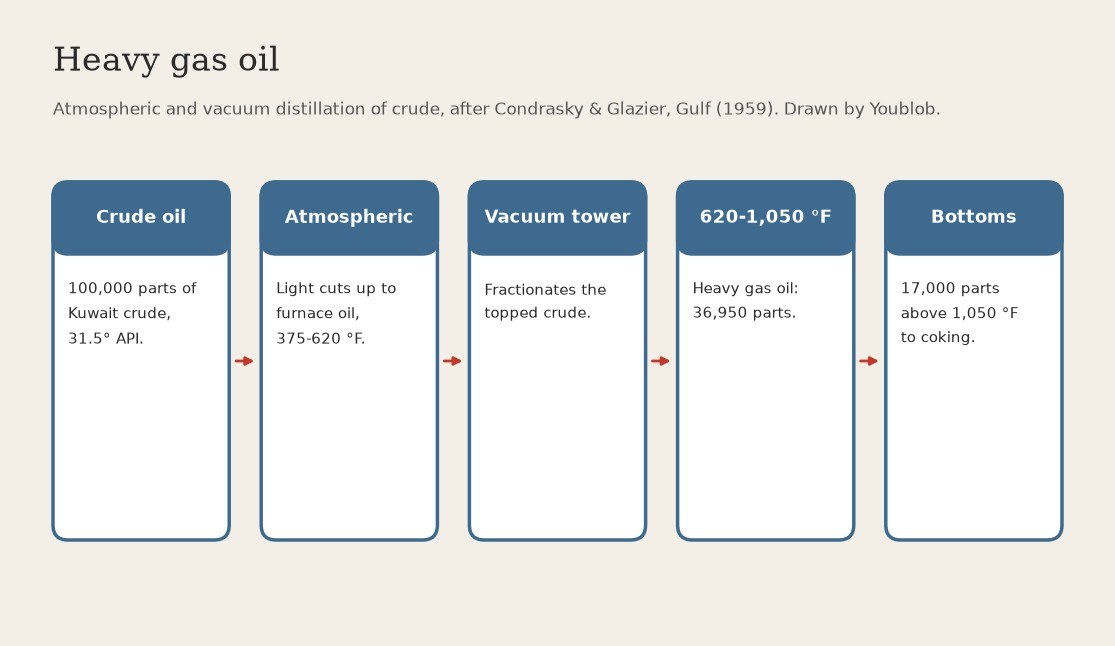


Heavy Gas Oil: the 620-1,050 °F Cut from Atmospheric and Vacuum Distillation of Crude Oil (Gulf, US 3,071,535)
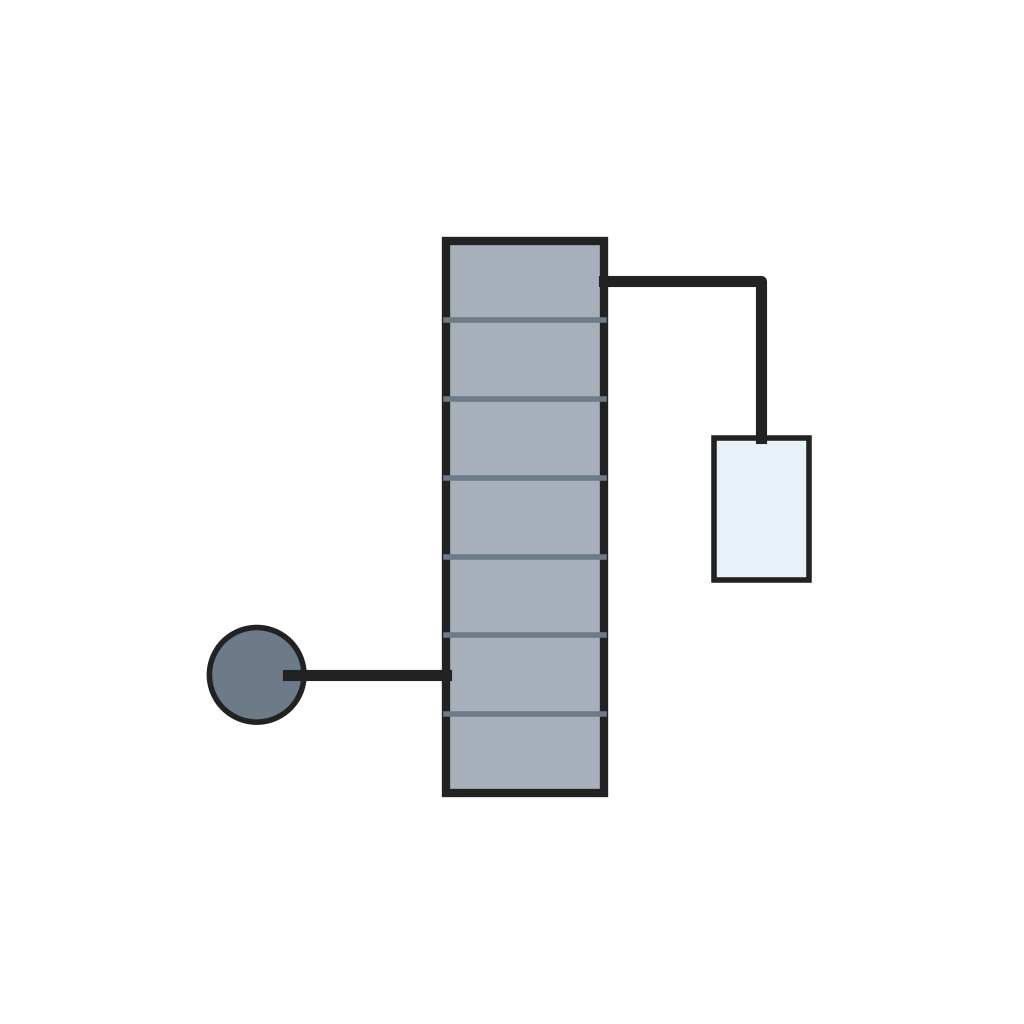
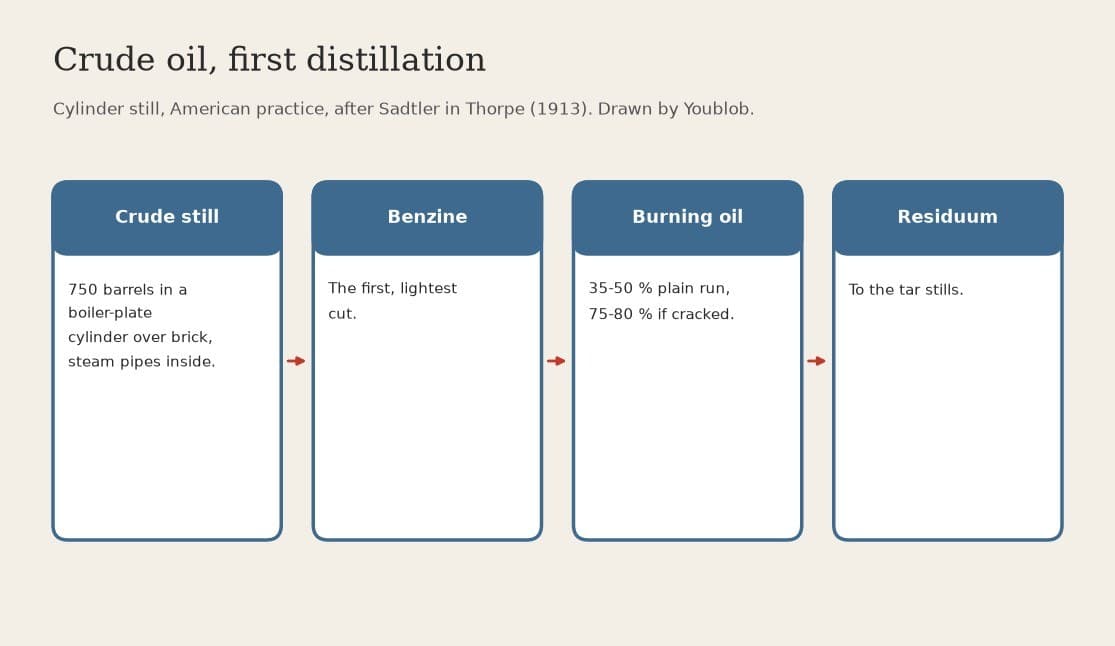
A modern refinery splits crude oil in two towers: the first, at atmospheric pressure, takes off everything up to the furnace oil; the second, a vacuum tower, fractionates what is left to give gas oil for the catalytic cracker and a reduced crude for coking.
Result (Gulf's example): from 100,000 barrels a day of Kuwait crude, 36,950 of heavy gas oil boiling from 620 to 1,050 °F.
Source: Condrasky & Glazier, US 3,071,535 (Gulf, filed 1959), Table I. Not given: tower pressures, temperatures and vacuum. Hot oil: fire risk. Picture drawn by Youblob.
专家
1 day
说明
1
1
Charge the crude oil
Charge the crude oil
Feed crude oil to the atmospheric fractionating column. Gulf's example: 100,000 barrels per calendar day of Kuwait crude of 31.5° API gravity.
此步骤所需材料:
 原油100000 parts by volume
所需工具:
 储油罐
 输送泵
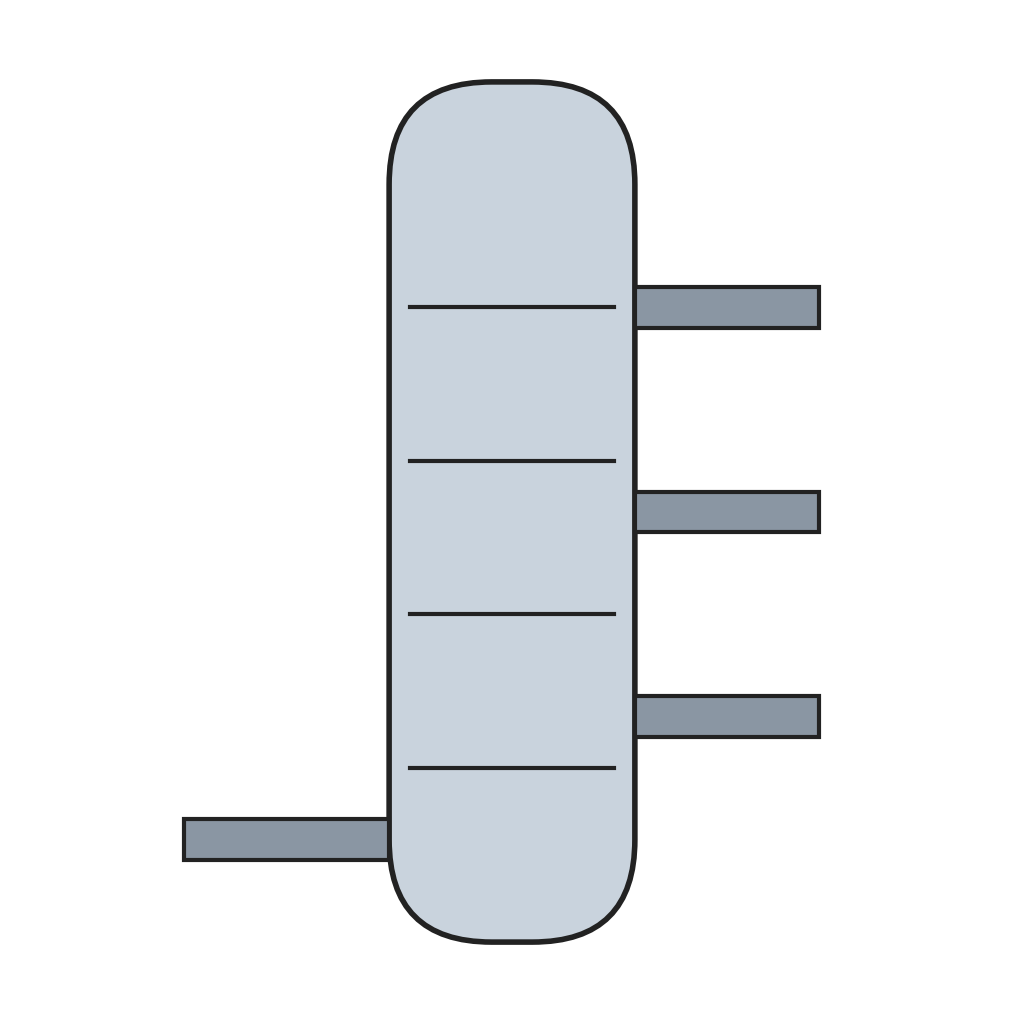 常压蒸馏塔
2
2
Top the crude at atmospheric pressure
Top the crude at atmospheric pressure
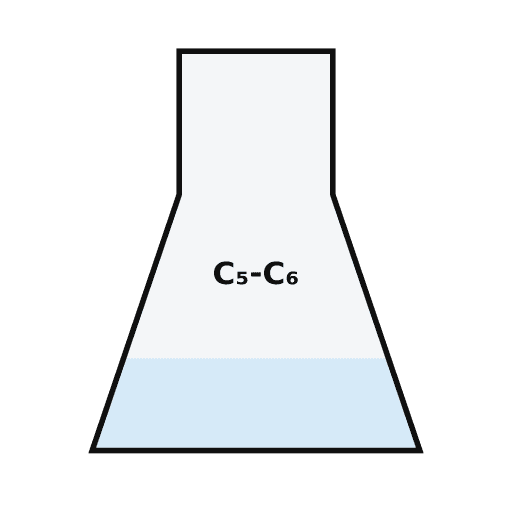
Take off the light cuts in the atmospheric column. Gulf's yields per 100,000: fuel gas 115 (as fuel-oil equivalent), C4 fraction 2,241, gasoline C5-190 °F 7,549 (the light straight-run gasoline, kept for isomerisation), naphtha 190-375 °F 15,700, furnace oil 375-620 °F 20,900.
所需工具:
常压蒸馏塔3
3
Fractionate the topped crude under vacuum
Fractionate the topped crude under vacuum
Send the topped crude to the vacuum tower. Gulf does not give the vacuum or the temperatures.
所需工具:
 减压蒸馏塔
 真空泵
4
4
Draw the 620-1,050 °F heavy gas oil
Draw the 620-1,050 °F heavy gas oil
Draw off the heavy gas oil boiling from 620 to 1,050 °F: 36,950 per 100,000 of crude. The vacuum bottoms above 1,050 °F, 17,000, are the vacuum residue that goes to coking.
所需工具:
减压蒸馏塔储油罐

相关蓝图
这些蓝图共享知识——技术、材料或原理

CC0 公共领域
此蓝图以 CC0 协议发布。你可以自由复制、修改、分发和使用此作品,无需征得许可。
通过购买蓝图中的产品支持创客,他们将获得 创客佣金 (由供应商设定),或创建此蓝图的新版本并将其作为连接包含在你自己的蓝图中以分享收入。