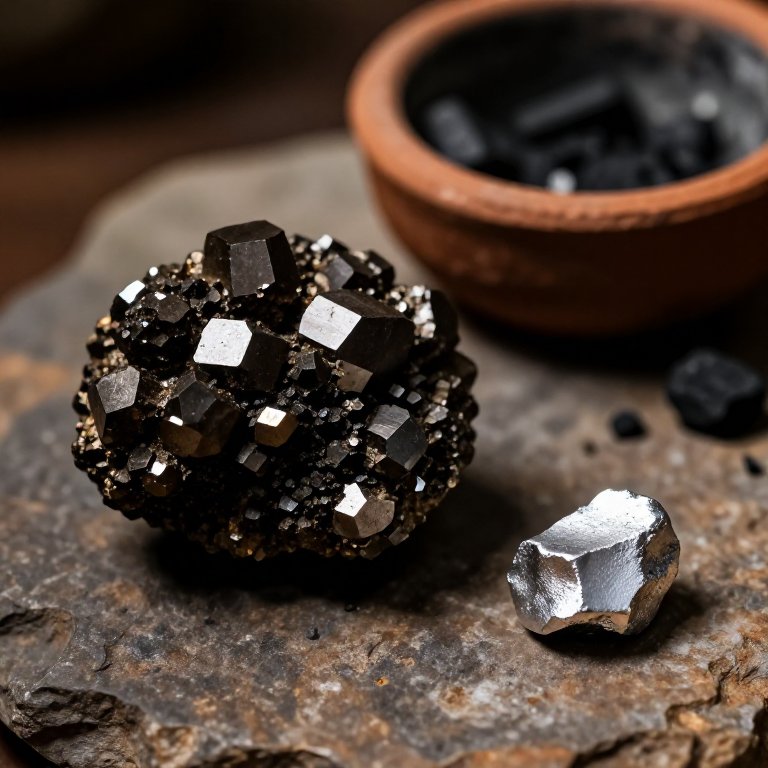


Extracting Tin from Cassiterite — The Missing Ingredient
说明
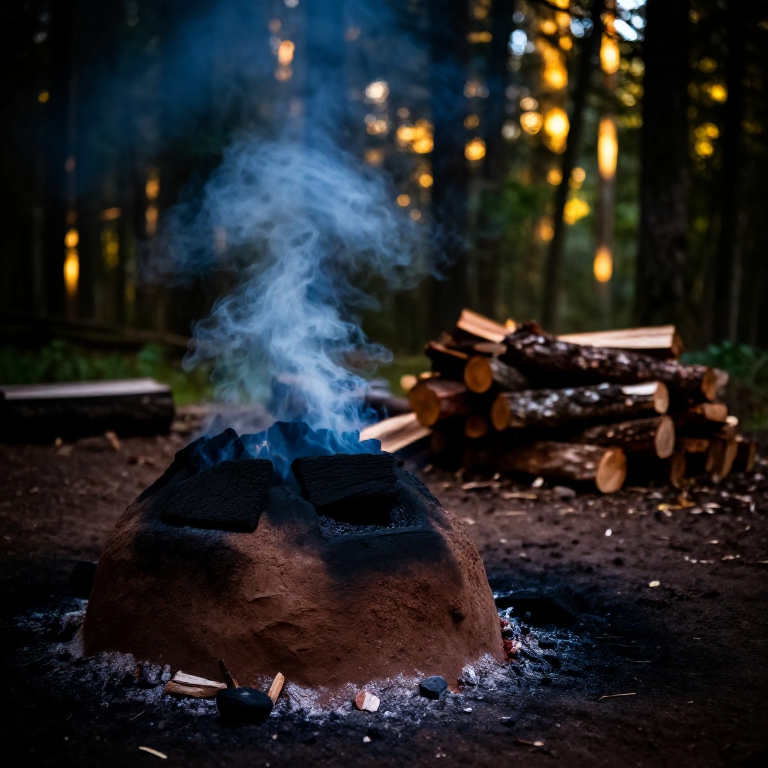
Prerequisite: Making Charcoal
Prerequisite: Making Charcoal
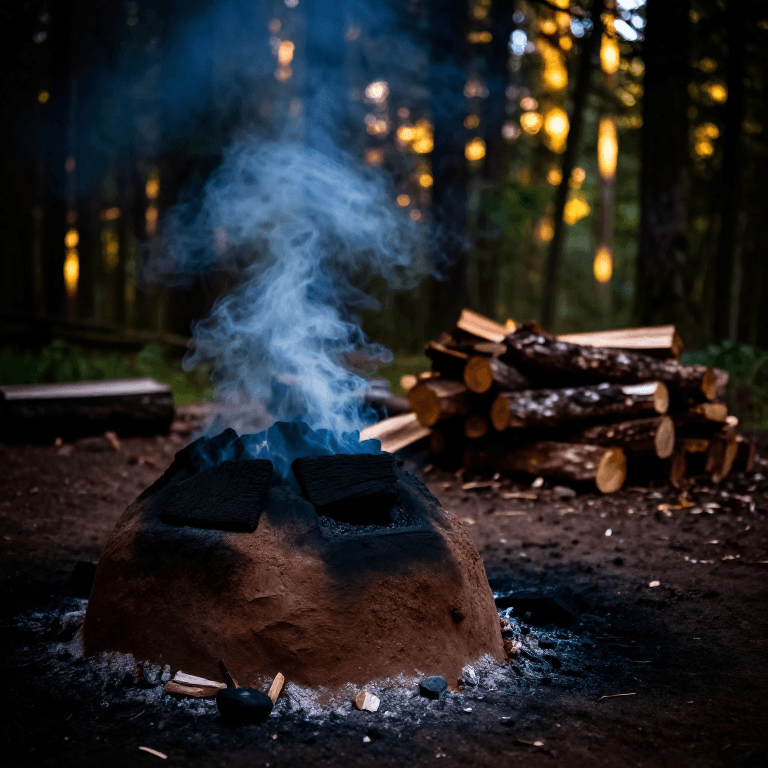
You need charcoal for tin smelting fuel.
前置蓝图
Making Charcoal — The First Chemical Process
此步骤所需材料:
 活性炭粉8 公斤
 锡1 参考
锡1 参考所需工具:
 窑炉
窑炉 风箱
风箱 锻造钳
锻造钳 石锤(碎矿)
Prerequisite: Building a Clay Kiln
Prerequisite: Building a Clay Kiln
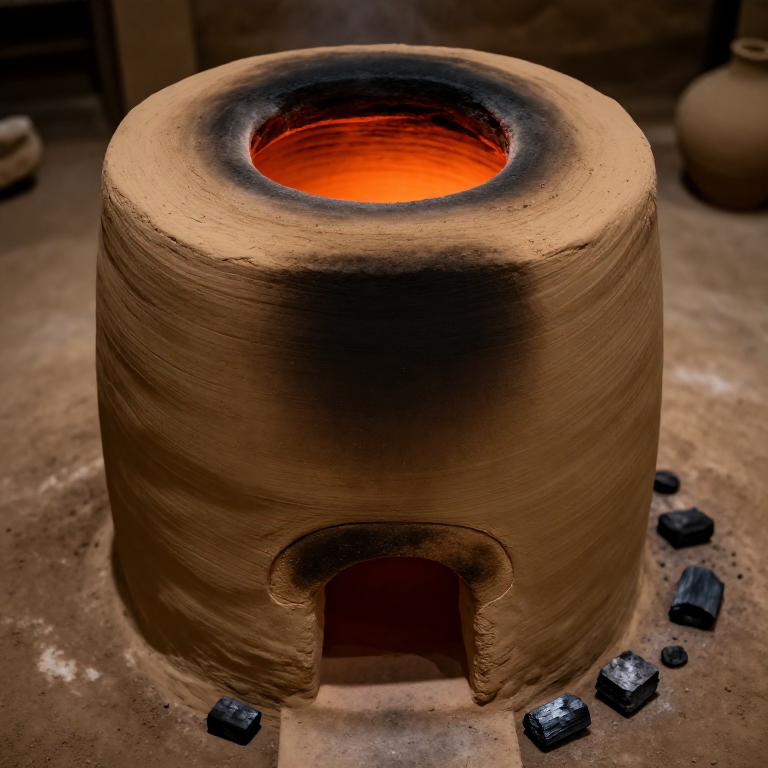
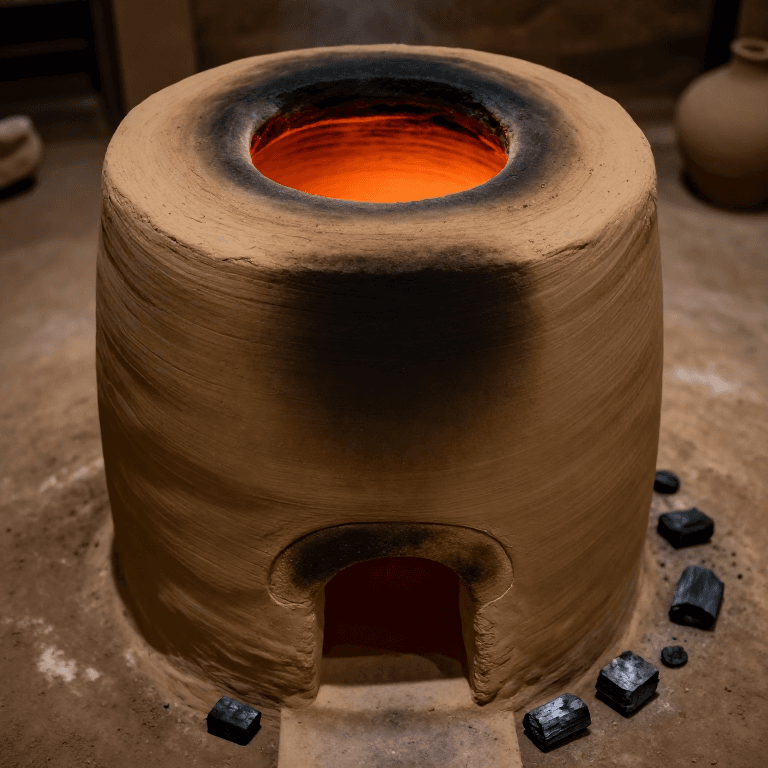
You need a kiln for the tin smelting process.
前置蓝图
Building a Clay Kiln — The First Furnace
此步骤所需材料:
锡1 参考The Chemistry of Tin Reduction
The Chemistry of Tin Reduction
The Reaction
SnO₂ + 2C → Sn + 2CO₂ (at ~900°C)
Carbon from charcoal reduces tin oxide to metallic tin. This is chemically simpler than copper smelting — cassiterite is a simple binary oxide.
Why It's Easy to Smelt
- Reduction temperature: ~900°C (well within kiln range)
- Tin melts at only 232°C — it liquefies immediately upon reduction
- Tin is dense (7.3 g/cm³) — it separates cleanly from slag by gravity
- Unlike copper, tin doesn't readily re-oxidize at smelting temperatures
Ore Preparation
- Crush cassiterite to coarse sand (2-5mm). Tin oxide is extremely hard — this takes effort.
- Wash crushed ore in a stream or pan (like gold panning). Cassiterite is heavy (density 6.8-7.1) — it concentrates just like gold.
- Ancient tin miners used streaming — washing alluvial deposits in wooden troughs to separate heavy cassiterite from lighter sand.
此步骤所需材料:
活性炭粉8 公斤 锡石矿(SnO₂)1 公斤锡1 参考
Smelting
Smelting
Kiln Setup
- Bring kiln to full temperature with charcoal and bellows (~1000°C).
- Pre-heat crucible in the kiln for 10 minutes.
- Layer in the crucible: charcoal → crushed cassiterite → charcoal → cassiterite → charcoal (like a sandwich).
- The charcoal layers ensure intimate contact between carbon and ore for efficient reduction.
The Smelt
- Maintain bellows operation for 1-2 hours. Tin smelts faster than copper.
- Watch for tin droplets collecting at the bottom of the crucible — they're bright and silvery.
- Add more charcoal to the kiln as needed to maintain temperature.
- After 2 hours, the reduction should be complete.
Recovery
- Carefully remove the crucible. The tin has pooled at the bottom under a layer of slag.
- Pour the contents onto a flat stone. The heavy tin will run out first, followed by lighter slag.
- Alternatively, let it cool in the crucible and break the slag off the solidified tin button.
Yield
Cassiterite is ~78.8% tin by weight. Expect 60-75% recovery with primitive methods. 1kg ore → 450-600g tin.
此步骤所需材料:
活性炭粉8 公斤锡石矿(SnO₂)1 公斤锡1 参考Properties and What's Next
Properties and What's Next
Identifying Your Tin
- Appearance: Bright silvery-white, with a slight bluish tint
- Sound: Bending a tin bar produces a distinctive "tin cry" — a crackling sound caused by crystal twinning
- Softness: Very soft — easily scratched with a fingernail
- Melting: Melts easily over a campfire (232°C)
Why Tin Alone Isn't Useful
Pure tin is too soft for tools. It bends easily and has poor edge retention. But when you add just 10-12% tin to copper, something remarkable happens — the resulting alloy (bronze) is harder than either metal alone, casts better, and holds a sharper edge than pure copper.
This discovery — that mixing two soft metals creates a hard alloy — was the insight that launched the Bronze Age. See Blueprint 07: Alloying Bronze.
此步骤所需材料:
锡1 参考已连接蓝图材料

CC0 公共领域
此蓝图以 CC0 协议发布。你可以自由复制、修改、分发和使用此作品,无需征得许可。
通过购买蓝图中的产品支持创客,他们将获得 创客佣金 (由供应商设定),或创建此蓝图的新版本并将其作为连接包含在你自己的蓝图中以分享收入。